Diógenes, the Cynic
The Sea Behind the Counter
Cicero, who lived after my time, was a lawyer, orator and public figure in Rome. In defending his clients, he knew that a good question could reveal more than a long speech. He used one attributed to Lucius Cassius: cui bono?
Who benefits?
I kept that question. It takes up little room and goes well with my lamp.
It came to mind when I heard about a young professional who, during the week of a major energy exhibition, went to discover the industry at sea. While his colleagues visited exhibition stands, he was sailing to Argentina.
He spent fifteen days aboard. Learned the routine, spoke with the crew and observed the operation. He continued working and stayed in touch with people ashore. He returned with an understanding that would hardly fit into a presentation.
It struck me as an excellent way to introduce someone to shipping.
The curious part was discovering how difficult such an experience has become to arrange.
⸻
There was a time when we presented the sea to young people as a world of possibility. There was distance, discovery, work: a profession that connected places and sustained cities.
Today, before someone can get to know a ship, they may first have to get to know a collection of acronyms.
Courses, certificates, authorisations, charterer requirements, operator requirements. Each arrives accompanied by a word that ends the conversation:
Safety.
I respect that word. Precisely for that reason, I like to ask what it means in each particular case.
Who is boarding? To do what? On which vessel? For how long? How will they get aboard? What risks will they face?
A visitor, a passenger and a professional with operational duties are not identical cases. Requirements need to recognise those differences, within the vessel’s operating conditions and authorisations.
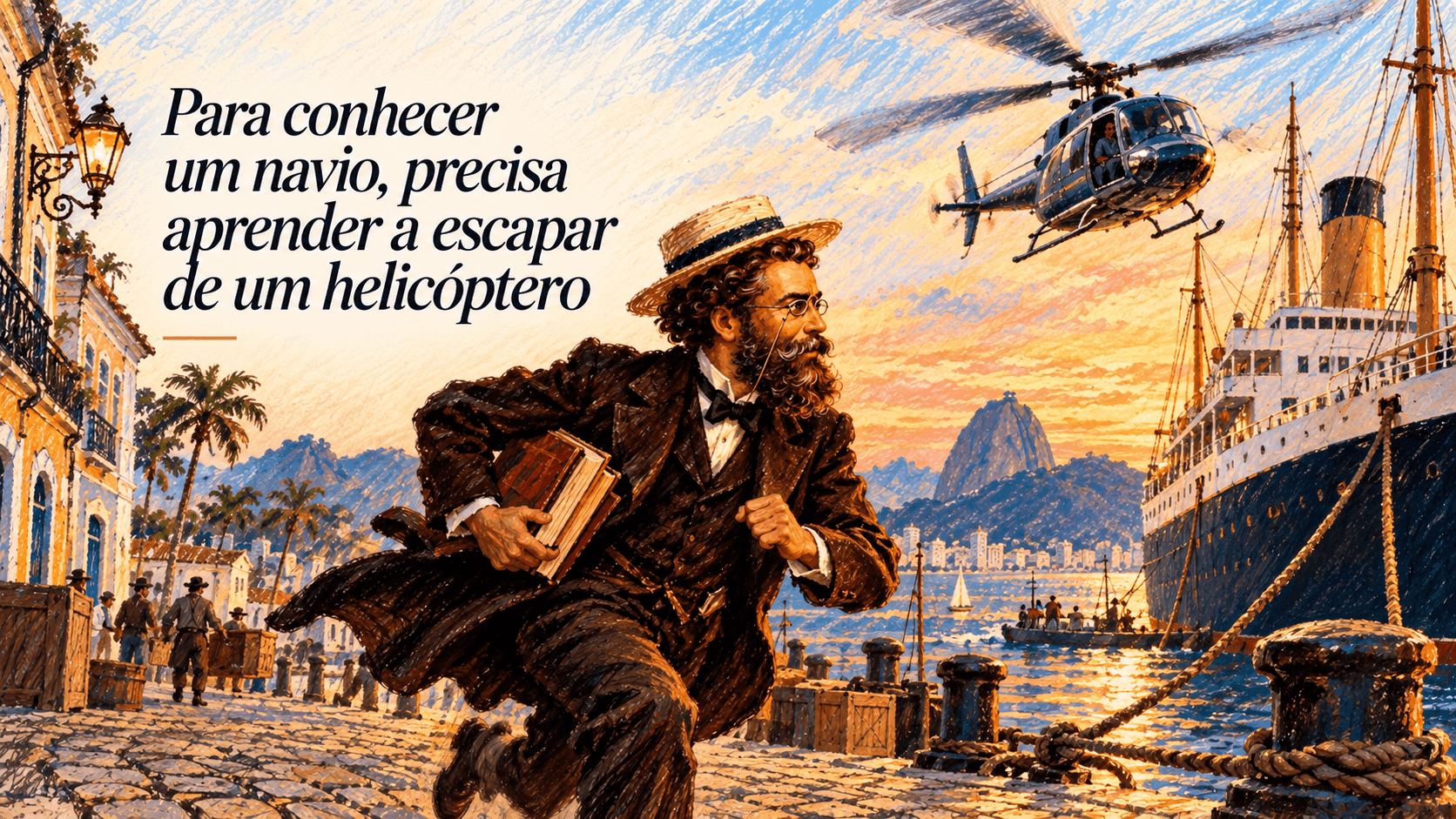
If someone requires helicopter escape training for a journey made entirely by sea, I would like to understand the reasoning.
Where does the helicopter come in?
Perhaps there is an operational reason I am unaware of. If so, explain it. My lamp welcomes clarification. It has more difficulty with the answer, “We always ask for it.”
⸻
The sea demands preparation. There are complex operations, fatigue, distance from assistance and risks that no responsible person should minimise.
That is precisely why each measure needs to relate to the hazard it is intended to control.
A well-founded requirement protects people. A requirement copied without considering its relevance may simply add cost and prevent an experience.
Counting certificates is not enough. We need to know what each one contributes to the safety of that particular voyage.
I asked for that explanation and was shown another form.
That was when I took Cicero’s question out of my pocket.
Cui bono?
⸻
A large company spreads the cost of its requirements across departments, contracts and vessels. For a newcomer, the same cost may determine whether the business ever gets off the ground.
That does not demonstrate a conspiracy. It demonstrates why the effect of a rule deserves to be examined alongside its intention.
Who can comply? What does it cost? Is there an equally safe, less expensive approach? How many potential participants have fallen by the wayside?
If only the largest survive each new barrier, we should ask whether we are making shipping safer or simply more exclusive.
The work of regulators, lawyers and charterers should include that question. A rule must also justify the doors it closes.
⸻
Meanwhile, how do we present the profession to those still choosing their future?
The young man who returned from Argentina spoke about work, learning and life with the crew. Throughout the voyage, he stayed in contact with people ashore. His experience reminds us that life aboard has changed too.
There are vessels with good accommodation, exercise and leisure facilities, connectivity and living conditions worth showing. There are work rotations with periods of leave ashore that allow people to study, spend time with their families and pursue other projects.
These conditions vary and must continue to improve. But why do they so rarely enter the conversation with the same enthusiasm devoted to the difficulties?
Other sectors have learned to inspire pride and curiosity. Shipping has stories, technology, engineering and a tangible connection to everyone’s life.
It could begin by inviting people to discover it.
⸻
The country debates how to build ships. I would like to hear it discuss, with equal dedication, how to develop shipowners.
Some began working aboard and went on to own shipping companies. Knowledge acquired on deck can mature into the ability to secure contracts, invest and build a business.
That path should fire our imagination.
A young person visiting a vessel today may choose a life at sea tomorrow. A seafarer may start a company. A small company may grow.
But someone has to be able to take the first step.
At the end of the conversation, I walked down to the quay. A young man was looking at a ship and asked what it would take to visit her.
I thought it was a good question.
Before anyone handed him a list, I raised my lamp:
“Are we preparing this young man to go aboard, or are we waiting for him to give up?”
Cicero would have asked who benefits from the answer.
I would like to know how many future shipowners we are leaving ashore.

This article was produced by Westhon Media for One Energy News.