
Alexander didn’t bring a cameraman
By Diogenes the Cynic
The story goes that Alexander the Great once found me lying in the sun and asked what he could do for me. I asked him to move aside. He was casting a shadow. I was content with something he had no need to conquer, finance or commission.
I remembered this as I entered the energy industry gathering. There was light everywhere: on the panels, on the screens, in the speeches about the future. Still, I kept my lamp lit. Some things deserve a closer look.
In the corridors, a proud man walked forward, surrounded by people intent on recording his progress. Someone filmed from the front, someone followed alongside, and someone made sure the spontaneity went according to plan.
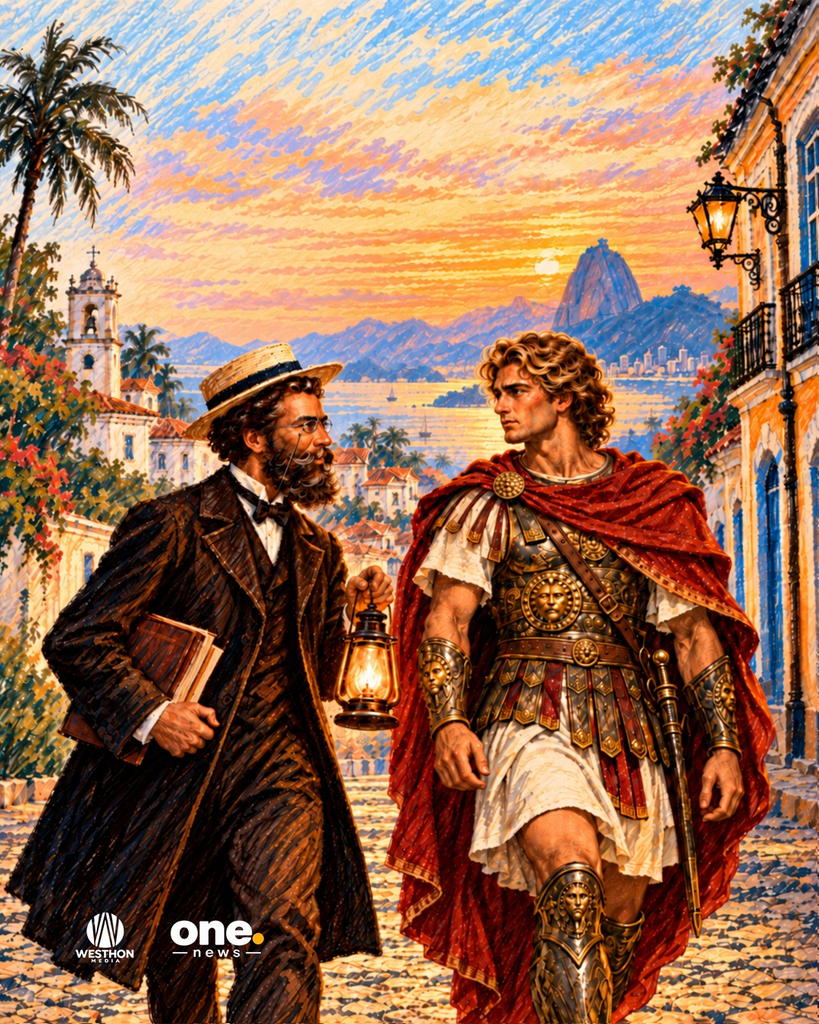
I waited for them to pass. I did not want to interrupt an important occasion. Then I began to suspect that the occasion was simply his walking past.
Alexander also travelled with an entourage. But he already had a few achievements to explain it.
Today, the presentation can precede the achievements. In seconds, an entire company appears: immaculate offices, focused people, swelling music. English buzzwords announce strategy, execution and results with the confidence of someone who has solved the problem before learning what it was.
My curiosity begins when the soundtrack ends.
Who are those people? What have they done together? Does that operation exist, or is it a picture of what someone intends to build?
The distinction matters. A vision of the future can convey a legitimate ambition. Offering it as evidence of an established capability leads the audience to believe in something that has yet to be delivered. Viewers should be able to distinguish a promise from an accomplishment.
If the video depicts tomorrow, say so. The problem begins when a client is invited to engage an operation today that exists only in the presentation.
The tools can produce almost any setting. Responsibility for what it leads others to believe still rests with the person presenting it.
I see no virtue in looking bad in a photograph. A good portrait can help serious work find its audience. But when the image begins to replace the work, the polish deserves less attention than whatever has been left outside the frame.

That is where I bring my lamp closer.
It is rather unsophisticated for this market. It does not retouch. It does not add extras. And it lights up the edges of the set.
Perhaps that is why I thought of Alexander. Faced with someone accustomed to occupying centre stage, I simply asked him to let the light through.
There is a useful lesson in that small gesture. The team can appear on its own. The results can be presented by those who delivered them. And a company can show its actual size, with an ambition to grow, without announcing that it has already arrived.
That takes a certain confidence. Including the confidence to let the world remain interesting when the camera turns away from us.
Without that freedom, the meeting becomes a set, the colleague becomes part of the composition, and the person becomes an employee of his own publicity. Even resting must be hard work. You never know when you might need to look spontaneous.
When the entourage returned, one of the cameramen pointed at my lamp. Perhaps it would make a good shot.
I waited for them to finish. Then I pointed to the window. The sun was streaming in, without a production crew, a caption or anyone to announce its importance.
“Excuse me. Would you mind moving aside?”
I wanted to enjoy the light.
This article was produced by Westhon Media for One Energy News.