Energy Talks – Aldo Manoel Pedro Júnior
Automatically generated translation; may contain errors.
Few professionals can say they played a key role in the implementation of one of the most important shipyards in Brazil’s shipbuilding industry. Mechanical engineer Aldo Manoel Pedro Júnior is one of them.
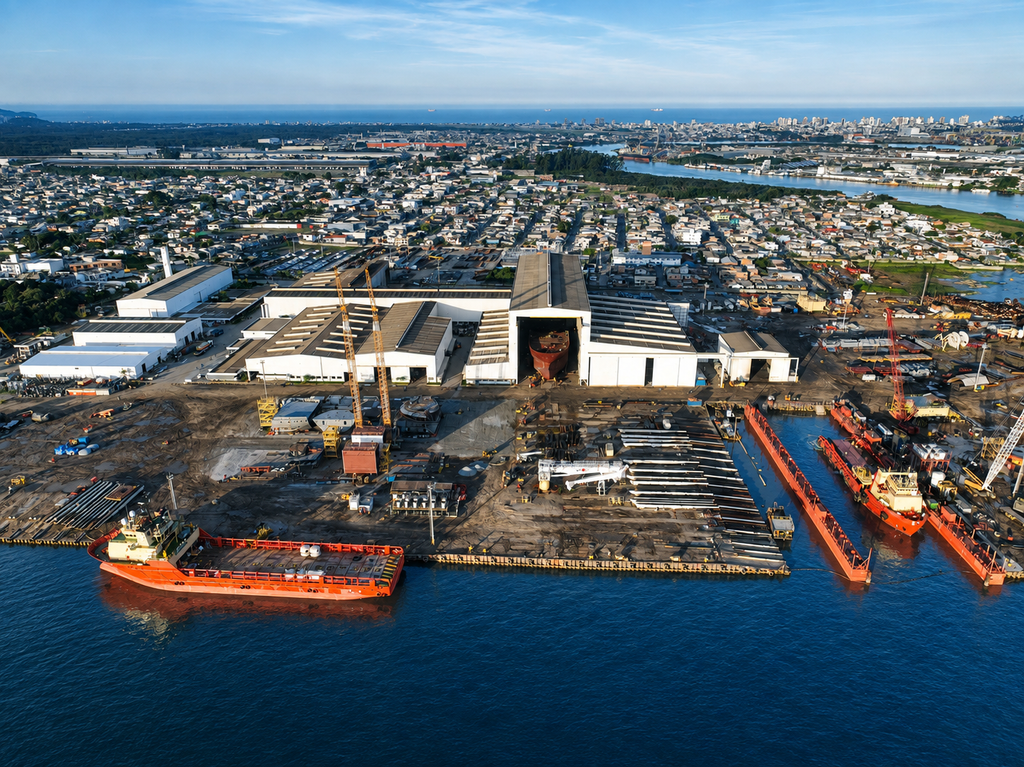
Born in Itajaí, Santa Catarina, Aldo graduated in Mechanical Engineering from the Federal University of Santa Catarina (UFSC) and holds a postgraduate degree in Business Administration from the University of the State of Santa Catarina (UDESC). In 2005, after building a solid career at other shipyards in the region, he led the implementation of Navship. An unexpected encounter with American executives changed the course of his career and placed him in charge of one of the greatest professional challenges of his life: building a shipyard from the ground up.
Over more than 15 years at the company, he served as Production Manager and later as Superintendent. He led teams, trained professionals and, above all, witnessed Navship’s growth into one of Brazil’s leading references in offshore vessel construction.
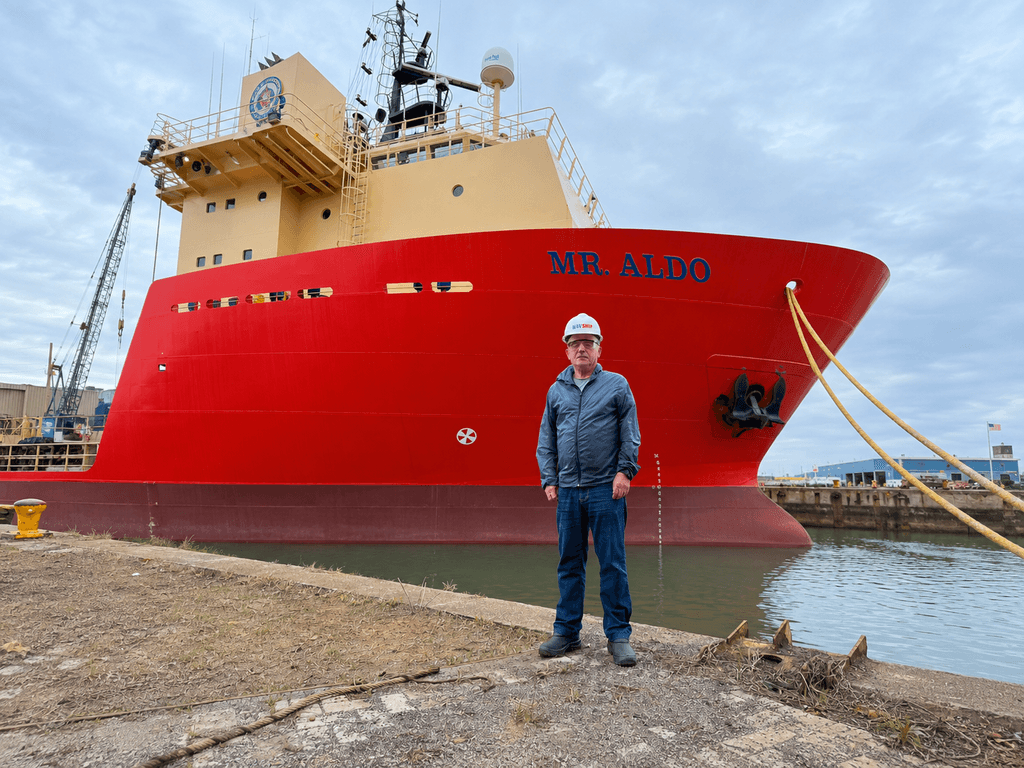
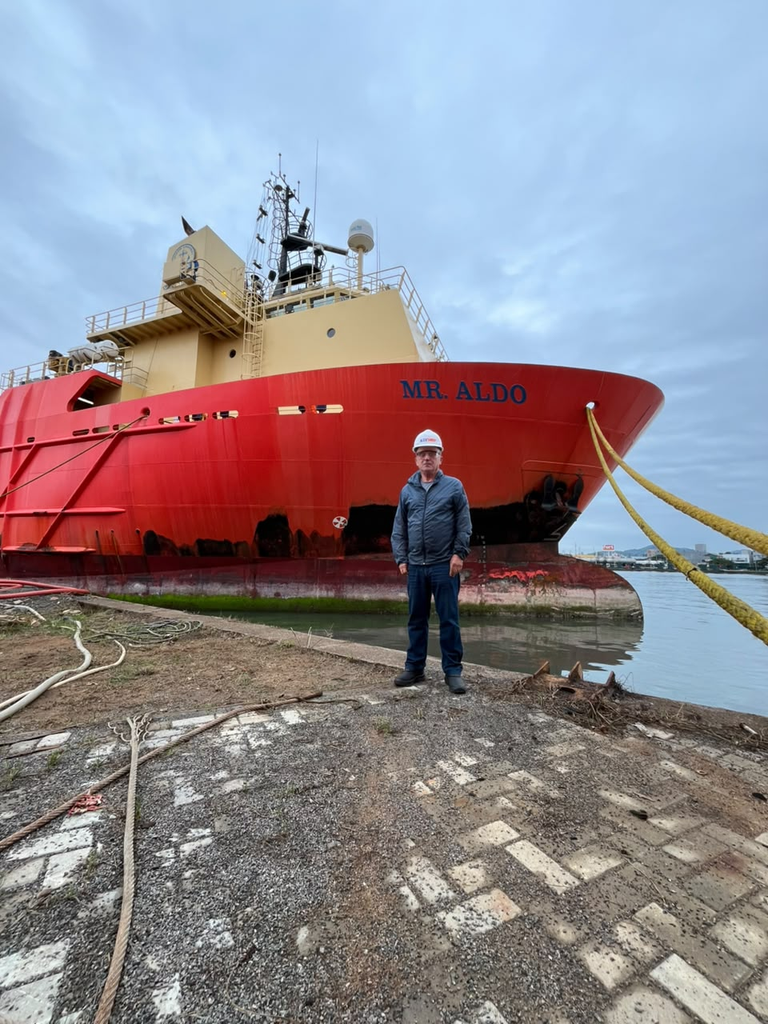
In recognition of his career, a vessel built by the company was named Mr Aldo in his honor — a tribute he considers the greatest distinction of his professional journey. Aldo recalls the challenges of establishing the shipyard, shares little-known stories, discusses leadership, workforce development and offers his views on the present and future of shipbuilding.
How did your journey at Navship begin?
Well, I was the General Manager of TWB Shipyard (which no longer exists), also in Navegantes, where I worked from 2001 to 2005, initially as Industrial Manager and later as General Manager. One of my challenges was to expand the shipyard.
In January 2005, I received an unexpected visit from four Americans from Edison Chouest who were interested in visiting the shipyard. At the end of the visit, one of them handed me a business card and asked me to call him the following morning. Since I had a good command of English, that helped facilitate our interaction.
I called the next morning and one of them, Bruce Kay (who is also honored today with a vessel named after him at Chouest), asked me to go to an address in downtown Navegantes for a meeting. I went there and, I admit, I was a little surprised when they asked me to implement Navship. However, I accepted the mission because I have always enjoyed taking on challenges.
What were the main obstacles to bringing a shipyard of this size into operation in Brazil?
Obtaining environmental licenses and securing qualified labor. We adopted several measures to overcome these challenges. First, Chouest sent professionals from the United States, including specialized workers to work in different areas. We also brought in foremen, supervisors and managers who trained our teams.
In addition, we were able to hire experienced professionals who were leaving EISA Shipyard, (Estaleiro Itajaí S.A.), which was going through a difficult period at the time. This helped us attract skilled labor.
We went through some challenging moments. One of them happened in the early months, when we cleared the vegetation and found several cattle carcasses. Apparently, local residents had been using the land for cattle slaughtering and butchering.
Shortly afterward, we faced another major challenge. While we were still implementing Navship’s structure, we were simultaneously building two PSVs: Navegantes Pride and Campos Clipper. Balancing the implementation of the shipyard itself with the construction of the vessels required a great deal of planning, organization and dedication from the entire team.
What factors explain Navship’s success in its early years?
The vessel projects were relatively straightforward to execute, combined with excellent local workforce. In addition, we had an internal training school to develop assemblers and pipefitters. Experienced welders were qualified according to ABS requirements.
It was also important to be present every day. Workers like to see those who manage the company working alongside them, always with respect and simplicity in the relationship with shop floor professionals.
When you were invited to participate in Navship’s implementation, did you imagine the scale that project would eventually reach?
Honestly, no, because I did not fully understand the size of the company behind the project, which was Edison Chouest, right? They have modern shipbuilding concepts that combine versatile, technologically advanced vessels with low production costs.
When we delivered the first vessels, I truly realized that Navship was not only successfully established but had also already become a market success.
Tell us more about your career at Navship.
Navship has a special place in my life. It was where I was able to buy my first brand-new car. It was a great working environment, and I really enjoyed the fact that every day brought something different.
I was Production Manager from 2005 to 2009 and later Superintendent until I left the company in 2021, due to the consequences of Covid-19, which I contracted a year earlier. Fortunately, I have fully recovered. I admit that I was emotional when I left the company.
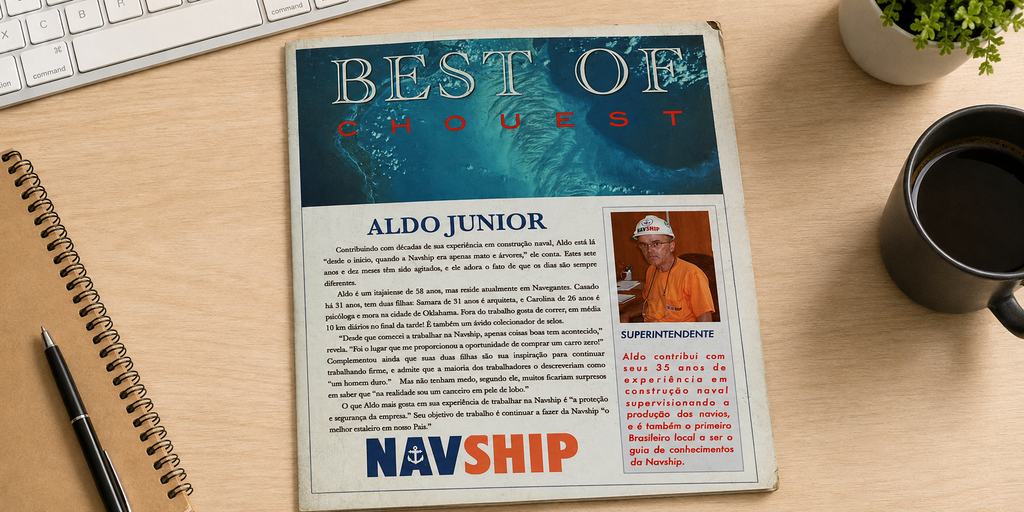
In 2010, I experienced another great moment when I received the annual “The Best of Chouest” award. Today, I enjoy my well-deserved retirement.
In 2017, you experienced one of the most remarkable moments of your career at Navship, when Bram/Edison Chouest launched a vessel named Mr Aldo in your honor. What was it like to experience that moment?
Professionally, it was the greatest distinction I have ever received. It was also the happiest day of my 15 years at the company and one of the happiest days of my life. My mother, Dona Sebastiana, was with me, and I am happy to see that the vessel continues operating today under a Petrobras charter.
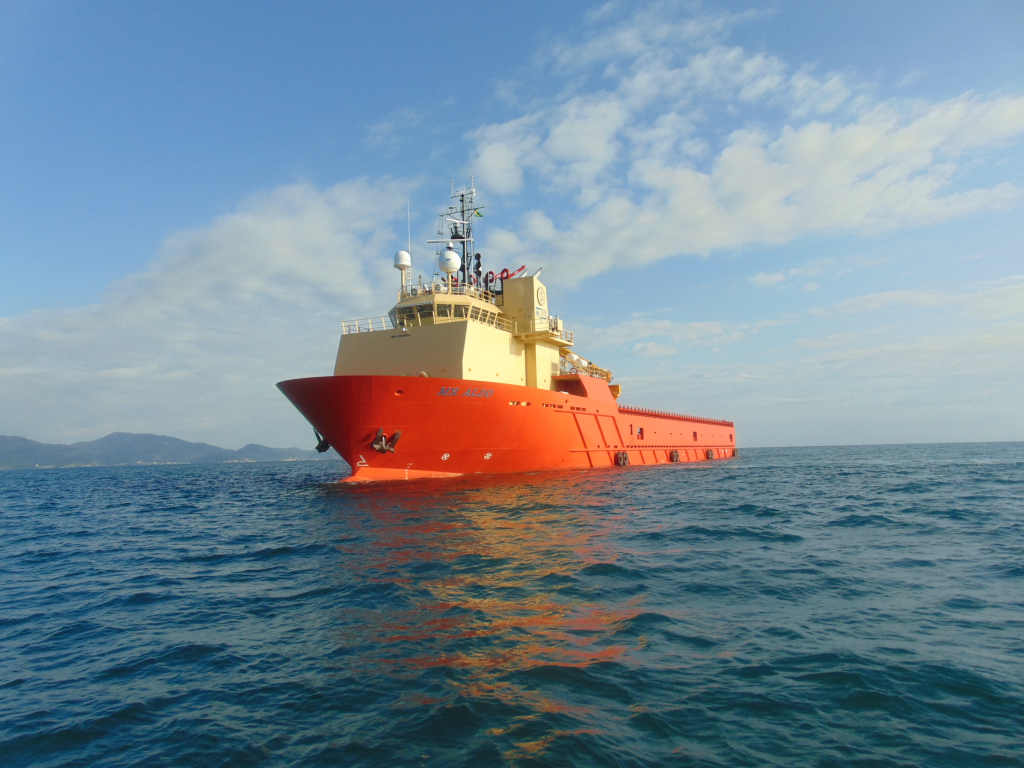
Besides the PSV Mr Aldo, is there another vessel that holds a special place in your heart?
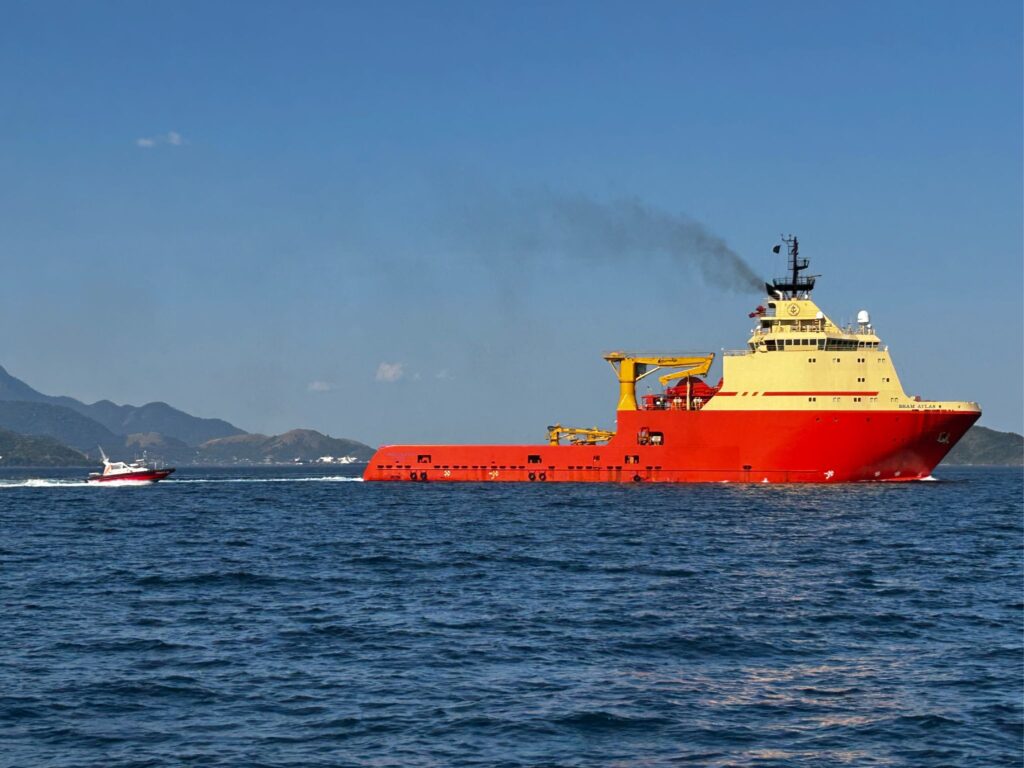
Without a doubt, the Bram Atlas, because it was the first large AHTS we built. Many times, we worked under tight deadlines, but I never doubted that we would meet the schedules because we had projects with great attention to detail, excellent workforce and good equipment.
I am also very proud that we prioritized hiring local professionals from Santa Catarina.
How do you see the shipbuilding market today, especially in Santa Catarina?
The market is booming in Santa Catarina, but it faces a major shortage of skilled labor. The professionals are good, but demand is very high. There is a lack of workers.
Young people today are less interested in working in shipyards and have chosen other careers considered less physically demanding, such as ride-hailing services and internet-related jobs.
I am curious to see how this will evolve, but I will always be a great supporter and enthusiast of shipyard work. It would be interesting to have programs that encourage young people to enter this industry.
Over these decades, technology has also deeply transformed shipbuilding. What was the biggest advancement you witnessed?
Nowadays, we have software that allows three-dimensional visualization of vessels, which helps avoid conflicts and optimize the list of materials to be purchased.
Besides TWB and Navship, you also worked at EISA and Ebrasa. What reflections do you take from nearly 50 years working in shipyards, and how would you like to be remembered?
Shipbuilding is 80% perspiration and 20% inspiration. I also learned that leadership requires fairness and respect, because I have been on both sides of the equation: as a leader and as someone being led.
I would like to be remembered as someone who worked hard, with focus and honesty. And also as someone who was simple and sincere in his actions.
To conclude this conversation, what have you been doing since retirement?
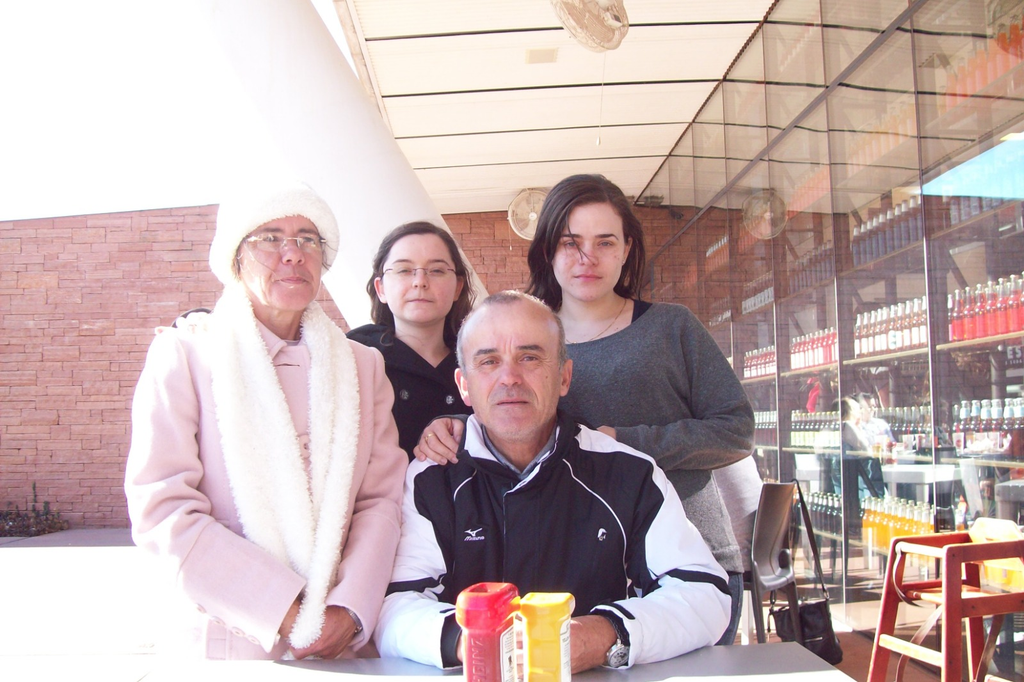
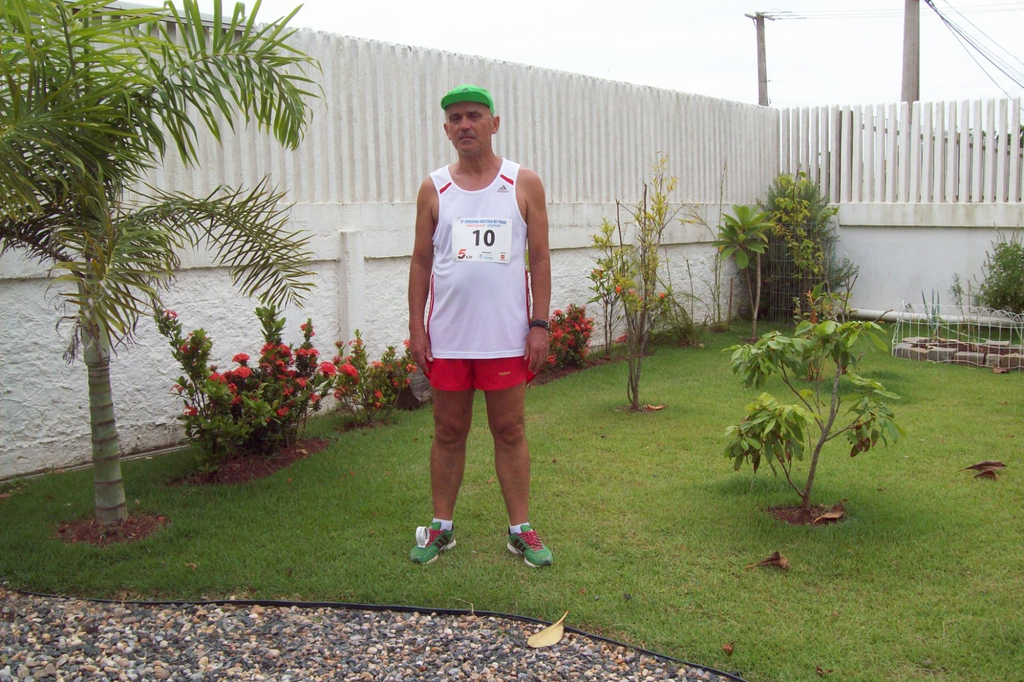
I dedicate myself to running, with a goal of completing 10 kilometers every day, always at the end of the afternoon. I also dedicate time to my wife, Maria Ester, and my daughters, Samara and Carolina. I enjoy collecting stamps as well.
Running is my great passion. I have been involved in this sport for around 60 years, since I was a teenager. I have already completed a marathon, with a time of 3 hours and 36 minutes, and I received an athletic scholarship when I was a student at UFSC.
Those were good times…
Thank you, Aldo.
This article was produced by Westhon Media for One Energy News.