Diógenes, the Cynic
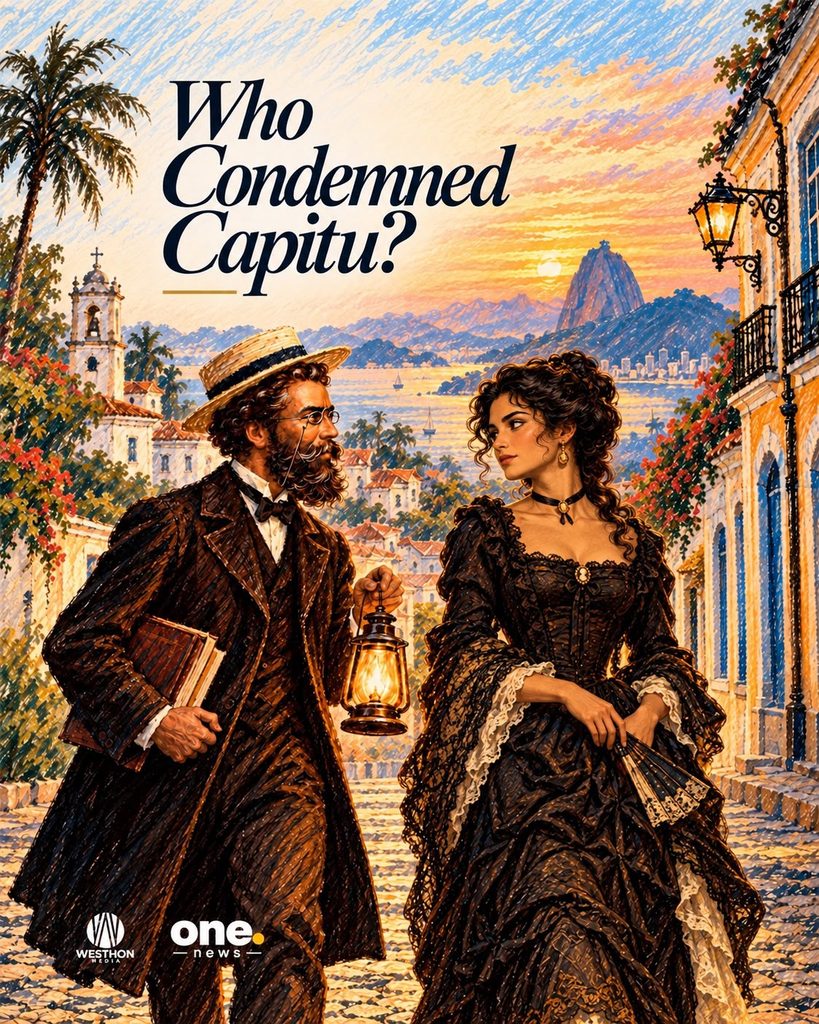
Who Condemned Capitu?
Automatically generated translation; may contain errors.
By Diogenes the Cynic
It may sound like a joke, but the great Machado de Assis borrowed my lamp. In 1858, he published a piece in Correio da Tarde entitled “Diogenes’ Lantern: A Study of the Columnist.” He signed it with a question mark.
I thought that appropriate. I have always felt more at home with questions than with certainties.
I could hardly let this encounter pass without paying tribute to the great author, who came many years after me. Today, I bring my lamp closer to Capitu.
Was she guilty or not?
One reader may go through Dom Casmurro looking only for the answer. Another, perhaps after a few experiences in literature and in life, begins to question the question itself.
Before judging Capitu, we should examine the person who brought us the accusation.
I was reminded of this the other day in a newsroom. I was among journalists and an editor-in-chief when an executive received a telephone call. At the other end, someone furious, apparently little inclined to hear an explanation, was talking of blasphemy, insults and even revenge over a published article.
That caught my attention.
The executive calmly rejected the accusations and asked, quite simply, what was wrong with the article.
As the conversation progressed, the concern became clearer: the current situation was compliant. The report dealt with earlier events, but it might leave readers with the impression that the irregularity persisted.
Well, there was something worth checking and, if necessary, clarifying. Readers are entitled to know what happened and what has changed.
But explaining the present does not require erasing the past. And the discomfort caused by a report does not establish that it was written out of revenge.
I lowered my lamp a little. I could now distinguish two issues that had arrived tangled together over the telephone: the content of the report and the motive attributed to those who published it.
That was when Capitu returned to the conversation, although nobody had spoken her name.
In a chapter of the magnificent Dom Casmurro, Machado — the great Machado — sends Bentinho to the theatre to watch Othello. Desdemona is innocent. Iago feeds Othello’s jealousy with lies, and she is killed by the man who believes he has grounds to condemn her.
Bentinho watches the tragedy, recognises Desdemona’s innocence and leaves still convinced of Capitu’s guilt.
He sees the error on the stage. He does not consider it in himself.
Perhaps that is the passage most deserving of my light.
Bentinho resembles Othello in his jealousy. But, in telling his own story, might he also play something of Iago’s role, guiding the suspicions of those who listen?
It is a question. Machado left room for it.
Everything we know about Capitu reaches us through the voice of the man accusing her. The gestures, the glances, the memories, the resemblances: he chooses what to show us and how to show it.
Did the boy really look like Escobar? And even if he did, what would that prove?
The narrator’s conviction should not relieve the reader of the responsibility to judge.
In that newsroom, the accusation of revenge had also arrived before any error had been demonstrated. Attributing a motive to the writer seemed enough to settle, at a stroke, the discussion about what had been written.
The press must answer for the facts it publishes. It must correct errors, clarify ambiguities and report relevant changes. That responsibility also requires criticism of a report to be examined without being treated as an insult.
The same willingness should exist at the other end of the telephone.
A society that seldom allows its own literature to question it risks repeating its dramas. It wants its stories told its own way. It confuses criticism with hostility and explanation with submission.
It attacks the facts. Tries to silence the storyteller.
And, when convenient, readily accepts the version offered by a narrator who sounds sure of himself.
Machado signed that piece with a question mark. Perhaps I should leave another beside my lamp, as a reminder that its light must also reach the accuser, the writer and the reader.
Poor Capitu.
They condemned her. And so many readers never even questioned the narrator.
This article was produced by Westhon Media for One Energy News.