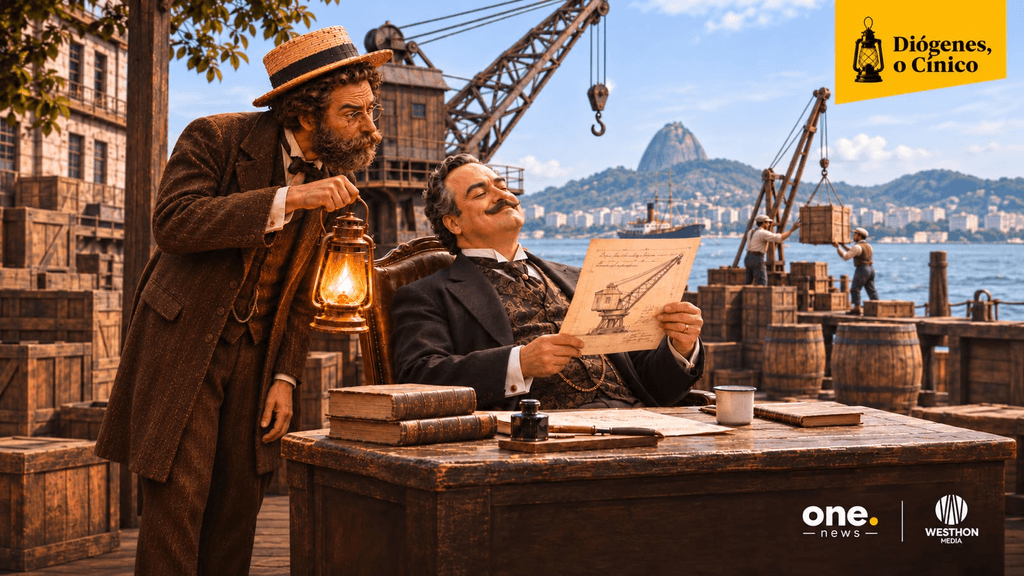
Diógenes, the Cynic
The Man Who Raised His Price for Standing Still
Automatically generated translation; may contain errors.
By Diogenes the Cynic
They say I once saw a boy drinking water from his cupped hands. I took the cup from my bag and threw it away. A child had just shown me that I needed less than I thought.
Had the cup been able to speak, it might have disagreed. It had been with me for years. It probably felt quite secure in its position.
But thirst had never depended on the cup.
I remembered this during a conversation near the port of Rio de Janeiro. A man was explaining, with considerable satisfaction, that people were finally beginning to appreciate the true value of what he owned.
Until the previous day, he had been happy with the work. That morning, someone had dangled a little more money before him.
That was all it took. What had seemed a perfectly good arrangement suddenly looked like a longstanding injustice.
“I could have been earning more,” he said.
It is a discovery people tend to make before asking who would actually be willing to pay.
The man reminded me of Falcão, a character in Machado de Assis’s short story Anedota pecuniária. In that story, a love of money found peculiar ways of accommodating personal affection. In my Falcão, whom I borrow for this tale, it did much the same to reason.
He could spot a small difference in price from a remarkable distance. The conditions that made it possible to earn anything at all, however, escaped him at close quarters.
Falcão owned a magnificent machine. Large, powerful, built for demanding tasks. It worked very well. It also cost a great deal to run.
The job at hand, however, was simple.
Finding work for the machine had taken a patient combination of knowledge, favourable circumstances and trust. Someone understood the need. Someone else knew the people. Terms were adjusted, difficulties resolved, and a place was found for something that had never been the obvious choice.
Falcão watched his machine at work and reached a rather comfortable conclusion: they needed it.
The others understood why it was there. He preferred to believe there was no alternative.
Then a gentleman arrived with news from elsewhere.
He had no name for whoever would be paying. He did have a figure.
Falcão thought the figure made an excellent first impression.
“And the work?” I asked.
“There’s a possibility.”
“And the client?”
“We’ll find out in due course.”
The gentleman did, however, have one very definite requirement: a letter granting him exclusivity.
Falcão signed it.
The promise had no name yet, but it already had exclusive rights.
A curious habit. Before accepting a certainty, some men demand documents, deadlines and explanations. To fall in love with a promise, they need only see a slightly higher figure.
While his established partners were securing confirmation of the work, Falcão was already offering the machine through his new acquaintance.
When confirmation arrived, he received it with the air of a man who regretted that everyone had come too late to secure his services.
“A better opportunity has come along. And it isn’t the same opportunity. The gentleman assured me of that.”
“Did he explain the difference?”
“He didn’t go into detail.”
Falcão nevertheless seemed satisfied with the assurance. To tell the two opportunities apart, he had been content to know about only one.
“But what if it is the same opportunity?” I asked.
“Then you dropped the ball. They got there first. In this market, you have to be working all the time. You didn’t work hard enough.”
I looked at the machine, still working where we had found a place for it. Falcão looked too, but seemed to make no connection.
His certainty that these were different opportunities lasted only as long as it suited him. If they turned out to be the same, he already had an explanation ready.
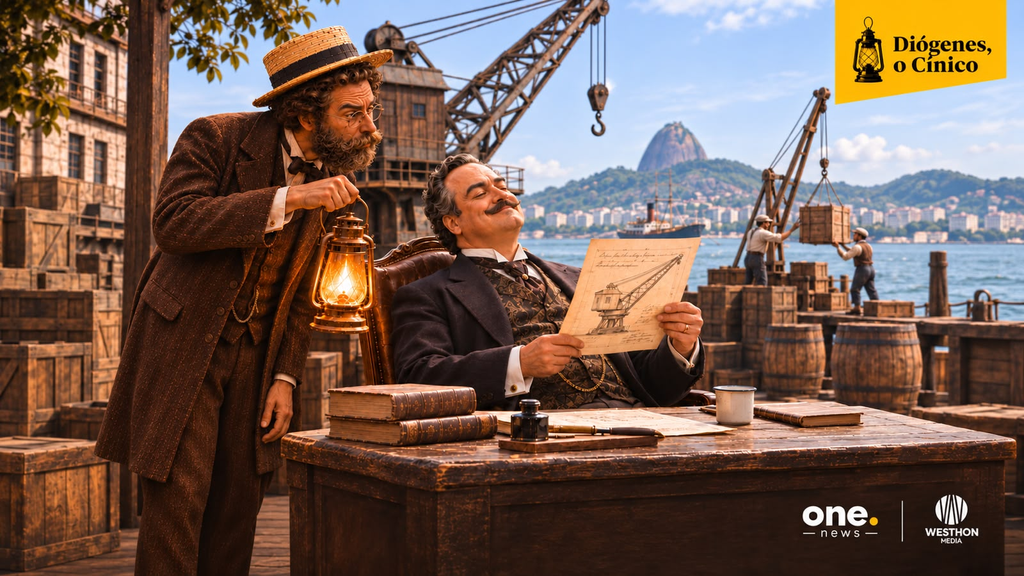
I brought my lamp closer. I wanted to see whether the better opportunity had anything to offer beyond the word “better.”
It had a hopeful prospect and a letter of exclusivity. The confirmed work would have to wait.
Falcão seemed pleased with the firmness of his position. He imagined that the prospect of losing his magnificent machine would make everyone realise what it was worth.
Across the table, however, someone asked a simpler question:
“What do we actually need to get the job done?”
It was a terrible question for the machine.
Until then, the discussion had been about keeping it working. Now they were comparing ways to do the work. Smaller, cheaper and perfectly adequate alternatives began to emerge.
Nobody needed to take revenge on Falcão.
They merely had to run the numbers again.
Some arrangements work because someone understands the whole picture: the cost, the timing, the difficulty, the alternatives. When that person finds a solution, the beneficiary may mistake the achievement for an inherent quality of what he owns.
He begins to treat as indispensable something that another person had the skill to make viable.
Falcão did not need a lesson in gratitude. He needed to understand his own business.
There was nothing wrong with wanting to earn more. What was remarkable was his willingness to risk what he already had without finding out whether the new promise had any substance. And, above all, to invite a comparison his established partners had managed to spare him.
He then settled down to wait for news.
His new acquaintance was still looking for answers. His established partners were already looking for another machine.
On the table lay the higher price, neatly written down. Falcão regarded it with some pride. It was, unquestionably, a larger figure.
All that was missing was the work.
I picked up my lamp and remembered the boy by the water.
The cup, too, could have announced that its price had gone up.
But the thirsty had already found another way to drink.
This article was produced by Westhon Media for One Energy News.