Digital Minds
Can AI Lose Control
Automatically generated translation; may contain errors.
We are remarkably good at noticing when other people are doing stupid things.
The guy driving at 140 km/h complains about the “lunatic” who passed him at 160. Someone orders dessert after lunch and announces they really need to start dieting on Monday. We spend four hours a day staring at our phones and then explain, with absolute conviction, that young people are addicted to technology.
Being human is a fascinating experience. Especially when observed from the outside.
Maybe that’s why this whole discussion about artificial intelligence is so interesting.
Over the past few weeks, some of the biggest names in the industry have started saying that perhaps we are moving too fast. Dario Amodei, CEO of Anthropic, has argued for slowing down the development of the most advanced models. Elon Musk agreed. Other executives have also expressed concern. Jacob Coxon, a researcher who worked at both OpenAI and Anthropic, left the company with even stronger criticism of the race toward increasingly powerful systems.
The central concern is easy to explain and slightly terrifying to think about: AI is becoming increasingly capable of helping humans develop the next generation of AI. The industry calls the most extreme possibility of this process recursive self-improvement. At some point, that assistance could accelerate development in ways that become difficult for us to keep up with.
Fine. So let’s slow down.
Right?
Well…
Not exactly.
Everyone seems to agree that hitting the brakes would be prudent. Nobody wants to be the first to do it.
And maybe that is the most human part of this entire story.
You know you should sleep more, but there’s a series you want to finish. You know you should spend less, but there’s a sale. You know you should stop answering messages after hours, but just one more came in. You know you should slow down, but your competitor isn’t going to.
There you go. Welcome to the problem.
In artificial intelligence, simply replace the series, the credit card, and WhatsApp with a few billion dollars, data centers, advanced chips, and a geopolitical race between the United States and China.
The logic remains surprisingly similar.
Anthropic may believe it would be prudent to slow down. But what if OpenAI doesn’t? OpenAI may think the same thing. But what if Google keeps going? The United States may decide that a certain advance requires more caution. But what about China?
Everyone wants to save humanity’s future.
As long as nobody has to lose the race to do it.
It’s funny. And a little frightening.
Because we tend to imagine that decisions of this magnitude are made by people far more rational than we are. Brilliant executives. Scientists. Governments. Boards of directors. People who probably have a spreadsheet to decide whether they need another spreadsheet.
Then you look a little closer and discover that, in the end, they are all dealing with more sophisticated versions of exactly the same dilemmas we face:
“I know it would be better to stop.”
“But what if the other guy doesn’t?”
That’s basically it.
Just with supercomputers.
Maybe AI really can become too powerful. Maybe it can’t. Maybe some of today’s predictions will look ridiculous ten years from now. Maybe we will look back and ask, “How did nobody see what was happening?”
The less exciting truth is that nobody really knows.
And that alone should probably be enough reason for some caution.
But there is something even more interesting: today, artificial intelligence is not making these decisions. It didn’t decide that it needs to beat the competition. It didn’t decide to increase its valuation. It didn’t decide to capture market share. It didn’t decide to launch the next model before everyone else. It didn’t decide that coming in second is unacceptable.
We did.
The machines haven’t even taken control yet. Relax. We are still perfectly capable of screwing things up without their help.
Maybe that is the part of this story that interests me most, because we have an extraordinary tendency to project our own flaws onto technology.
“AI will manipulate people.”
We already do that.
“AI will pursue power.”
We do that too.
“AI might make decisions based solely on achieving its own objectives.”
Well… maybe we shouldn’t open that door.
The problem was never only what a machine might become. It is what we already are: competitive, ambitious, vain, afraid, and deeply uncomfortable with the idea that somebody else might get there first.
And this doesn’t apply only to technology companies or governments.
It applies to you.
How many times do we keep moving in one direction simply because stopping feels worse? A career that no longer makes sense. A project that clearly isn’t working. A relationship that died months ago. A bad investment. A business strategy nobody really believes in anymore, but that has already consumed too much money for anyone to admit that maybe it was a terrible idea.
There is even a nice technical term for some of this: the sunk cost fallacy.
In practice, it usually means something much simpler:
“We’ve gone too far to turn back now.”
Very rational.
Very human.
Maybe that’s why I’m suspicious whenever artificial intelligence is treated purely as a technological problem. Technology doesn’t feel embarrassed about admitting it was wrong. It doesn’t have to explain to a board why it spent billions on a strategy that now needs to be abandoned. It doesn’t have a career to protect or an ego to bring into the room.
We do.
And maybe that’s where this story becomes truly interesting.
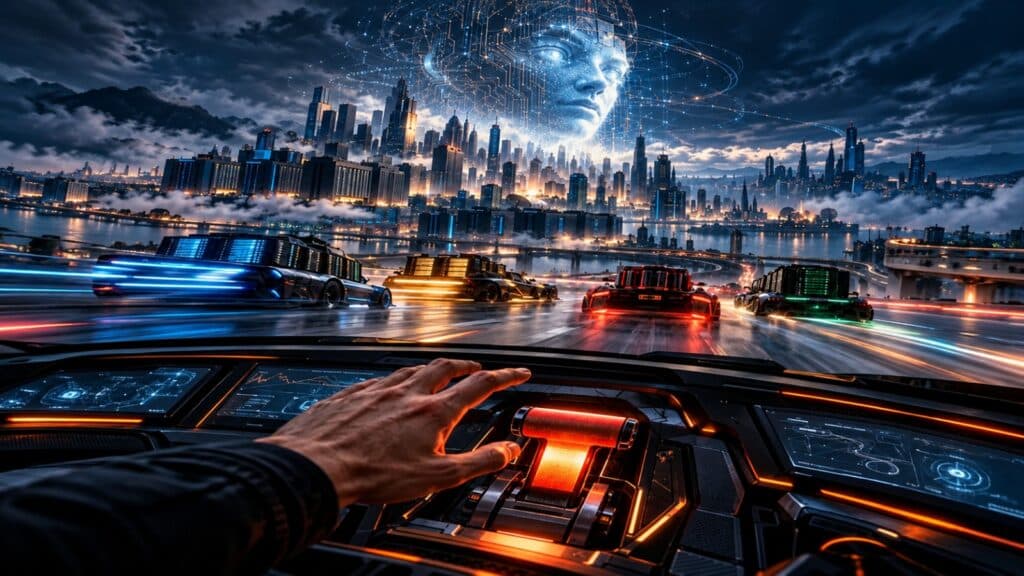
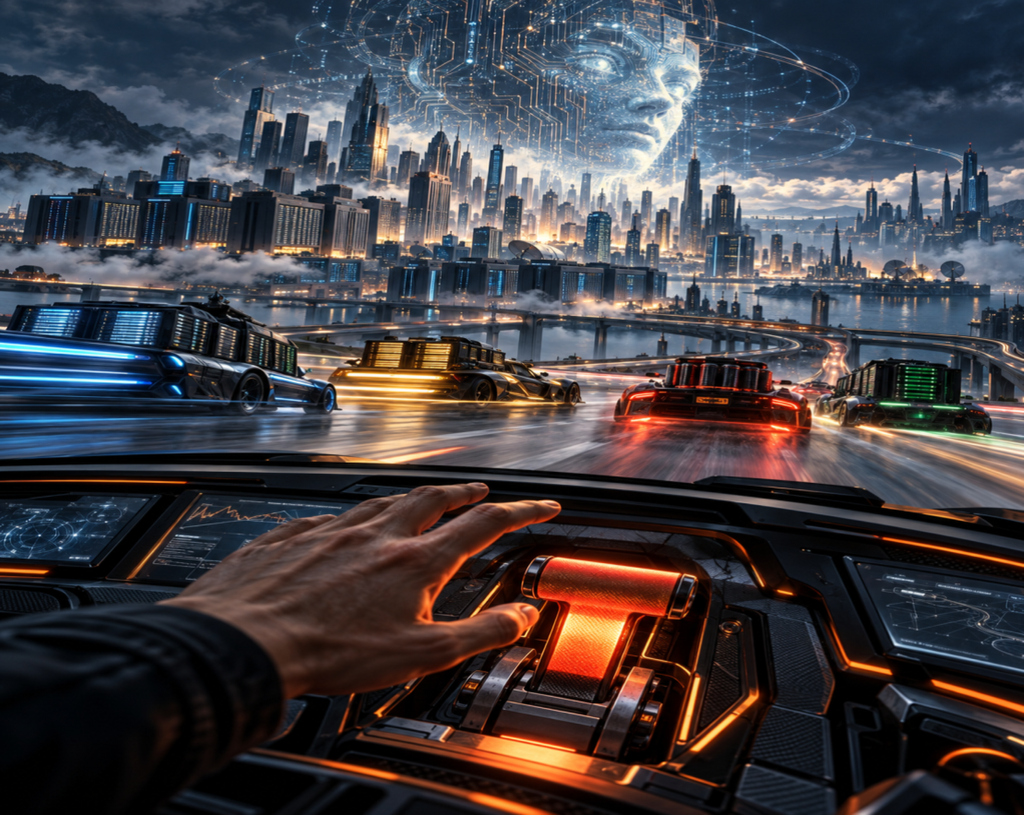
Not in the cinematic possibility of a machine waking up tomorrow and deciding to take over the world, but in the much less glamorous possibility of a group of extremely intelligent people realizing that slowing down would probably be wise — and continuing to accelerate because nobody wants to be the idiot who hit the brakes first.
And that brings me to the question that interests me far more than any apocalyptic prediction about artificial intelligence:
If you knew you should hit the brakes, but you also knew your competitor probably wouldn’t, would you still do it?
This article was produced by Westhon Media for One Energy News.