Offscreen
The blank page is disappearing
Automatically generated translation; may contain errors.
AI can now begin almost anything for us. What happens when we stop having to begin?
A few days ago I opened a document to write something and, before writing a sentence, I opened another window and started explaining what I wanted to an AI.
Nothing dramatic happened. I did not feel lazy or incapable. It felt normal.
Only later did I notice that I had skipped a part of the process I used to know very well: staring at nothing.
The blank page was never pleasant. There was the cursor blinking as if it knew I was taking too long, the first sentence that sounded embarrassing, the vague suspicion that maybe I did not have anything to say after all. Then a phrase appeared. Usually a bad one. But it was enough to make the second possible.
Now the first phrase can arrive before the discomfort does.
I can ask for a structure, a beginning, three alternatives. I can open a code editor and ask for the first function before deciding how I would build it. I can ask for a summary before reading the thing being summarized.
We used to tell software what to do. Increasingly, we tell it what we want.
I like this. That is part of the problem.
There are afternoons I would gladly never spend again looking for a missing comma in code or moving things around a spreadsheet. I do not think difficulty makes something meaningful just because it is difficult.
Still, I keep wondering about the kinds of difficulty we are removing.
When I was younger, the blank page felt like evidence that I had not started. Now I am less sure. Maybe staring at it was already part of starting.
Because strange things happen when there is nothing to react to.
You write a sentence and discover that it is not what you meant. You look for an example and end up finding a different question. You explain an idea badly enough that, for the first time, you notice the hole inside it.
None of this looks productive while it is happening.
It looks like being stuck.
And being stuck has become increasingly easy to avoid.
The temptation is not only to ask AI for answers. It is to ask before the question has finished becoming a question.
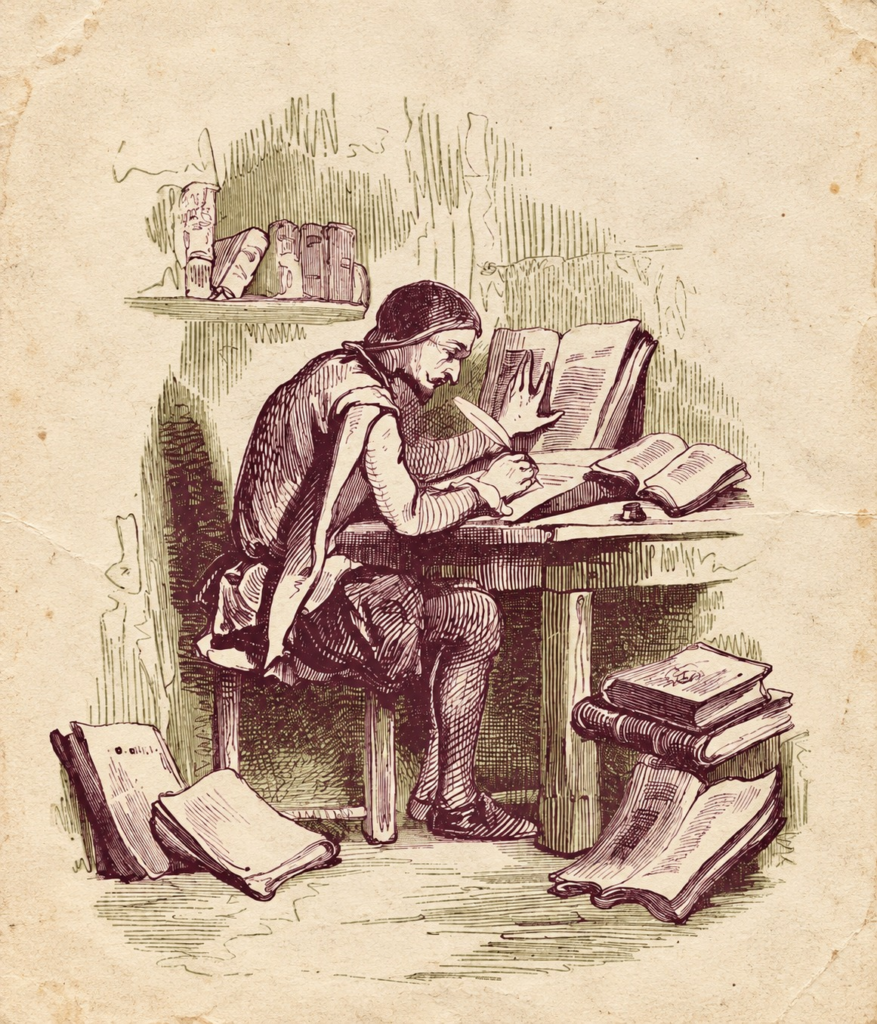
I notice this most with writing because the evidence stays on the screen, but it is probably happening elsewhere too. A programmer can receive working code before forming a mental picture of the system. Someone can ask how to answer a difficult message before sitting for a minute with what the message made them feel.
Perhaps nothing important is lost. People once worried that calculators would ruin arithmetic and that search engines would ruin memory. We adapt. We move some skills elsewhere.
But a calculator gives you an answer to a problem you already have.
This feels slightly different.
The machine can meet you earlier, somewhere between the vague intention and the first attempt to give it shape.
That space used to belong mostly to us.
I do not want the blank page back out of nostalgia. I definitely do not want every task to become slower so that I can feel virtuous about doing it myself.
I just want to notice when I skip it.
Because one day the cursor may stop feeling like an invitation and start feeling like a defect in the interface: an empty place where something should already have been generated.
And maybe the interesting question is not what AI can create for us.
Maybe it is what we used to create in the few uncomfortable seconds before anything was there.
This article was produced by Westhon Media for One Energy News.