Venezuela: Impacts on Brazil and the Equatorial Margin
Alexandre Vilela, CEO of WSB Advisors and Westhon, analyzes the developments of the recent tensions between the United States and Venezuela and their potential effects on the global oil market, with a particular focus on the implications for Brazil.
According to Vilela, despite the rise in geopolitical instability, the immediate effects on the Brazilian market are likely to be limited. The low level of direct trade integration between Brazil and Venezuela reduces short-term risks related to prices, supply, or logistics.
Vilela also emphasizes that Brazil currently occupies a more resilient position on the international stage, supported by stable production, long-term contracts, and greater regulatory predictability. In the medium and long term, this context could even strengthen the country’s role as a reliable oil supplier in the global market.

1. In practice, how could a rise in tensions between the U.S. and Venezuela affect Brazilian oil trade — in terms of price, supply, or logistics?
In the short term, it’s too early to expect any significant impact on Brazilian oil trade. Direct interaction of volumes between Brazil and Venezuela has historically been very limited, and any structural changes in Venezuelan supply would take time to materialize. Moreover, the current situation still lacks the political and operational stability needed to generate meaningful shifts in trade flows. In the long run, Brazil is more likely to benefit than be harmed, mainly due to its position as a stable producer.
2. Is Brazil today more vulnerable or more resilient to geopolitical shocks in the international oil market compared to other recent periods in history? Why?
Brazil is clearly more resilient today. The country has a solid production base, long-term contracts, greater regulatory predictability, and a growing national-flag fleet for transporting oil and derivatives. These factors reduce exposure to external shocks and contribute to greater logistical and commercial stability.
3. Could this new international context have any potential impact on investments or regulatory decisions related to the Equatorial Margin?
In the short term, no. There are also no significant regulatory impacts expected in the long term. Potentially, a reconstruction of Venezuelan production and refining could generate regional synergies, including in terms of knowledge and scale, which could benefit the development of Brazil’s Equatorial Margin. That said, it’s important to note that despite its name, the Brazilian Equatorial Margin is geographically distant from Venezuela and already follows its own logic, aligned with the proven FPSO model, as seen in Guyana.
4. If Venezuelan oil faces additional restrictions or export redirection, could Brazil benefit commercially, or would this likely put pressure on domestic prices and costs?
This scenario is unlikely. Recent developments point more toward a relaxation of restrictions rather than additional tightening. Therefore, no significant structural pressure on Brazilian prices or domestic costs is expected from this specific factor.
5. Could this international context accelerate or slow Brazil’s strategic decisions regarding exploration, refining, and energy self-sufficiency?
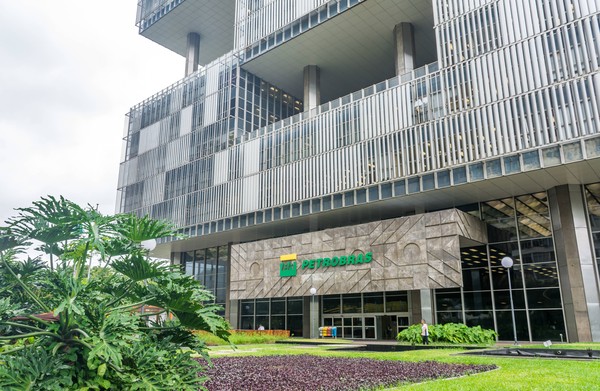
Rather than slowing them down, this context reinforces a broader strategic perspective. Brazil has previously been affected by asset nationalizations and unmet commitments in Venezuela, but today it possesses high technical, operational, and financial expertise. Energy self-sufficiency should be understood not only as domestic production but also as a national company’s ability to operate in an integrated way, both inside and outside the country. In this sense, Petrobras can, selectively, align itself with a regional market in reconstruction and capture value in a potential near-term international expansion.
*Questions made by Correio Braziliense
This article was produced by Westhon Media for One Energy News.