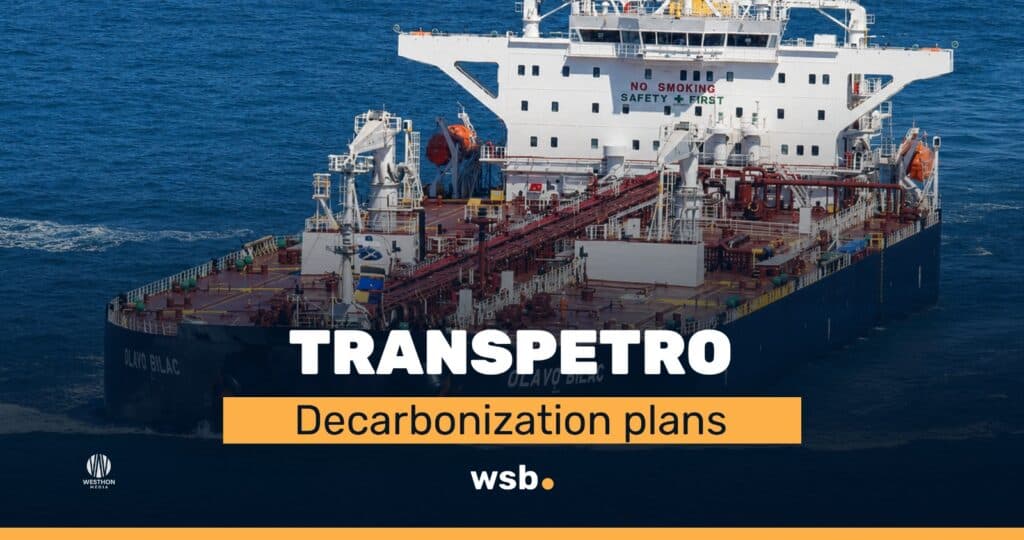
Transpetro – Decarbonization plans
Decarbonization in shipping is becoming less about breakthrough technologies and more about combining practical solutions that can be deployed today.
Transpetro’s latest initiative reflects this approach in practice.
On July 2, the Petrobras subsidiary completed its first bunkering operation using B30, a marine fuel containing 30% renewable content. The operation took place at the Port of Rotterdam, where the tanker Olavo Bilac received approximately 400 tonnes of fuel.
The initiative builds on a program launched in 2025. During its first phase, six vessels operated on B24 fuel, consuming around 4,000 tonnes and avoiding approximately 1,600 tonnes of CO₂ emissions.
The use of renewable-content marine fuels is only one component of the company’s broader decarbonization strategy.
Transpetro is also investing in hydrodynamic appendages, engine combustion optimization, software-based speed monitoring, regular hull cleaning and specialized low-friction coatings. Together, these initiatives improve vessel efficiency, reduce fuel consumption and contribute to lower greenhouse gas emissions.
For shipowners and operators, the direction is becoming increasingly clear. Progress toward lower emissions is likely to come from combining alternative fuels with proven efficiency technologies, allowing measurable reductions while leveraging existing fleet infrastructure.
The initiative is aligned with the International Maritime Organization’s (IMO) ambition of achieving net-zero greenhouse gas emissions from international shipping by or around 2050.
This article was produced by Westhon Media for One Energy News.