Special WSB: Por onde anda? Comandante Airton
Por Onde Anda? — Comandante Airton
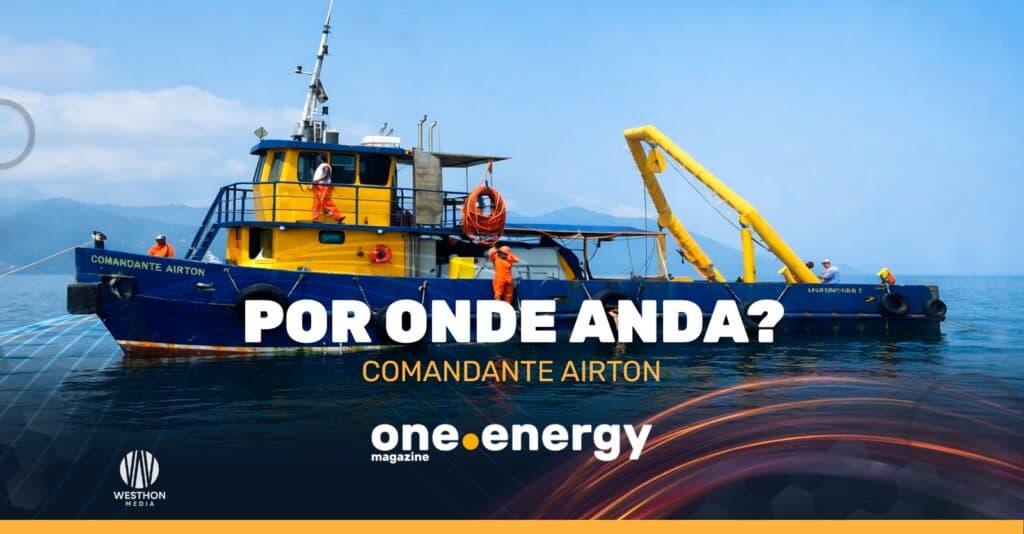
Comandante Airton was built in 2014. Steel hull. Twin Scania DSI 12 engines. 18.75 metres in overall length (LOA). Designed from the outset for one purpose: heavy-duty work.
Not to impress. Not to be the largest in the fleet. To work.
“This vessel is a phenomenon. It never breaks down. Perhaps the secret lies in the fact that it is always moving, always working. Just as the human body seizes up when sedentary, so does she. It is a source of pride for all of us,” says Diego Venturini, Commercial Director and partner at Umi San.
Classified as a tugboat, she operates offshore with a 15-day endurance, a cruising speed of 10 knots, and a 15-tonne lifting capacity through a stern A-frame that makes her surprisingly versatile for an asset of her size. The vessel is one of UMI SAN’s flagships — a company specialising in coastal navigation.
Registered under the Brazilian flag, MMSI 710005126, Comandante Airton currently operates within UMI SAN’s fleet, supporting maritime operations that include buoy installation and maintenance, diving activities, hydrographic surveys, and the towage of barges and submerged structures.
Certified by the DPC for diving operations under NORMAM 222. Equipped with a hyperbaric chamber and an onboard real-time data processing workstation.
A small vessel. A complete operational package.
But the story of Comandante Airton does not begin with the vessel. It begins with the man.
Who was Comandante Airton?
In 1999, Comandante Airton A. Rodrigues — freshly retired from the Brazilian Navy — decided not simply to leave the sea behind. He founded UMI SAN, a company whose name carries both a language and a purpose: umi, meaning “sea,” and san, meaning “master” in Japanese, combined with the acronym SAN — Serviços de Apoio à Navegação (Navigation Support Services).
In 2019, Comandante Airton Rodrigues passed away. In 2021, the vessel was incorporated into the fleet. The company he built kept sailing. The projects continue.
“This was the first vessel in Brazil to carry out a rock-breaking operation using diamond wire cutting, without the use of explosives,” says Venturini. The operation took place in Itaguaí, where legislation prohibited the removal of underwater rock formations through blasting.
And the fleet gained a name that was no longer merely operational.
Some vessels are given a simple name. Others are given one with weight, with history, with the quiet responsibility of representing something greater than steel and engines.
Comandante Airton is the second kind.
Every Thursday, a new Where Are They Now? — stay tuned.
This article was produced by Westhon Media for One Energy News.