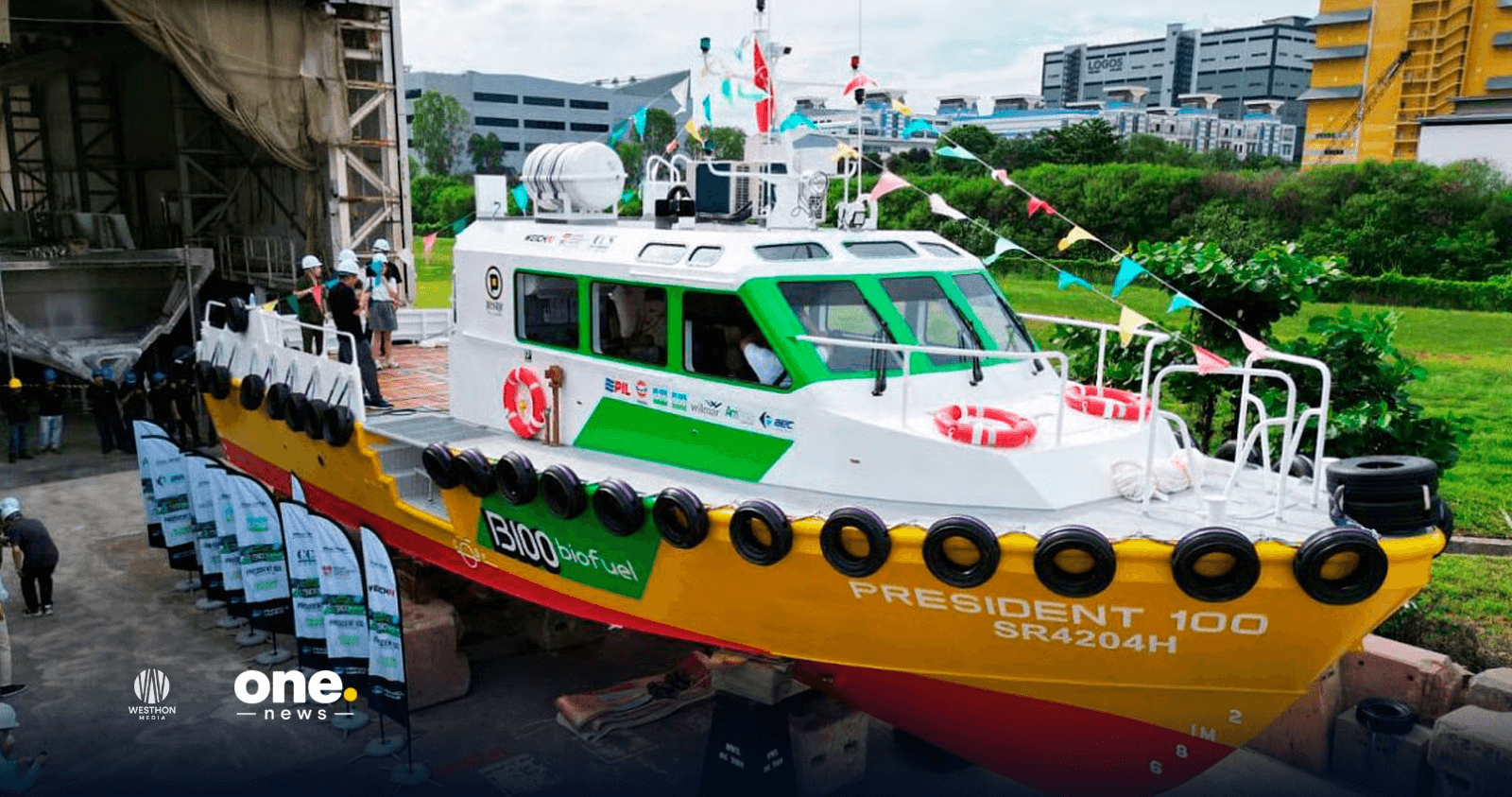
Singapore moves B100 from trial to fleet
A 1,000-hour trial using 100% biodiesel is beginning to translate into new vessels in Singapore.
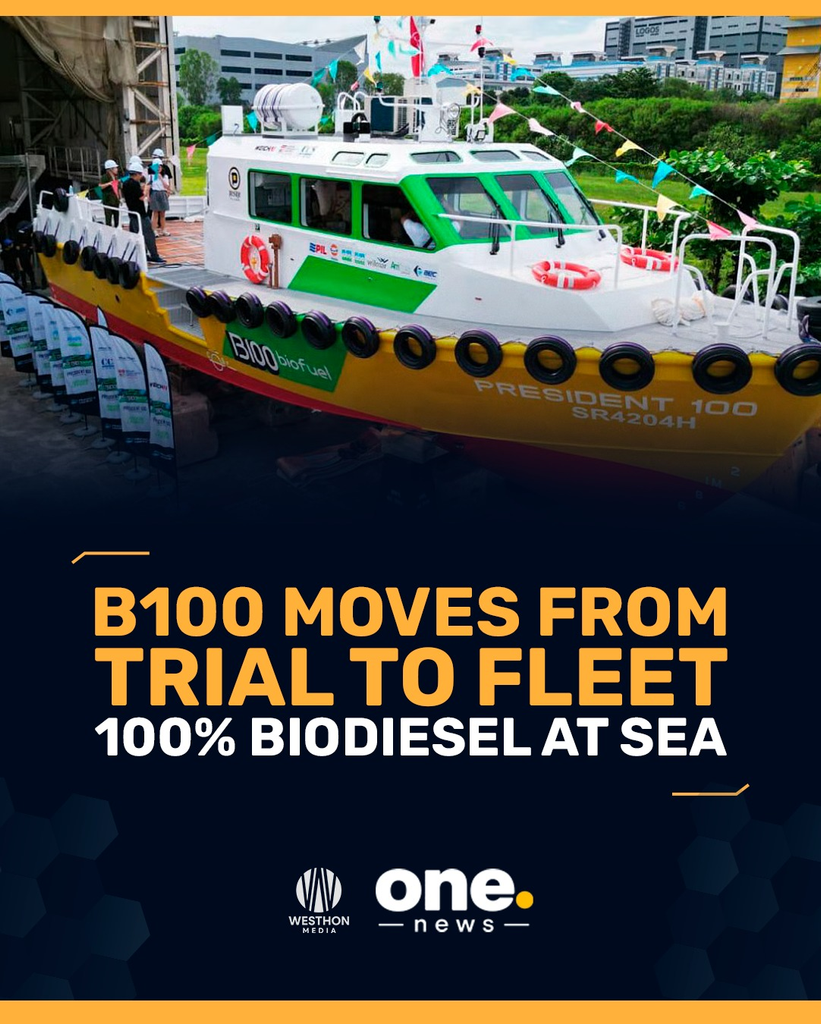
President 100, a 16-meter aluminium utility boat operated by Prestige Ocean, completed an operational trial running entirely on B100 biodiesel in Singapore waters. The programme began in July 2025 and was completed in January 2026.
Built by Pinnacle Marine, the vessel is equipped with two Weichai WP13C450-18BF main engines rated at 450 hp each and two 20 kW generator sets, with both propulsion and onboard power generation configured to operate on B100.
The importance of the project, however, may lie less in the vessel itself than in what happened after the trial.
In May, Pinnacle Marine announced plans to build a new series of larger, 20-meter B100-compatible utility boats, using the President 100 programme as part of the basis for the propulsion selection. The newbuild programme has since progressed through construction, although its configuration has been adjusted as the shipyard responds to operational requirements.
A further step came on October 2, when Pinnacle Marine launched Sea Horizon, another B100-compatible aluminium utility boat. Owned by Les Star, it is the first B100-compatible harbour craft in that company’s fleet and the second such vessel launched by Pinnacle following President 100.
The developments are taking place within a clear regulatory direction.
From 2030, all new harbour craft operating in the Port of Singapore will have to be fully electric, capable of using B100 biofuel or compatible with net-zero fuels. Singapore’s Maritime and Port Authority has also been working with the industry on technical standards for B100 use.
Brazil is also moving in this direction.
Changes introduced by the Fuel of the Future Law removed the requirement for prior ANP approval for several voluntary uses of biodiesel above the mandatory blend, including maritime and inland navigation, replacing it with a communication procedure in applicable cases.
ANP’s current records already list companies using B100 in aquatic applications. Wilson Sons, for example, communicated B100 use to the agency on September 24, following an earlier experimental authorization in 2025 that allowed up to 30,000 liters per month aboard one vessel. Navegação Aliança is also listed for B100 aquatic use.
The comparison is therefore no longer between a country using B100 and another simply considering it.
The difference is increasingly about how quickly regulation, operational testing and fleet investment begin to connect.
Singapore already has a completed 1,000-hour B100 trial, follow-on newbuild activity and a regulatory deadline that will require new harbour craft to adopt B100 capability, electrification or other net-zero-compatible solutions from 2030.
Brazil has started opening the regulatory and operational path as well.
The technology is no longer the only question.
President 100 has shown that a harbour craft can operate for 1,000 hours entirely on B100, and Singapore is now translating that experience into additional vessels.
For Brazil, the question may increasingly be less about whether 100% biodiesel can be used at sea and more about how quickly regulatory progress can be converted into vessels, fuel supply and everyday maritime operations.
This article was produced by Westhon Media for One Energy News.