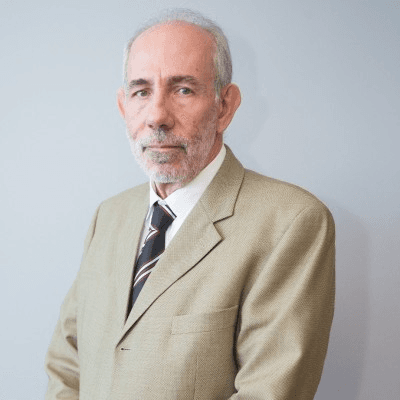
Energy Talks # 12 – Anídio Corrêa
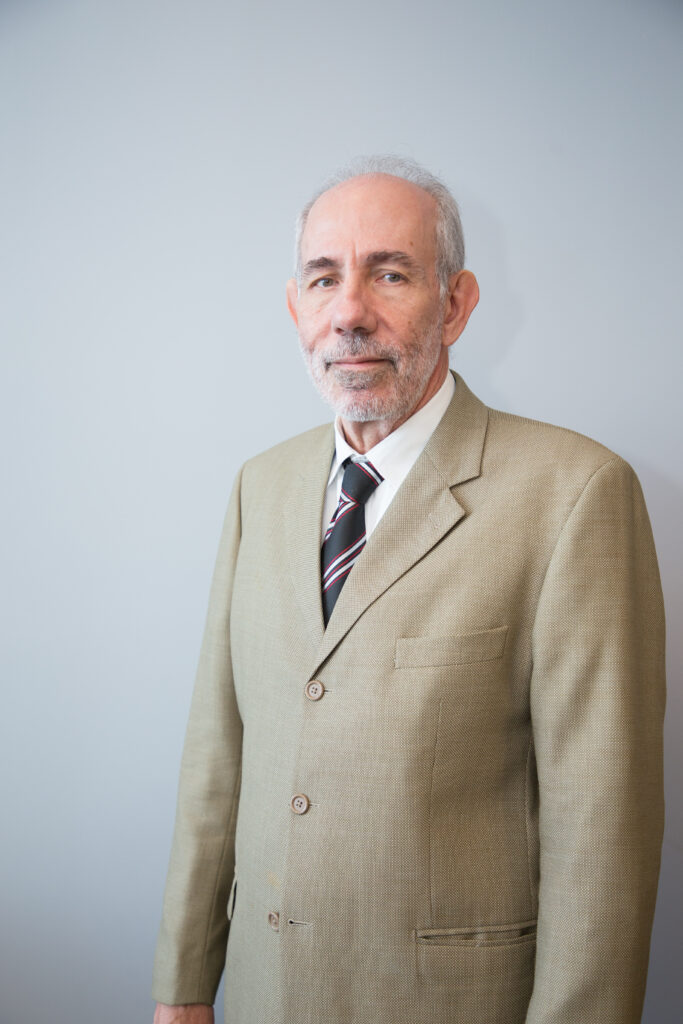
In this edition of Energy Talks featured in One.Energy Magazine, we have the pleasure of speaking with Anídio Corrêa, the R&D Environment Projects Lead at WSB Advisors. Anídio, a native of Rio de Janeiro, brings a rich background as a geologist to his current role where he is pivotal in steering WSB’s initiatives on sustainable and environmental projects. Today, he brings clarity to some of the pressing questions concerning the Brazilian Equatorial Margin, an area of increasing interest in the offshore industry.
To kick off our conversation, Anídio shares insights into his personal journey and professional path.
“I was born and raised in the vibrant city of Rio de Janeiro, a place where the pulsating energy of urban life meets the tranquility of nature. My passion for the outdoors began early. By the age of 14, I was already an avid hiker and climber, spending every possible weekend scaling the peaks around Rio or venturing to other towns in pursuit of new challenges. This deep connection with nature and my fascination with the earth’s structures fueled my decision to pursue a career in geology. The discipline perfectly melds my love for the outdoors with my curiosity about the planet’s geological puzzles.”
You began your higher education at the Federal University of Rio de Janeiro (UFRJ) but graduated from the Federal University of Bahia. Can you tell us what prompted this transition?
“Absolutely, the journey between these two universities was both eventful and transformative. During my third year at UFRJ, I was presented with an exceptional opportunity—a scholarship with Petrobras. This entailed spending 30 days offshore, split between two different drilling rigs. It was a profound learning experience, deeply enhancing my understanding of the Campos Basin’s geology and the day-to-day responsibilities of an exploratory geologist. This firsthand exposure to the offshore environment offered me a clear perspective on both the advantages and challenges of working for Petrobras in such capacities.
As my fourth year of college was drawing to a close, Petrobras announced a competitive selection process for 40 scholarships that required recipients to relocate to Salvador, Bahia. The program was structured to include the final year of geology studies at the Federal University of Bahia, coupled with a specialized course in petroleum geology. Successful completion of the program guaranteed employment with Petrobras. Having already gained a solid understanding of what the work entailed, I seized the opportunity, passed the exam, and moved to Salvador to complete my studies. This pivotal decision shaped my career path and led me to where I am today.”
How was the experience of “leaving home”? What professional and personal lessons did you draw from the year 1980?
“Leaving home” was an experience I had grown quite accustomed to by 1980, thanks to my earlier adventures, including a six-month exchange program in the United States when I was sixteen. This early exposure to different cultures and environments instilled in me a sense of independence and adaptability that would prove invaluable in my career and life.
Moving to Bahia for a year to complete my studies under a Petrobras scholarship was exhilarating. I shared a house, commonly referred to as a ‘república’ in Brazil, with five other students, all of whom were also preparing for careers at Petrobras. This arrangement not only provided a financially stable student life—thanks to our scholarships—but it also posed unique challenges and learning opportunities.
As the de facto manager of our household, I was responsible for budgeting, bill payments, and even managing household staff, which honed my organizational and leadership skills. Living with five other young men from diverse backgrounds taught me invaluable lessons in interpersonal relationships and conflict resolution.
Professionally, the rigorous academic environment demanded excellence, preparing me for the challenges of a career in geology. Personally, the vibrant social scene of Salvador, filled with constant festivities, taught me the importance of balancing hard work with leisure—an equilibrium that has enhanced my quality of life.
Ultimately, the year 1980 was transformative. It was a year of intense study, vibrant social life, and profound personal growth. Upon completing my studies, I chose to start my career with Petrobras in Macaé, allowing me to return to Rio and once again live with my parents, bringing my journey full circle with newfound skills and perspectives.
Many people are curious about what a geologist does at an oil company. Could you explain your role and experiences at Petrobras?
“In the realm of petroleum geology, there are essentially three primary roles: field geologists, exploration geologists, and reservoir geologists. Field geologists are stationed at the drilling sites, actively involved with the physical process of drilling. Exploration geologists analyze geological data to pinpoint prospective drilling locations in search of new oil deposits. Reservoir geologists, on the other hand, focus on understanding the rock properties of oil reservoirs to optimize recovery strategies.
At Petrobras, I started my career as a field geologist, spending five years working across various environments, from offshore platforms in the Campos and Espírito Santo Basins to onshore sites in Santos and Pelotas. My responsibilities included everything from mud logging and wireline logging to well testing and coring, as well as compiling detailed reports on these operations. This hands-on period was foundational, providing a deep dive into the operational side of oil exploration.
Subsequently, I transitioned to a role as a reservoir geologist based in Macaé, where I analyzed well log data and petrophysical information to identify the most productive intervals of the oil reservoirs. This role was crucial in designing effective extraction techniques and ensuring sustainable oil production.
You left Petrobras in 1987 and took a sabbatical to pursue personal projects and further studies. After a decade, you returned to the industry with roles at TotalEnergies, Shell, and again at Petrobras. What did you gain from these experiences?
“After departing Petrobras in 1987, I embarked on a family trading project. However, realizing my passion truly lay in geology, I returned to academia in 1998 to pursue a Master’s in Marine Geology and Geophysics at Universidade Federal Fluminense. This period was enriching, rejuvenating my expertise and broadening my horizons in geological science.
My return to the professional field was marked by a transition into environmental consultancy, particularly focusing on environmental licensing for oil and gas operations. This led to a role with Ibama, analyzing environmental impact assessments—a pivotal experience that sharpened my understanding of the environmental dimensions of oil exploration.
In 2005, I rejoined Petrobras through a competitive examination, only to be headhunted by Shell two years later to lead their environment and licensing department. This role offered significant challenges and learning opportunities, which continued when I moved to TotalEnergies under a similar capacity. My journey culminated in an R&D role at
TotalEnergies, focusing on environmentally sustainable research projects, before deciding to step back from the industry.
These diverse roles have not only broadened my expertise across different aspects of geology and environmental management but also underscored the importance of adapting to changing landscapes in both professional and ecological contexts.”
What are your challenges within WSB Advisors?
Joining WSB Advisors brings me a lot of challenges. Geology is far from the core business of the company. Nevertheless, my experience in the past years dealing with environmental licensing thought me a lot about vessels, their purpose, some of their characteristics and how they fit into the projects which are licensed by Ibama. In certain circumstances, Ibama inspects the vessels, mainly those to play a role in the emergency plan (PEI). Eventually, I can contribute with the preparedness of the vessel and the approach with Ibama, helping to clear an unexpected demand. I also foresee working with WSB Advisors on the design and formatting of environment related projects, which can bring new opportunities to the company as well as creating opportunities of new businesses in different areas. I believe that we will find synergies working together, generating new businesses and creating value for the company.
Read more here
This article was produced by Westhon Media for One Energy News.