Editorial: Brazil has spent decades financing ships. Perhaps it is time to start building shipowners
Also available in Portuguese
Editorial: Brasil passou décadas financiando navios. Talvez seja hora de começar a construir armadores.Read in Portuguese →Automatically generated translation; may contain errors.
The dispute surrounding Capital Marítima has exposed a question that reaches far beyond one company: whether Brazil’s maritime policy is preserving not only vessels and jobs, but also the entrepreneurs, intellectual capital and industrial capability required to sustain a genuinely national shipping industry
For generations, Brazilian shipping was shaped by companies closely identified with their founders: Wilson Sons; CBO under the Fischer family; São Miguel and Bravante under Marcelino and Renato Nascimento following their father; Comte Matos and William, Astromaritima; Camorim; and, more recently, OceanPact and Posidonia. Despite different histories and business models, they accumulated something more important than vessels alone: Brazilian entrepreneurial, technical and institutional capital.
Operating in Brazil required knowledge of Petrobras and international oil companies, shipyards, banks, ANTAQ, the Navy, unions, crews and repeated market cycles. Mobilisation failures, vessel downtime, financial crises and regulatory changes produced experience that remained within the country. This intangible capital, commercial credibility, engineering judgement, institutional memory and operational discipline, is difficult to value, but it is what distinguishes an established shipowner from a newly incorporated vehicle that merely controls a fleet.
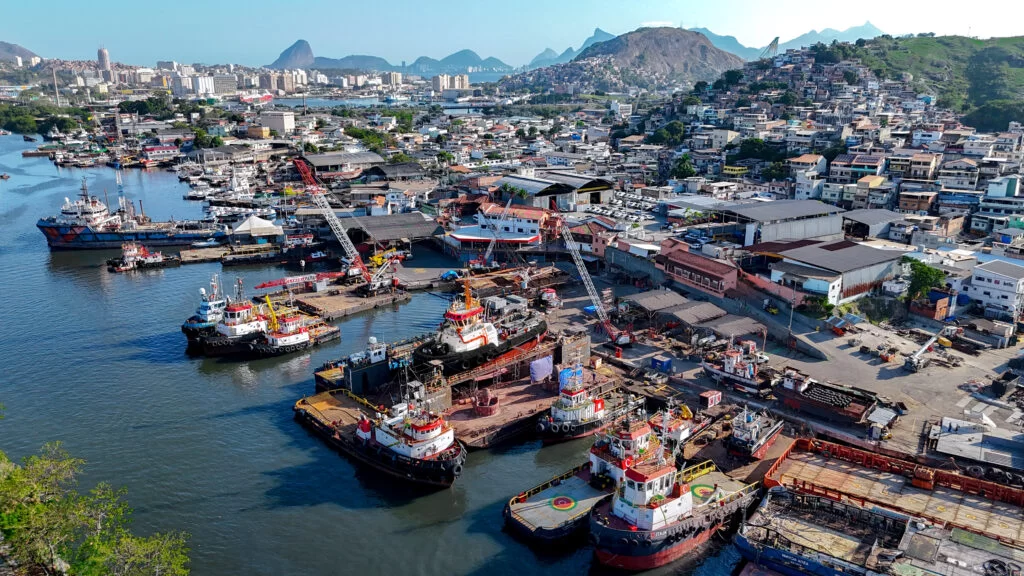
Over the past two decades, the Brazilian market has changed, drastically. International investors, foreign shipping groups and private equity have expanded, while Brazilian operators have increasingly been acquired or integrated into structures spanning several jurisdictions. More sophisticated financing and ownership arrangements are not inherently negative. Shipping depends on global capital, technology and expertise, and Brazil should continue to welcome international organized and transparent participation.
The strategic question is whether the country is also preserving its capacity to create and strengthen Brazilian shipowners, and reserving due care to investigating the foreign entities involved. A nation can finance vessels, generate contracts and maintain employment while gradually transferring decision-making, intellectual property, commercial relationships and accumulated expertise abroad. Ships may continue to fly the Brazilian flag even as the industry’s economic and intellectual substance migrates elsewhere.
Capital Marítima offers a visible example of this broader issue, not because foreign ownership necessarily causes poor governance, but because the dispute has shown how uncertainty over control, authority, assets and responsibility can quickly affect employees, clients, suppliers, vessels and commercial relationships built over years.
A dispute that escaped the boardroom
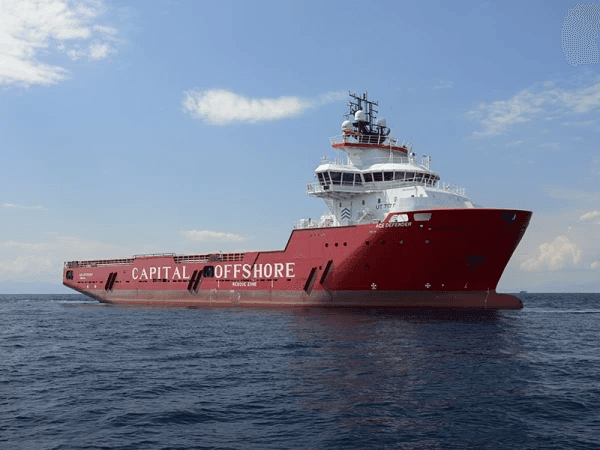
Capital Marítima developed from Embrareb, a Brazilian company associated with entrepreneur Plínio Calenzo, and later came to include Constance Maritime, incorporated in Monrovia, Liberia, alongside interests commercially associated with the Capital Offshore name. What might ordinarily have remained a dispute over shares, management and corporate authority soon reached the company’s workforce, commercial counterparties and vessel operations.
Negotiations with shore-based employees have progressed since One Energy first reported on the dispute, and some workers indicated their willingness to accept a settlement proposed by the company. At the time of publication, however, the agreements had not yet been formally executed by the administration. The immediate tensions may have eased, but the company’s institutional position remains unsettled. Further, the technical challenges surrounding the ACE Defender with Petrobras and the Brazilian Navy have come to a halt.
The situation became more serious in labour proceedings involving the ACE Defender, when the court ordered the arrest of the vessel after considering the risk that a future judgment might be difficult to enforce, particularly in light of the assets available in Brazil and the opacity attributed to the corporate structure supporting the operation. Petrobras, as the recipient of the vessel’s services, was also instructed to make a judicial deposit up to the value claimed.
The arrest does not constitute a final finding of liability. It does, however, reveal a practical concern: when a vessel operates in Brazil but ownership, management, employment, financing, guarantees and material assets are distributed abroad, the reach of Brazilian jurisdiction may be less secure than the obligations created within the country. The same weakness that may prevent an employee from recovering a legitimate indemnity can affect suppliers, creditors and commercial partners attempting to enforce guarantees or contractual rights against foreign group assets.
The corporate dispute has also entered arbitration. After being informed that an emergency arbitrator had been appointed, the 7th Corporate Court of Rio de Janeiro suspended an Extraordinary Shareholders’ Meeting intended to consider claims against shareholders and administrators. The judge concluded that prudence required avoiding further escalation until the appropriate arbitral forum had been established and prospectively set aside the effects of any resolution adopted in breach of the order, which was followed by the arbitrator.
The decision neither settles the control dispute nor invalidates every act of the administration currently in place. It confirms, however, that the company’s governance remains contested and subject to interim measures while arbitration proceeds.
The sequence bears some of the characteristics of an aggressive takeover: provisional authority is obtained, operational and commercial channels are occupied rapidly, and practical consequences emerge well before the legal dispute can be finally resolved. Whether this was a deliberate strategy in the Capital case is for the courts and the arbitral tribunal to determine. What is already evident is that those assuming control appear not to have anticipated the commercial damage caused by acting before authority, representation and stakeholder relationships had been stabilized.
A more experienced maritime transition would ordinarily seek to preserve continuity while the shareholder dispute proceeded in parallel. Instead, relationships and opportunities developed over years were exposed to immediate disruption. One Energy has confirmed that a major international client requested documentary confirmation of the authority of Capital Marítima’s current controllers on an ongoing competitive process. The required confirmation was not produced within the requested timeframe, and negotiations involving offers that had already reached the award stage were terminated.
That episode shows how quickly provisional corporate power can destroy permanent commercial value. Often clients cannot wait for arbitration. They must secure tonnage, preserve schedules and manage risk, and they will usually move to another option when representation or vessel availability cannot be confirmed.
What Brazil loses when it loses a shipowner
The significance of the Capital case extends beyond the dispute itself. It brings into view the internationalisation not only of capital and control, but also of industrial knowledge, commercial intelligence and entrepreneurial capability.
Brazilian maritime policy has historically concentrated on tangible assets: domestic construction, Brazilian-flag tonnage, REB registration, local content and financing through the Merchant Marine Fund. These instruments remain important, but ships alone do not create shipowners.

A maritime company depends on accumulated capital, access to charterers, regulatory knowledge, engineering capability, financial expertise, experienced management and the ability to survive long periods of weak markets. This capability resides in people, systems, relationships and judgement, and it takes years to develop.
Every contract performed in Brazil produces knowledge. Vessel data is collected, maintenance systems are refined, crews gain experience, engineering solutions are developed and commercial teams learn how particular clients assess risk. The strategic question is who retains and monetises that knowledge.
When a Brazilian operator is absorbed into an international group, its legal entity may remain in the country while procurement, engineering, financial strategy, operational data and client relationships become centralised abroad. Brazilian workers continue to perform the activity, but the higher-value capability created by their experience may no longer accumulate within a Brazilian enterprise.
This transformation is rarely dramatic. It occurs through acquisitions, management agreements and the gradual migration of strategic functions. The country continues to host vessels and crews while losing the capacity to create companies that control technology, capital and international expansion. Losing a shipowner can therefore mean losing an ecosystem of knowledge assembled over an entire generation.
The unequal cost of building a shipowner
The imbalance becomes clearer when the conditions faced by Brazilian entrepreneurs are compared with those available to international competitors. Local companies operate with expensive capital, volatile exchange rates, complex taxation, demanding collateral requirements and recurrent regulatory and judicial uncertainty. Offshore assets require substantial investment, while the revenue supporting them depends on contracts that may be delayed, contested or terminated.
International groups often enter Brazil with access to deeper capital markets, export-credit agencies, established banking relationships and fleets capable of spreading risk across several regions. They may use cash flow generated elsewhere to acquire Brazilian companies or assets precisely when local operators are financially vulnerable.
Competition therefore takes place not only between companies, but between national industrial ecosystems.
When a foreign group acquires a Brazilian operator, it may gain approved-vendor status, licences, local registrations, trained personnel, regulatory knowledge and access to commercial relationships developed over many years, notwithstanding the extremely competitive financing mechanisms available – while they can present foreign guarantees. The Brazilian entrepreneur often created these assets under far less favourable financial conditions.
The result is unlikely to be the disappearance of maritime activity from Brazil. The market is too attractive. The quieter consequence is that Brazilian entrepreneurs may increasingly become minority partners, local representatives or service providers within structures financed and controlled elsewhere. Brazil preserves the operations while losing more of their economic ownership.
That outcome should not be blamed on foreign investors, who are acting,most of the time, rationally. It is principally a policy question. Other countries support the international expansion of their maritime companies through finance, guarantees, taxation and coordinated industrial policies. The absence of comparable support in Brazil is itself a choice, and it generally favours those arriving with the strongest backing.
Partnership requires substance
Brazil does not need to choose between domestic entrepreneurship and foreign investment. It needs partnerships that strengthen both. International groups can bring scale, technology, financial discipline and improved operating standards, but the local side should not be reduced to providing licences, market access and execution while the strategic value is accumulated elsewhere.
A country should defend its own entrepreneurs in partnership with the world; it should not merely defend the world’s entrepreneurs through partnerships with its own.
This does not justify protecting inefficient companies simply because they are Brazilian. Public support should require transparency, sound governance, safety, investment and the creation of lasting domestic capability. Nor should foreign-controlled groups be presumed less committed to Brazil, unless they really are. The relevant distinction is not nationality alone, but economic substance, accountability and contribution to the local industrial base.
Brazil should aim not only to host international shipowners, but also to create Brazilian companies capable of becoming international shipowners themselves.
Financing companies, not only ships
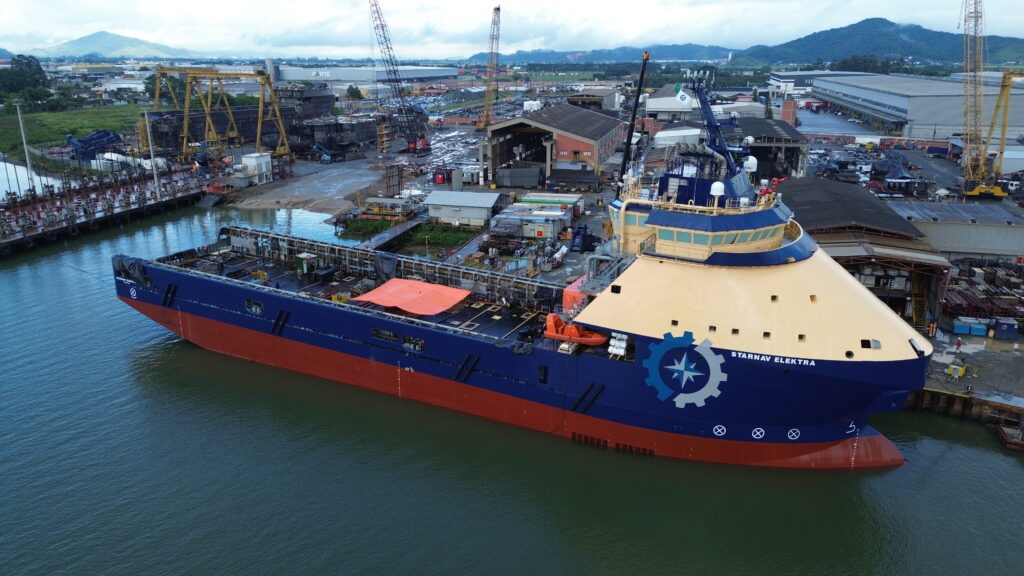
For decades, Brazilian maritime policy treated the construction and financing of vessels as its central challenge. The logic was reasonable: domestic orders would create employment, engineering capability and an industrial supply chain. But financing a vessel does not necessarily create a sustainable shipowner. Maybe it better benefits an existing and capitalized one, and not local.
The company must also possess working capital, commercial strength, governance and the balance sheet required to absorb delays, cost overruns, technical failures and periods without revenue. A vessel depreciates; a successful shipowner can accumulate value through credibility, systems, knowledge and access to progressively better financing.
The most valuable outcome of public support should therefore be an enterprise capable of ordering its next vessel with less dependence on the same support. Brazil should measure not only how many ships were delivered, but how many stronger, more transparent and internationally competitive companies were created. And to start, they must created from zero.
That requires policy instruments directed at the enterprise itself: competitive capital, guarantees, governance standards, technology, data, management development and support for international expansion. Shipbuilding and entrepreneurial formation should be parts of the same strategy.
What should count as a Brazilian shipping company?
The transformation of the sector also raises a regulatory question. The current definition of a Brazilian Shipping Company places considerable weight on incorporation, authorisation, flag, registration and tonnage. Those criteria remain relevant, but they may no longer be sufficient measures of national economic substance.
A company may be incorporated in Brazil, employ Brazilian crews and operate Brazilian-flagged vessels while its decision-making, guarantees, intellectual property and strategic assets remain abroad. Another may receive foreign capital while retaining management, technical capability, assets and reinvestment substantially in Brazil. Formally similar companies may therefore contribute very differently to national development and present different levels of accountability before Brazilian jurisdiction.
A modern framework should not rely on crude ownership restrictions. It could instead consider transparency of ultimate ownership and everything in-between, the location of effective management, the availability of assets and guarantees in Brazil, the authority of local administration, reinvestment, professional training, research and development, and the participation of Brazilian entrepreneurs in economic decision-making.
The purpose would not be to exclude internationally controlled companies, but to align access to public support, strategic protections and preferential financing with verifiable economic substance.
Capital Marítima does not answer this debate, and its dispute should not be used to generalise about every foreign-linked operator. It does, however, show how quickly uncertainty over place, control, authority and assets can affect workers, courts, clients and commercial partners, and how an aggressive transition under provisional authority can destroy value before the underlying legal dispute reaches a final outcome.
More than a maritime market
Brazil must decide what it expects from maritime policy. If the objective is merely to ensure the availability of vessels, international capital can provide them whenever demand and contract terms justify the investment. Sort of what is happening now with larger demand and the ageing fleet. If the country also wants to preserve national industrial capability, its policies must support companies that retain technical knowledge, financial substance, commercial intelligence and effective decision-making in Brazil.
This does not require protectionism. It requires incentives and standards that distinguish between structures that merely use Brazilian registrations, contracts and flag arrangements and those that build durable companies, skills and accountability within the country.
The Capital Marítima case does not resolve this question, but it illustrates the cost of ignoring it. When control, assets, guarantees and authority are distributed across jurisdictions, a shareholder dispute can quickly affect vessels, employees, clients, suppliers and contracts. Formal Brazilian status alone does not ensure operational continuity or effective accountability.
Brazilian policy has spent decades addressing how ships should be financed. Its next challenge is to create competitive shipowners capable of attracting international capital, retaining industrial knowledge, answering effectively to Brazilian jurisdiction and expanding beyond the domestic market. That is the practical distinction between remaining a maritime industry and becoming merely a maritime market.
Editor’s note: One Energy has sought comments and documentary clarification from Capital Marítima, Constance Maritime and representatives associated with the administration currently in place. The publication remains open to further documents, clarification and the exercise of the right of reply. Interim court orders, labour claims and arbitral proceedings do not constitute final findings of liability, and all persons and companies mentioned remain entitled to due process and a full opportunity to present their position.
This article was produced by Westhon Media for One Energy News.