Bareboat on paper, manager on deck: What exactly makes Petrobras an EBN?
Also available in Portuguese
Bareboat no papel, gerente no convés: O que faz da Petrobras uma EBN?Read in Portuguese →Automatically generated translation; may contain errors.
Petrobras’ latest PSV tender may be entirely lawful. It is also a remarkably good test of the distance between regulatory status and operating reality.
Petrobras has clarified the rationale behind Opportunity 7004598410, covering the bareboat charter and technical management of a PSV 3000.
The explanation closes one question and opens a much better one.
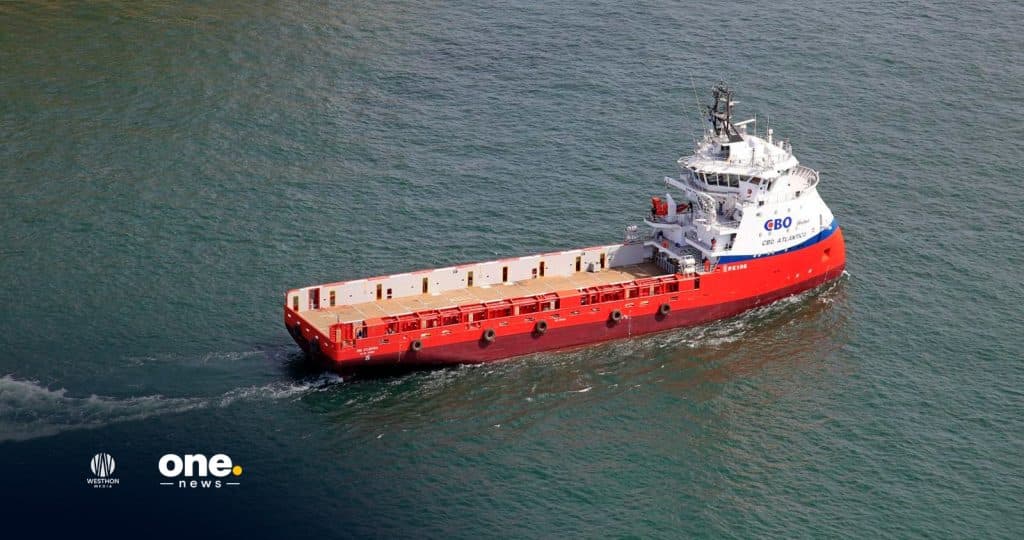
According to Petrobras, the structure is required to maintain the company’s status as an Empresa Brasileira de Navegação, or EBN. The new PSV will replace a vessel already serving the same purpose under the same contractual model, while also performing ordinary offshore logistics work.
So, first things first: this is not necessarily another PSV being added to Brazilian demand. It is principally a replacement—and, at least in part, a regulatory one.
But what exactly is Petrobras replacing?

Brazilian law does not require an EBN to own its qualifying vessel. Under Law 9,432/1997 and ANTAQ Resolution 133/2025, an EBN may operate with owned or chartered tonnage. It must, however, keep at least one suitable vessel equipped and in commercial operation in the authorised navigation segment.
Petrobras does not appear to be using an owned PSV to satisfy that requirement. Its solution is a bareboat charter.
That is perfectly legitimate.
It is also where the paperwork stops being boring.
A bareboat charterer must hold possession, use and control of the vessel, including the right to designate its master and crew. ANTAQ further says that this control includes both commercial and nautical management.
Yet Petrobras is also procuring a technical manager to supply the maritime organisation, expertise and personnel required to run the PSV.
This can be valid. The manager may execute the work as Petrobras’ agent while Petrobras retains authority, responsibility and the final word.
But there is a difference between delegating the work and delegating the control.
That is why the separation between vessel owner and technical manager matters. If the owner delivers a “bare” vessel and then recovers its operation through an affiliated company, the structure could begin to resemble a time charter wearing a false moustache.
Using separate companies makes the distinction clearer. It does not, however, settle the matter by itself.
Two contracts are not magic.
Companies from the same economic group do not automatically establish simulation. Unrelated companies do not automatically exclude it. What matters is who actually appoints the master, directs the manager, controls maintenance and safety decisions, assumes the liabilities and has the final word onboard.
Those answers identify the operator—not the procurement title or the logos on the contracts.
Nothing presently available proves that the Petrobras structure is unlawful. But the tender exposes a legitimate question: is an EBN a company that operates vessels itself, or one that maintains legal control while contractors provide virtually all the operating capability?
For the PSV market, the immediate answer is simpler. Petrobras says the vessel will replace an existing unit and that time charter remains its normal model for other offshore-support requirements. Opportunity 7004598410 should therefore not be counted as straightforward incremental demand.
The wider issue is more interesting.
Brazil is again building vessels. But building vessels is not necessarily building shipowners.
This PSV will sail. A technical manager will run it. Petrobras will retain the bareboat charter and its EBN status.
The law may be satisfied.
The question is whether Brazil is developing genuine shipping capability—or merely becoming very good at maintaining shipping licences.
We explored this wider contradiction in the featured article of the latest edition of One Energy News Magazine: “Brazil is building vessels—but is it building shipowners?”
https://westhon.com/magazines/one-energy-magazine-issue-no-19-2026
At the time of writing, proposals for Opportunity 7004598410 are due on 4 September 2026.
This article was produced by Westhon Media for One Energy News.