
Glória Maria Rocha Leão
Just Call Me Maria. There's Enough Glory in This Industry Already.
Also available in Portuguese
Pode me chamar de Maria. Glória já existe demais neste mercado.Read in Portuguese →Automatically generated translation; may contain errors.
By Glória Maria Rocha Leão | One Energy News
The Weight of a Name
My name is Glória Maria Rocha Leão. But please, just call me Maria.
It’s not that I have anything against Glória. My parents gave me that name, and I’ve always been rather fond of it. But after spending so many years navigating the world of ships, offshore platforms, shipowners and executives, I’ve come to realise that glory is something far too many people chase and remarkably few know how to handle.
I prefer Maria. It’s simpler. Lighter. And, frankly, after carrying a name like Rocha Leão around for most of my life, something had to give.
When I first went to sea, back in the days when having a woman on board was still something of an extraordinary event, hardly anyone used my first name. I was simply Rocha Leão.
Picture the scene. A captain would be told that Rocha Leão was coming aboard. Naturally, he would imagine some enormous fellow, shoulders like bulkheads, arms like a dockworker’s, and the sort of man who might casually lift an anchor without troubling the windlass.
And then I would turn up.
A rather frail, painfully thin young woman, thin enough to raise genuine concerns about whether anyone had been feeding her, with long, curly, jet-black hair and eyes so dark you could barely distinguish the pupils from the irises.
My father used to call me his little jabuticaba eyes, after those glossy black Brazilian berries.
Perhaps that’s why I learned so early in life that appearances, particularly in shipping, can be wonderfully misleading.
The Sea Teaches. Vanity Gets in the Way.
I’ve spent a good part of my life moving between tankers, gas carriers, offshore support vessels and the offices where decisions about all of them are made.
I’ve known remarkable captains, seafarers who understood more about life than many company presidents, and executives who were practically walking encyclopaedias.
I’ve also met an astonishing number of people who were utterly convinced of their own importance.
Shipping is rather peculiar that way. It’s an industry dealing with enormous forces, considerable risks and extraordinary amounts of money. Perhaps that’s why some people eventually begin confusing the size of the ships they manage with the scale of their own significance.
Over the years, I’ve learned that experience doesn’t need an introduction. Those who know, know. And those who constantly remind everyone how much they know are often still trying to convince themselves.
Somewhere along the way, Glória gradually faded into the background, and Maria began to emerge.
These days, after so many years, I have little interest in impressing anyone. I’d much rather listen. Observe. Talk. And, above all, remember.
Oh, my dears, the things I remember!
I have friends in practically every corner of this industry. People who started out on deck and now run entire fleets. People who once owned empires and are now looking for jobs. People who bought ships for next to nothing and later sold them for fortunes.
And, of course, I know a few who managed precisely the opposite.
That’s the world I’d like to share with you.
Don’t expect corporate press releases dressed up as opinions. Nor will I pretend to get everything right. Anyone who relies on waterfront conversations knows that occasionally a good story arrives on the wrong tide, and even the best-informed among us can miss the mark.
When that happens, I’ll have no trouble admitting it.
Vanity, remember? That’s precisely what I decided to leave behind.
The Price of Steel and the Value of Time
And since we’re talking about people who know how to buy and sell ships, I couldn’t possibly launch this column without mentioning a deal that’s been stirring up some rather interesting conversations.
OceanPact, following its combination with CBO, announced an agreement to sell two PSVs, CBO Energy and CBO Wiser, for no less than US$43 million apiece.
Eighty-six million dollars for two vessels.
A splendid deal, by any measure.
The vessels had been acquired some years earlier, under rather different market conditions, reportedly for less than US$18 million each.
Anyone who’s been around shipping long enough knows there’s nothing particularly revolutionary about this. The Norwegians, especially, have turned the art of buying vessels at bargain-basement prices and selling them when the market turns into something approaching a national sport.
The famous flip.
And why not? Good for them.
But there’s one detail that makes this particular transaction especially interesting.
The price.
Forty-three million dollars for a second-hand PSV puts the transaction uncomfortably close to what certain brand-new PSVs can cost when delivered from Chinese yards, sometimes with even more sophisticated specifications.
Of course, there’s something the old hands in shipping understand very well: the value of time.
A ship available today may be worth considerably more than a brand-new one that won’t leave the yard for another two years. Particularly when there’s a charter waiting for her.
And that, my dears, is where the story starts getting delicious.
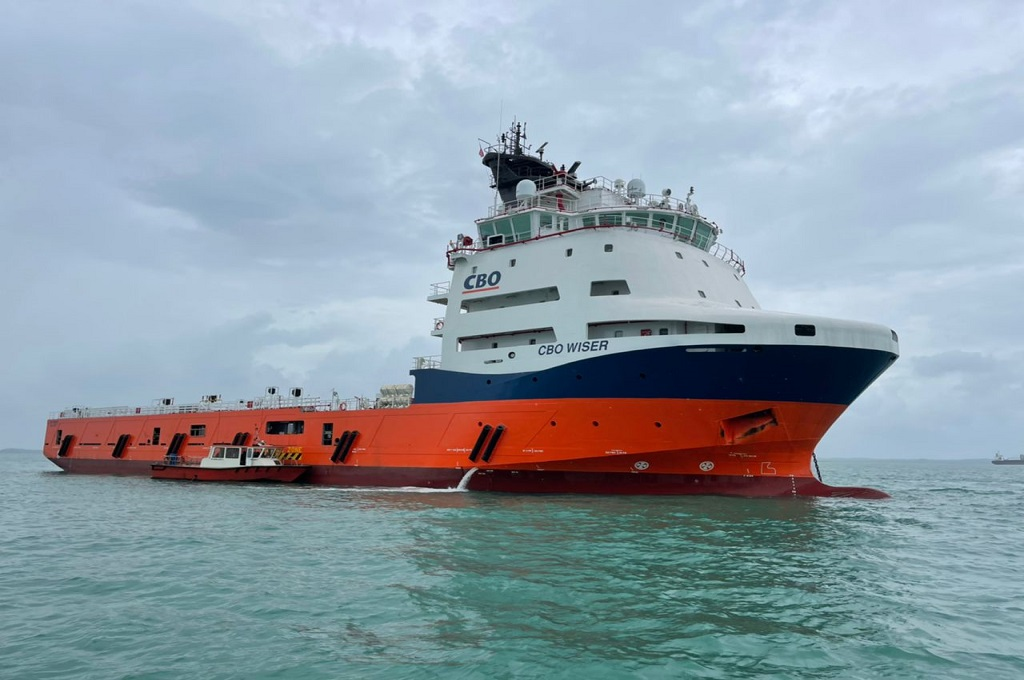
Does the Buyer Know Something We Don’t?
The buyer’s identity has yet to be officially disclosed.
But a few whispers reaching my ears point towards a familiar European shipowner. One of those companies that went through some rather difficult years, emerged from a painful financial restructuring and now seems determined to reclaim its place in the sun.
A company that has always had a particular fondness for PSVs.
Think of it as Europe’s answer to Tidewater.
I won’t give you the name. Not just yet.
What I’m hearing is that these vessels may already have somewhere to go, possibly connected to a contract opportunity in waters where a North American competitor has long felt very much at home.
If that’s true, things become even more intriguing.
Because paying forty-three million dollars for a used PSV may be a perfectly rational decision when you know exactly what the contract she’s about to service is worth.
Or it may be an extraordinary display of confidence in a market that has played some rather cruel tricks on even the most experienced shipowners.
Next time, I promise we’ll have a closer look at that almost irresistible urge some owners seem to have to pay a small fortune simply to get somewhere before everyone else.
And please, don’t misunderstand me. I’m certainly not talking about the seller.
Flávio Andrade appears to have chosen a rather magnificent moment to strike an excellent deal.
Touché, Flávio Andrade!
It’s the other side of the table that has caught my attention.
Because in the offshore business, buying well is an art. Buying dear requires a very particular kind of conviction.
And sometimes, while everyone is admiring a clever move, nobody notices what’s happening to the queen.
But on the other side of the chessboard… is the queen about to fall?
Until next time, my dears.
Maria.
Because, frankly, there’s already more than enough glory in this industry.
This article was produced by Westhon Media for One Energy News.