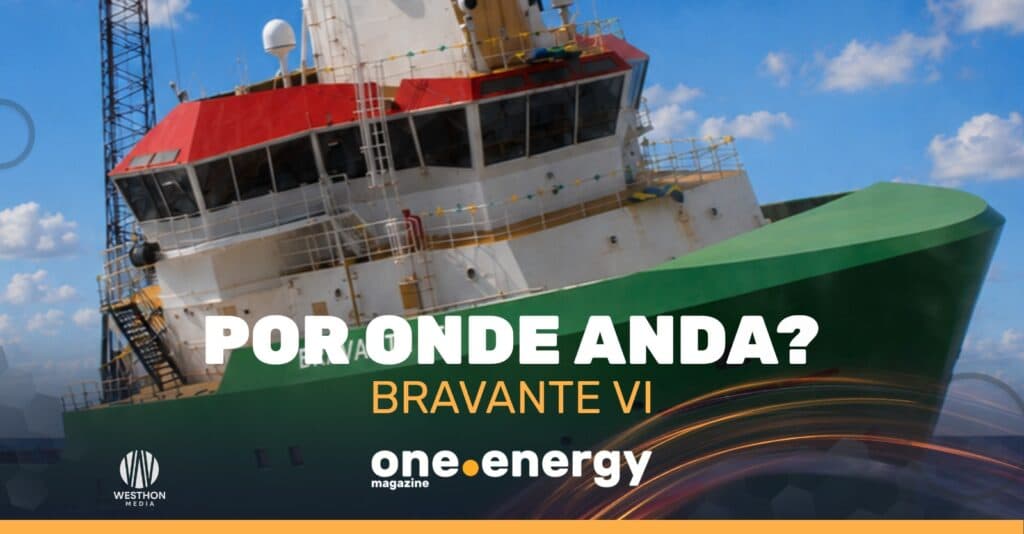
Por onde anda? Bravante VI
Automatically generated translation; may contain errors.
The former Brazilian PSV now operating as a Service Operation Vessel in the United States.
The Bravante VI (IMO 9645621) followed a path that differs from most of the vessels featured in this series.
Built in 2014 by Eastern Shipbuilding Group in Florida, the vessel was delivered to Boldini S.A., a company of Brazil’s Bravante Group, as a Platform Supply Vessel (PSV) designed to support the Brazilian offshore market.
Measuring approximately 92 metres in length, with an 18-metre beam and DP-2 dynamic positioning, she was designed to transport cargo, equipment and supplies to offshore installations. At the time, Brazil was experiencing one of the strongest periods of demand for offshore support vessels, driven by Petrobras’ expanding offshore activities and the rapid development of the pre-salt fields.
That scenario, however, changed quickly.
From 2014 onwards, reduced Petrobras investment, the impacts of the Lava Jato investigations and an oversupplied OSV market triggered one of the most challenging periods ever faced by Brazil’s offshore support industry. Several shipowners underwent financial restructuring, contracts were terminated and part of the fleet was either sold or redeployed to other regions.
Bravante VI became part of that movement.
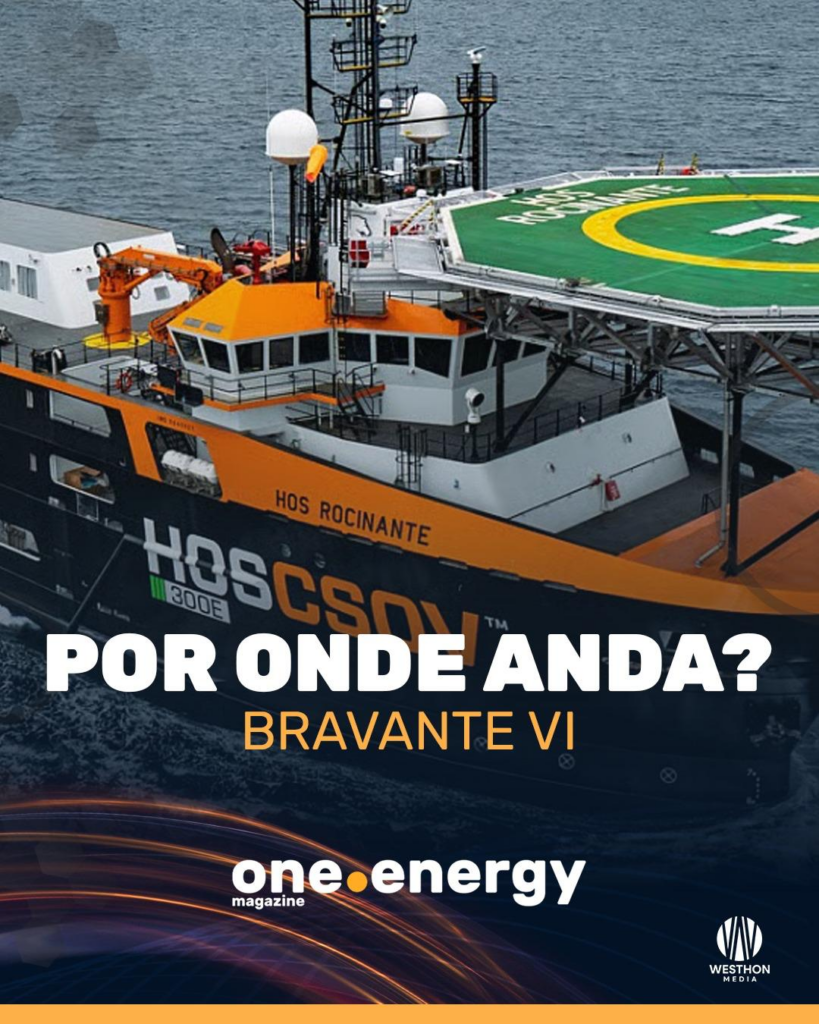
In 2022, the vessel was acquired by Hornbeck Offshore Services, one of the leading offshore vessel operators in the United States. Initially renamed HOS Rosehill, she returned to the same shipyard where she had been built for an extensive conversion project. Before re-entering service, she received her current name: HOS ROCINANTE.
The conversion
Rather than continuing to operate the vessel as a conventional PSV, Hornbeck chose to convert her into a Service Operation Vessel (SOV) — a category also commonly referred to as CSOV within the offshore wind sector.
The project was carried out by Eastern Shipbuilding Group, the vessel’s original builder.
While retaining the original hull, the conversion substantially changed her operational profile. The vessel received a motion-compensated walk-to-work gangway, a hybrid battery system, accommodation for up to 119 personnel, an S-92-certified helideck, a 3D motion-compensated offshore crane and infrastructure designed to support extended offshore campaigns.
The former PSV was adapted to perform a completely different role, providing technical support, accommodation for specialised crews and safe personnel transfer during offshore operations.
According to Eastern Shipbuilding Group and Hornbeck Offshore Services, HOS ROCINANTE is the first U.S.-flagged SOV converted from an existing offshore support vessel.
Where is she now?
Today, the former Bravante VI operates as HOS ROCINANTE, remaining in the Hornbeck Offshore Services fleet and operating along the U.S. East Coast.
Recent public vessel tracking records indicate her involvement in activities supporting the Revolution Wind offshore wind project. Her trajectory also reflects significant changes in two different offshore markets.
By the time she left Brazil, the country’s offshore support sector was still recovering from one of its deepest downturns, with limited demand for walk-to-work vessels. Investment remained largely focused on PSVs, AHTSs, RSVs and MPSVs supporting conventional oil and gas operations.
In the United States, meanwhile, the expansion of offshore wind projects has created demand for vessels capable of accommodating specialised personnel, providing safe offshore personnel transfers and supporting extended offshore campaigns.
Hornbeck’s decision also reflects a broader strategy that has become increasingly common across parts of the maritime industry. Rather than investing in a newbuild, the company selected a relatively modern hull, already built in the United States and compliant with the Jones Act, reducing delivery time, capital investment and project risk compared with commissioning a completely new vessel.
The former Bravante VI therefore reflects three important developments over the past decade: the contraction of Brazil’s offshore support market, the international redeployment of offshore assets and the growing demand for specialised support vessels serving the U.S. offshore wind industry.
It remains to be seen whether this project will remain an isolated case within the U.S. fleet or become a reference for future conversions of similar offshore vessels.
This article was produced by Westhon Media for One Energy News.