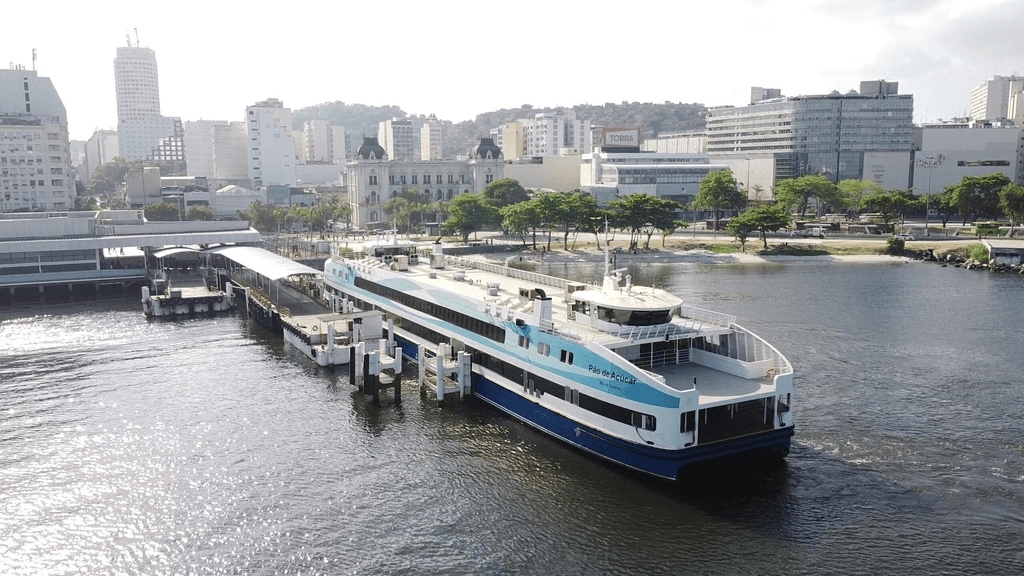
Rio–Niterói Ferries:
Tradition, Mobility and a New Chapter in 2025
It is impossible to talk about waterborne transportation in Rio de Janeiro without mentioning the Ferries — the popular name for the four lines connecting the city to the neighboring municipality of Niterói.
The main route connects Praça XV, in downtown Rio, to Araribóia, in downtown Niterói, covering 5 km. Primarily used by workers and students, the line operates daily, including holidays, from 5:40 a.m. to 11:30 p.m., with average intervals of 20 minutes.
In addition to this crossing, the Ferries also serve the Charitas neighborhood in Niterói and the Rio de Janeiro neighborhoods of Ilha do Governador and Paquetá. The Praça XV–Araribóia route has historically been the busiest, playing a key role in mobility between the two cities — especially before the Rio–Niterói Bridge opened in 1974.
The crossing between downtown Rio and Niterói takes an average of 22 minutes and offers passengers a privileged view of Guanabara Bay, where drilling rigs and OSVs (Offshore Support Vessels) can be seen operating at close range. The other routes can take up to an hour, and not all of them operate on weekends and holidays.
Currently, 14 vessels operate across the four lines, with capacities ranging from 237 to 2,000 passengers. Full details are available in the table at the end of the article.
190 Years of History and a New Operator
Passenger transportation by vessels of this type will complete 190 years in October 2025 — a year that also marks an important transition. After 27 years under the management of CCR Barcas, the concession was transferred to Barcas Rio, formed by four companies in partnership with the Government of the State of Rio de Janeiro.
One of the new operator’s first measures was a significant reduction in fares. On the main Praça XV–Araribóia route, the fare costs a maximum of R$4.70. In addition, the operator has promised improvements to vessel air conditioning and the maintenance of accessibility for people with disabilities (PCDs).
Mobility, Sustainability and Tourism
More than simply a means of transportation, the Ferries play a strategic role in urban mobility. Recent studies point to a reduction in the use of individual vehicles and a considerable increase in passenger numbers: approximately 55,000 people use the service every day, compared with 45,000 recorded the previous year.
Another highlight is the promotion of cycling. The vessels allow passengers to bring bicycles on board free of charge, serving as a natural extension of the existing cycling infrastructure in both cities.
The Ferries also contribute to tourism. Every day, visitors from Brazil and abroad use the service to explore the surrounding area. Schools often take students to visit Niterói’s historic center, encouraging learning through first-hand experiences.
In addition, the Ferries are the only form of public transportation connecting Paquetá Island to the rest of the municipality of Rio de Janeiro. Without them, access to the neighborhood — known for its historical and tourist value — would depend exclusively on private vessels.
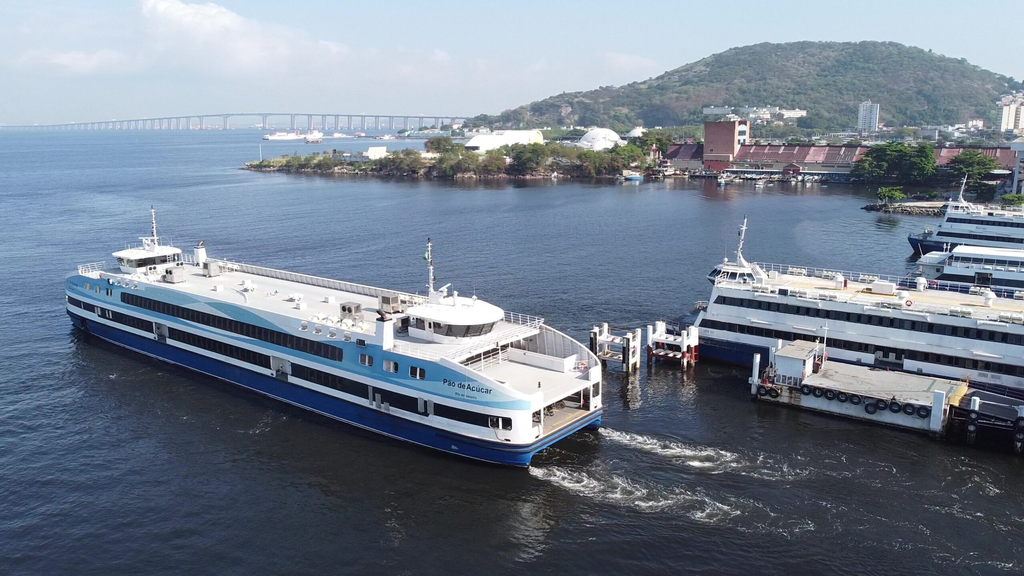
WSB
The history of the Ferries also intersects with that of WSB. Some of our employees commute daily using this mode of transportation. In addition, Pedro Pellegrini, Shipbroker-Intern, worked directly with CODERTE (Road and Terminal Development Company) on technical studies related to the Ferries’ operations.
Se quiser, também posso adaptar o inglês para um tom mais editorial/internacional, mais próximo do estilo da One.Energy News.
This article was produced by Westhon Media for One Energy News.