Por onde anda? Tonelagem da Galáxia
Automatically generated translation; may contain errors.
As the market’s primary reference for fleet data—also reflected in our WSB One Database—we are frequently challenged by clients to explain not only where vessels are, but under what structures they remain where they are.
That is precisely what happened following our recent article on Atlas Z. As readers and users looked more closely into the Galáxia fleet, a broader question began to emerge: where is the Brazilian tonnage sustaining the REB eligibility of some of the group’s foreign-built vessels now operating under Brazilian flag?
The issue is not marginal.
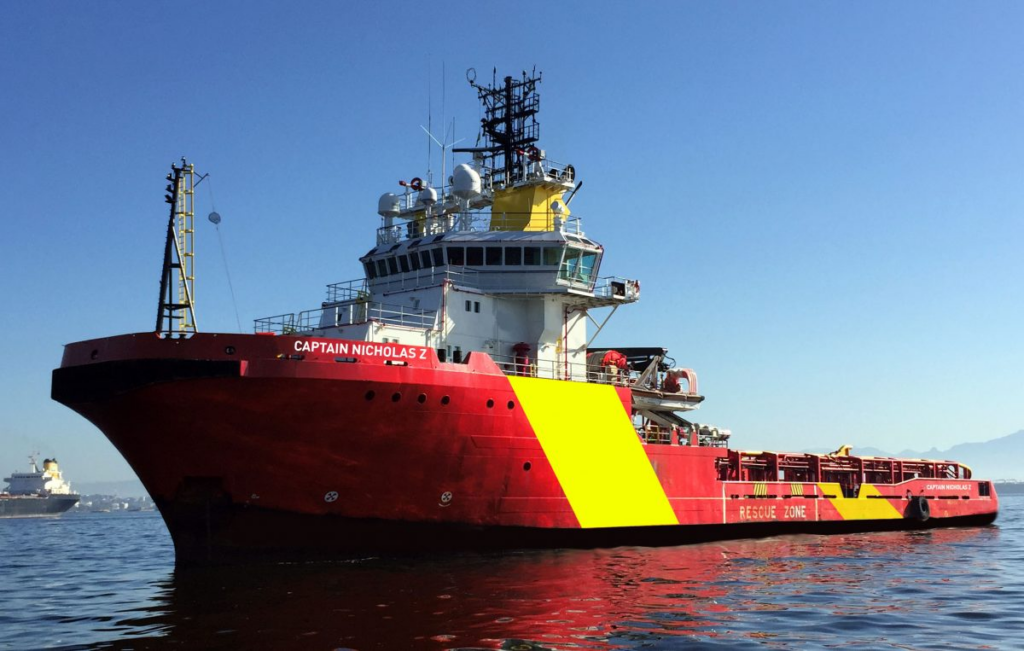
Three vessels originally introduced from abroad and now operating under REB through the Galáxia structure—Captain Nicholas Z, Apollo Z and Theseus Z—appear, at least from publicly available information, to rely on a tonnage base that is difficult to identify with clarity.
The numbers are what make the question unavoidable.
Captain Nicholas Z, with 3,211 tonnes, appears on Galáxia’s own website and in class records, yet is not clearly listed within the publicly visible fleet of either Galáxia Navegação or Galáxia Marítima. Apollo Z and Theseus Z, together representing approximately 4,800 tonnes, do appear linked to Galáxia Marítima. The problem is that Galáxia Marítima, according to official public records, appears to have no local tonnage currently capable of supporting that REB structure.
On the Galáxia Navegação side, the only visible local tonnage appears to be GNL 1015, with approximately 1,800 tonnes. That vessel, although not genuinely Brazilian in origin, became legally valid local tonnage after Galáxia took it over through judicial auction in the aftermath of the Varada case.
Even taking GNL 1015 into account, the structural question remains.
How can Apollo Z and Theseus Z remain under REB if Galáxia Marítima has, for a considerable period, lacked the local tonnage apparently required to sustain that flag structure? And how can Captain Nicholas Z remain under REB through Galáxia Navegação if GNL 1015, as the only visible local-tonnage vessel in that company, does not appear to provide the equivalent tonnage required to support it?
These are not merely theoretical questions.
We have been in contact with the Maritime Court, which confirmed that the condition precedent of equivalent tonnage must be maintained for the vessel to remain eligible under REB. The Court also clarified that any practical action depends on ANTAQ, as regulatory authority, formally informing the Maritime Court that the underlying conditions have been lost.
ANTAQ, for its part, has not yet returned our questions, although it is understood that a process is in its final stages for a definitive decision on the matter.
This is where the issue becomes more significant than a fleet-list discrepancy.
If vessels are able to remain under REB indefinitely until a grace period expires, even after the supporting tonnage has already been lost, then the structure opens room for a potentially unlimited migration of foreign-built tonnage into REB without effective ongoing equivalence. That would not be a minor administrative tolerance, but a material reinterpretation of the rule itself—one that would deserve much clearer visibility from both regulator and Court.
If, on the other hand, due process ultimately confirms that the supporting structure was not validly maintained, the consequences are potentially severe. ANTAQ’s own framework provides for sanctions where regulatory conditions are not preserved.
There is another element worth noting.
Our sources have identified what appears to be a late registration, in ANTAQ, of the charter contract for GNL 1015 by Galáxia Navegação. According to documentation presented by Galáxia itself, that contract was not timely executed to support the initial admission of Captain Nicholas Z into the Galáxia Navegação fleet. ANTAQ itself, in formal correspondence, is understood to have noted that the contract submitted did not cover the vessel’s initial admission period.
That point, if confirmed, would only reinforce the broader concern: not simply whether local tonnage exists today, but whether it existed at the moment it was legally required.
Galáxia could not be reached for comment.
For now, the vessels remain under REB, active and visible in the market.
What remains less visible is the tonnage behind them.
This article was produced by Westhon Media for One Energy News.