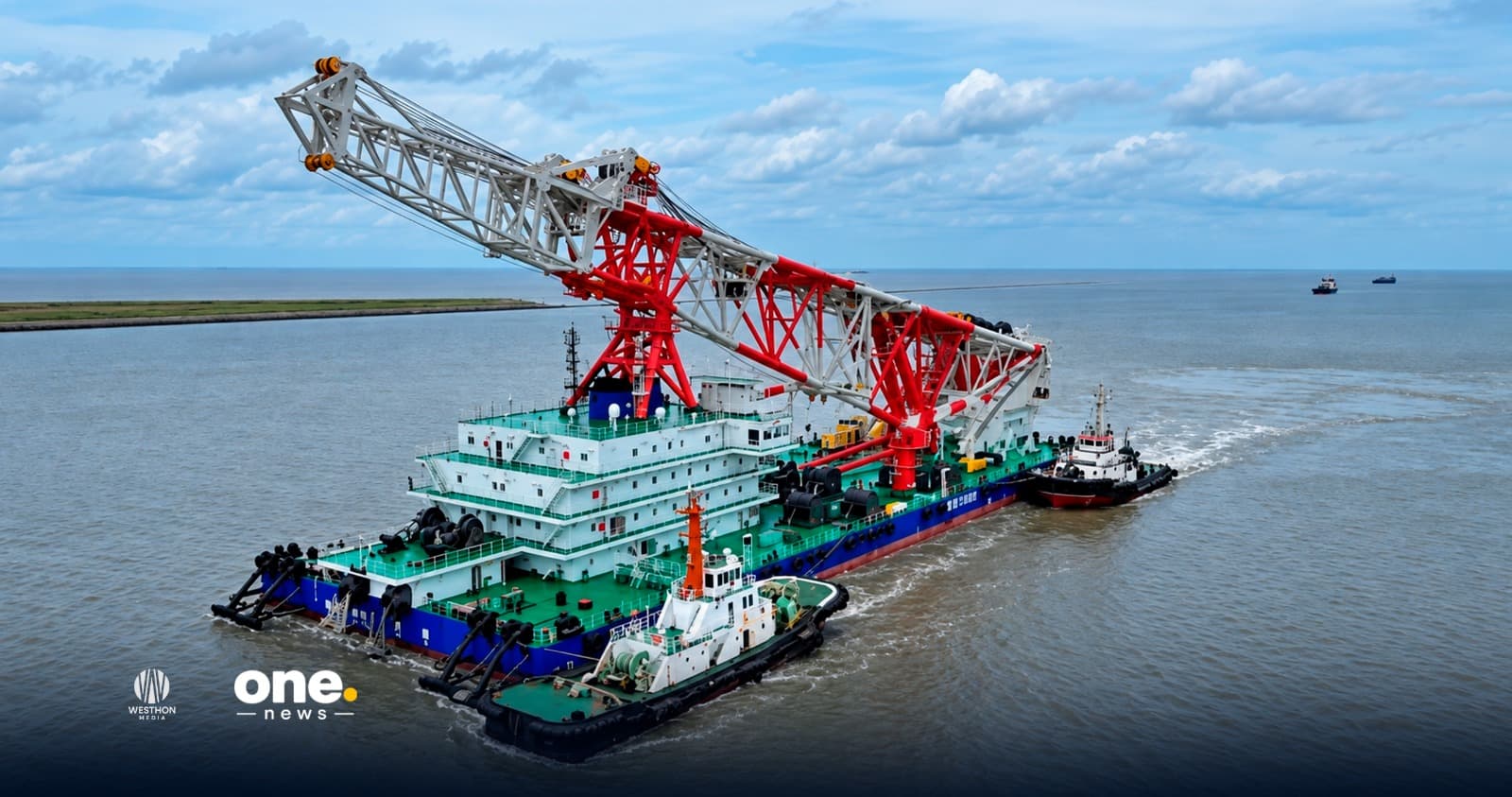
Por Onde Anda? CRCC Bridge Piling No. 1
One of Brazil’s largest infrastructure projects has triggered an 11,300-nautical-mile marine mobilization from China to Bahia.
On September 27, CRCC Bridge Piling No. 1 departed Lüsi Port, in Jiangsu, for the Bay of All Saints, where it will work on the foundations of the Salvador-Itaparica Bridge.
The transit is expected to take around 45 days, through the Malacca Strait, around the Cape of Good Hope and across the South Atlantic. It will also be the vessel’s first overseas mission since its delivery in March 2026.
The reason for bringing this particular vessel halfway around the world lies below the surface of the bay.
The 12.4-kilometre crossing will require foundation work in water depths reaching around 64 metres. The geotechnical campaign included 105 boreholes along the alignment, with drilling reaching depths of 200 metres at some locations.
And CRCC Bridge Piling No. 1 was not simply selected for the project after it was built.
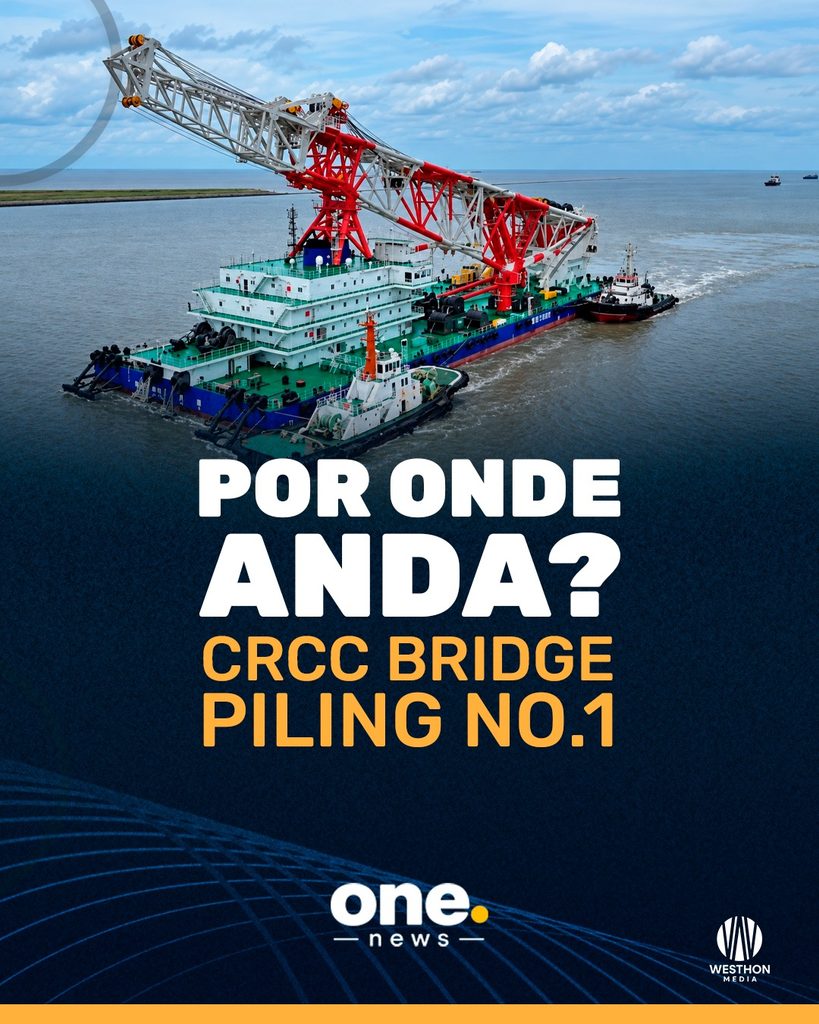
According to CRCC Bridge Engineering Bureau, the vessel was tailor-made for the main bridge. Its maximum operating depth of 70 metres was defined considering the approximately 64 metres of water at the main foundation area, together with conditions such as tidal variation.
That comparison says more about the scale of the mobilization than the vessel’s title.
CRCC and Chinese state sources describe it as the world’s largest pile-driving vessel, with a 156-metre piling frame, capacity to handle piles weighing up to 700 tonnes and the ability to operate in water depths of up to 70 metres.
The vessel measures 130.5 metres in length and 40.8 metres in beam and can handle piles measuring as much as seven metres in diameter.
But size alone does not explain why it is coming to Bahia.
The bridge’s foundations will use large steel tubular piles installed from floating equipment, followed by internal excavation, reinforcement and underwater concreting.
Its positioning configuration combines dynamic positioning and anchor positioning, while a hydraulic system with a 5,000-tonne-rated main cylinder controls the 156-metre piling structure during installation.
The vessel is also only one part of a much broader marine construction operation now taking shape in Bahia.
This article was produced by Westhon Media for One Energy News.