OceanPact bought a shipyard: The interesting question is what comes next
Also available in Portuguese
OceanPact comprou um estaleiro: A pergunta interessante é o que vem depois.Read in Portuguese →Automatically generated translation; may contain errors.
The easiest way to read OceanPact’s acquisition of Dock Brasil is exactly as the company presented it: more capacity for repair, maintenance and docking, both for its own fleet and for third-party vessels.
That is certainly true.
It is also probably the least interesting part of the deal.
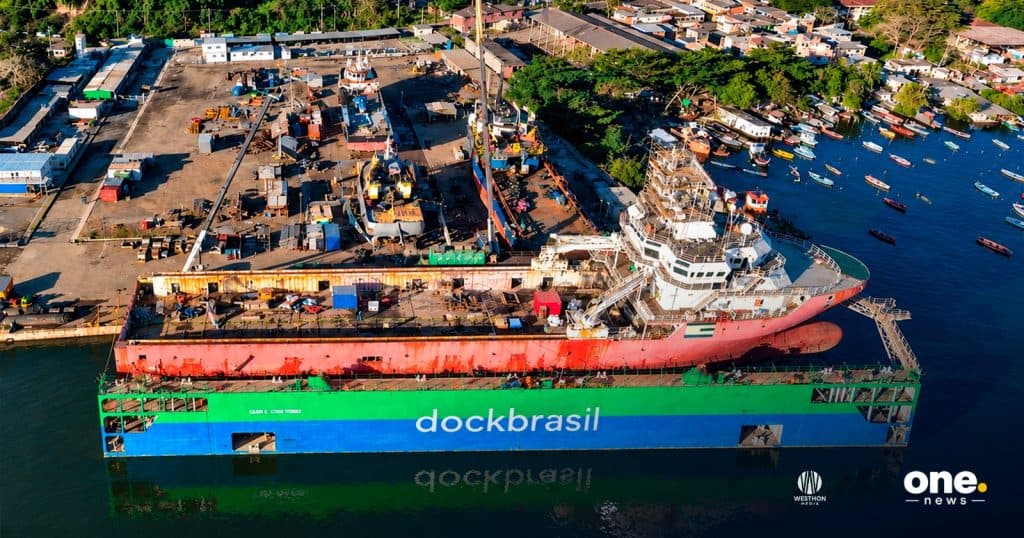
OceanPact completed the acquisition of 100% of Dock Brasil on August 31, following an agreement announced at a base price of approximately R$119 million. Located in São Gonçalo, inside Guanabara Bay, the yard brings with it around 340 employees, a 99-metre floating dock with lifting capacity of up to 5,800 tonnes and a load-in/load-out system capable of transferring vessels of up to 3,000 tonnes to three onshore docking positions.
Those are useful numbers. But the more relevant word here may be VERTICALIZATION.
Brazil already offers good examples of what happens when an offshore vessel operator controls more of the industrial chain behind its fleet.
Edison Chouest is perhaps the most complete example. In Brazil, the group combines Bram Offshore’s vessel operations with Navship, B-Port, logistics infrastructure and subsea activities. Navship has built dozens of offshore vessels for the group, while Chouest’s own description of its global model is remarkably straightforward: design, build, own and operate. Its Brazilian B-Port facility at Açu combines a logistics base with naval repair capability and a 13,700-tonne floating drydock.
Starnav offers another version of the same logic. It sits inside the Detroit group, alongside Detroit Brasil, whose yard in Itajaí builds, repairs and modernises workboats. The group itself says Detroit Brasil supports Starnav both in improving its vessels and expanding its fleet, and several of Starnav’s PSVs were built there.
There is a reason why this model makes sense.
A vessel owner with its own industrial capability is not merely trying to save money on a drydocking invoice. It gains greater control over schedules, work scopes, procurement, engineering decisions, upgrades, conversions and, perhaps most importantly, downtime.
And in the offshore vessel business, downtime is not simply a maintenance problem.
It is lost revenue.
This makes the Dock Brasil acquisition particularly interesting when viewed against OceanPact’s own fleet.
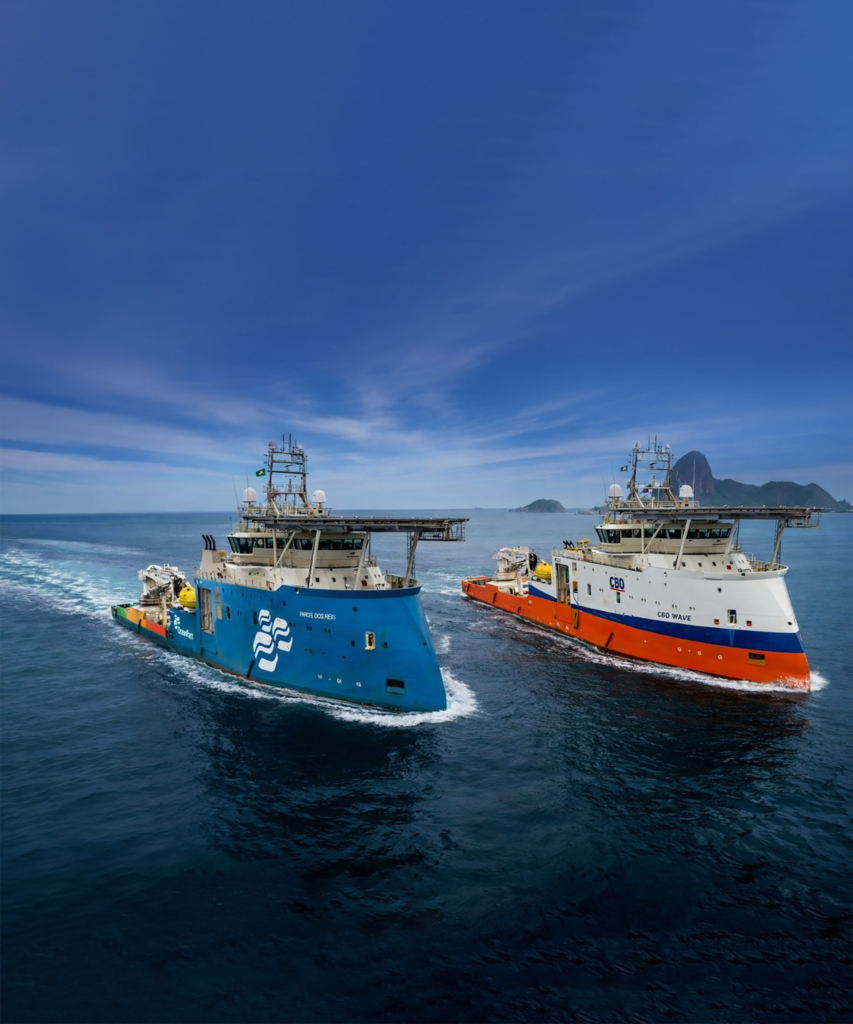
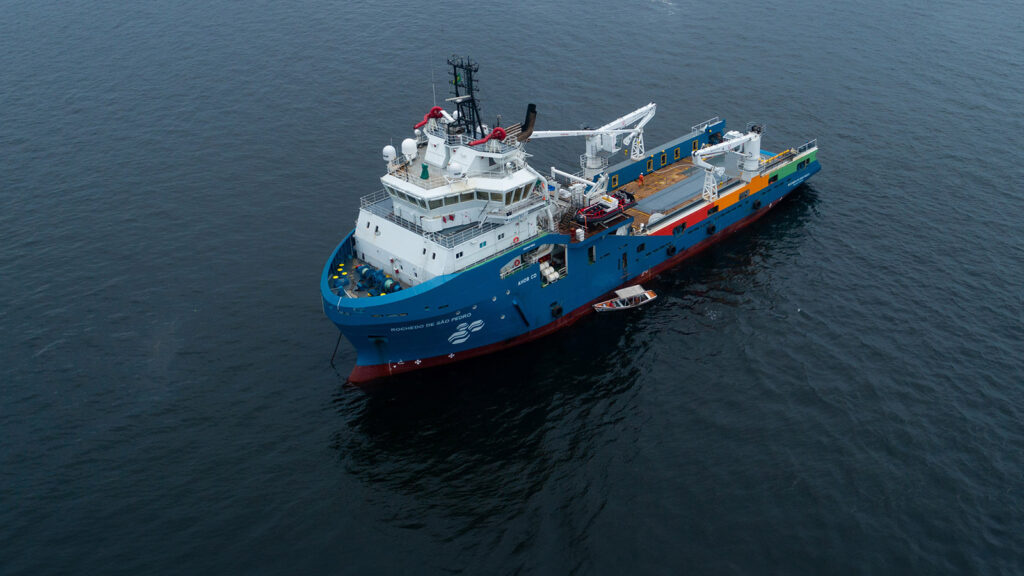
OceanPact did not grow by building twenty versions of the same vessel. Its fleet was assembled over time through different projects, acquisitions and opportunities and today spans OSRVs, RSVs, PSVs, research vessels, anchor handlers and other specialised units. Even before the CBO combination, it was already a technically diverse collection of vessels of different generations and configurations.
That diversity has enormous commercial value. It also creates an equally obvious engineering challenge.
Different designs mean different equipment. Different generations mean different maintenance profiles. Different machinery packages mean different spare parts, service requirements and lifecycle decisions. As vessels age, these differences become increasingly relevant — particularly when class renewals, major overhauls, life-extension work and equipment obsolescence begin arriving at the same time.
The CBO transaction improves part of that equation. OceanPact itself has highlighted the reduction in average fleet age as one of the strategic benefits of the combination. But a 73-vessel fleet does not become less demanding to maintain simply because its average age falls. It becomes larger. (OceanPact).
And that is why the timing of Dock Brasil deserves more attention than the R$119 million headline.
The OceanPact-CBO combination is scheduled to close on September 16. When completed, the group expects to have 73 vessels, annual revenue above R$4 billion and a backlog of approximately R$14 billion. Just over two weeks before that combination becomes effective, OceanPact took control of an industrial asset capable of servicing a substantial part of the offshore support market from inside Guanabara Bay.
One transaction adds scale. The other adds control. Seen together, they begin to look considerably more strategic.
Dock Brasil can obviously continue doing exactly what it does today: compete for third-party repair work while increasingly servicing OceanPact’s own fleet. In fact, OceanPact has explicitly said that the yard will continue serving the wider market. But internalising part of the fleet-maintenance cycle creates opportunities that go beyond simply replacing an external supplier with an internal one.
Repeated dockings allow engineering knowledge to remain inside the organisation. Standard work packages can be developed. Procurement can be consolidated. Equipment failures can be tracked across similar units. Certain upgrades can be replicated vessel after vessel rather than redesigned each time. Life-extension decisions can increasingly become fleet decisions rather than isolated ship projects.
For a heterogeneous fleet, that matters.
It is therefore difficult to look at Dock Brasil simply as another OceanPact business unit. Properly integrated, the yard can become part of the operating system of the fleet itself.
And then comes the inevitable question.
What about shipbuilding?
There is, to our knowledge, no formal indication from OceanPact that the acquisition of Dock Brasil is connected to a newbuilding programme, and One Energy News has no information at this point suggesting that such a decision has been made.
It would be wrong to present speculation as strategy.
But it would be equally strange not to ask the question.
Brazil is entering another offshore investment cycle. The combined OceanPact-CBO fleet will number 73 vessels. Petrobras and other operators continue to create demand for increasingly capable offshore tonnage. The company will now own a shipyard, an engineering organisation, a large operating fleet and a growing backlog.
Nobody should interpret that as evidence that OceanPact is about to start building ships.
But nobody studying the transaction seriously should ignore the optionality either.
Chouest demonstrates what can happen when shipbuilding, repair, logistics and vessel operation become parts of the same industrial platform. Detroit and Starnav show another Brazilian example of a shipyard and an offshore fleet developing alongside each other.
OceanPact has not followed either model historically.
Now, for the first time, it has an asset that allows the comparison to be made.
Perhaps nothing changes beyond maintenance and repair. If Dock Brasil improves vessel availability, reduces dependency on external docking windows and helps OceanPact manage the technical complexity of a much larger fleet, the R$119 million investment may already prove remarkably smart.
But the strategic value of owning industrial capacity is that management does not need to decide every possible use for it on day one.
It creates options.
And that, more than the floating dock, may be what OceanPact actually bought.
The CBO deal gives OceanPact scale.
Dock Brasil gives it something different: greater control over what happens to that scale once the vessels come alongside.
In a fleet business, that distinction matters.
And if one day a new hull starts taking shape there, perhaps we should not be entirely surprised.
This article was produced by Westhon Media for One Energy News.