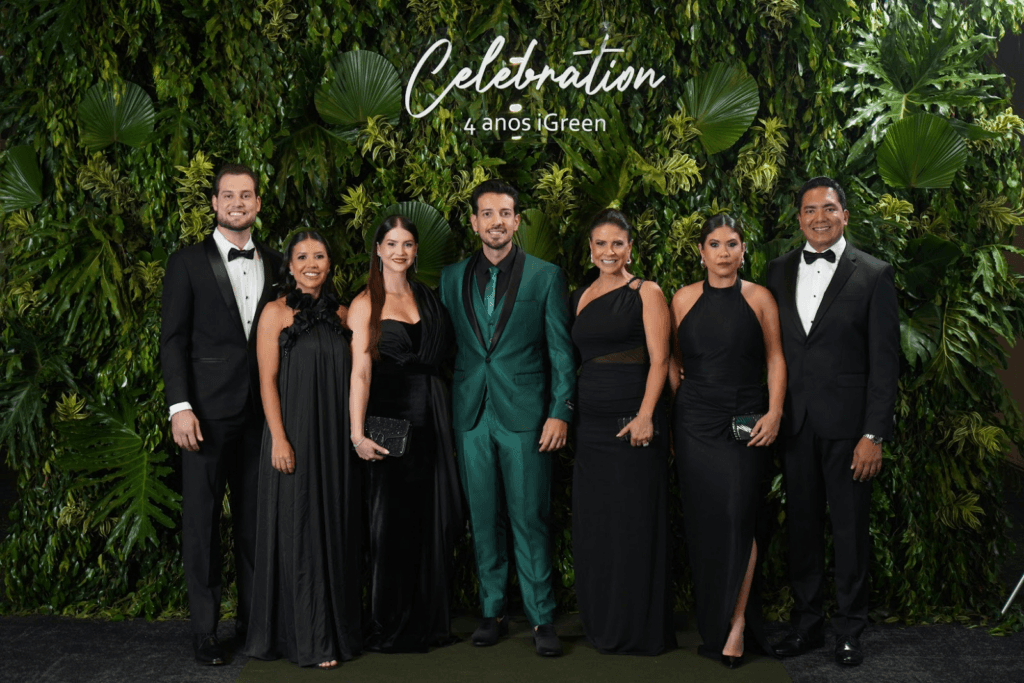
Energy Talks – Amanda Durante
Automatically generated translation; may contain errors.
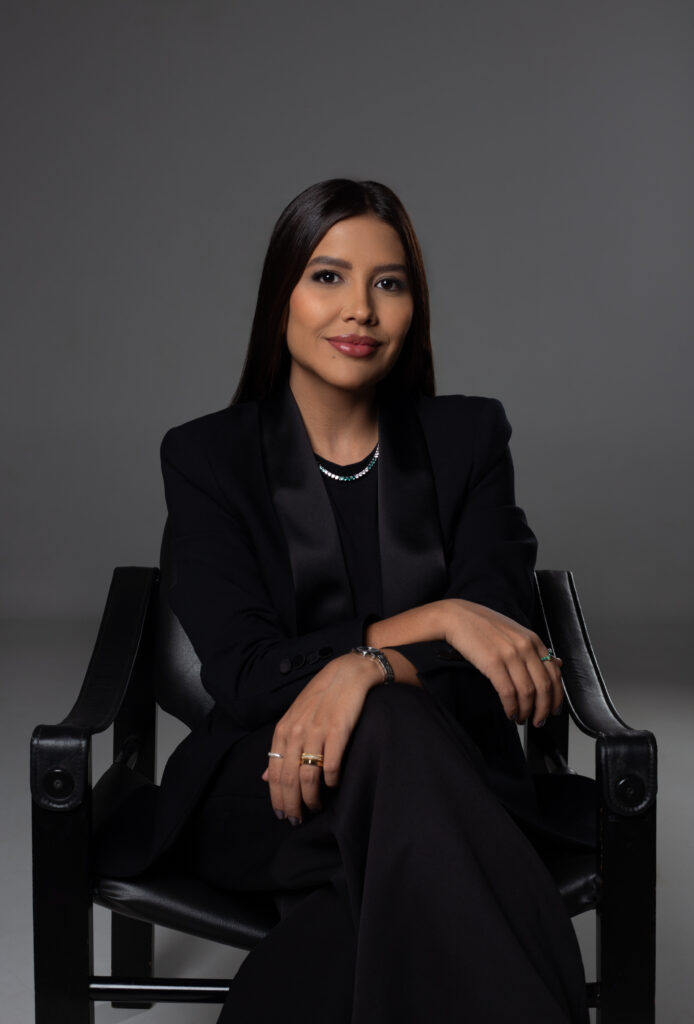
In this edition of Energy Talks, we had the pleasure of speaking with Amanda Durante. At just 28 years old, she proudly says she turned not being hired at Itaú Unibanco into the driving force to not only change industries, but also to become an entrepreneur and inspire other women.
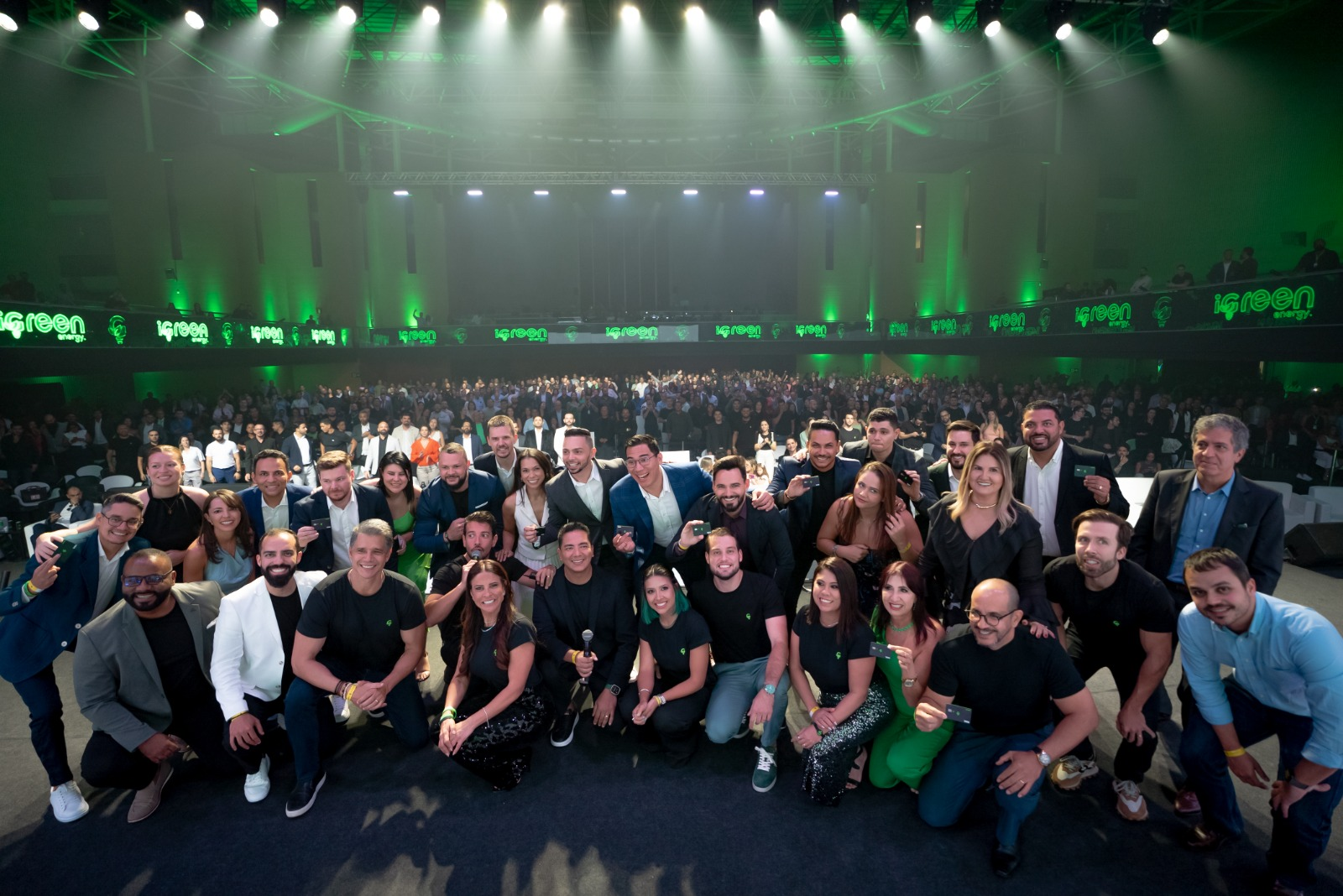
With support from her brother and husband, she founded iGreen Energy. Established in 2021 and headquartered in Uberlândia, the company was created with the mission of democratizing access to clean and renewable energy. It connects members to solar plants without the need for installation or upfront investment, generating immediate savings on electricity bills. With more than 500,000 members across over 20 states, the company offers significant compensation to its network of licensed partners and contributes to reducing CO₂ emissions and building a more sustainable future.
Under her leadership, iGreen has grown with thousands of salespeople and hundreds of thousands of sustainable energy subscribers. The company’s name came from the idea of connecting energy producers and consumers, much like delivery platforms connect restaurants and customers. Her work was recognized when she was named to the prestigious Forbes Under 30 list in the “Business & Industry” category in 2025.
Tell us a bit about your personal and professional journey and how it influenced not only the creation of iGreen, but also the professional you are today
I grew up in an entrepreneurial household. No one had a traditional corporate job, and I was never pressured to go to college or follow a specific path. I was always encouraged to be creative and take care of my own responsibilities. One situation that really marked me was that my mother NEVER did a school assignment for me, not even with me. She would always say, “You are the student, so you have to do it!” My projects were always the ugliest in the class, but she would look at them and say, “It’s the most beautiful one, because you made it!” And that’s how I grew up.
I studied Business Administration and entered the job market as an intern at Itaú, but I wasn’t hired because, according to them, I wasn’t creative. That’s when I started looking for new opportunities and discovered the solar energy sector. I began as a salesperson, earning only commissions. I grew within the company, took on multiple roles, and eventually had the idea to invite my brother to help with sales. We talked and decided to create a business model. The owner of the company I worked for didn’t like the idea. So my brother Thiago and I left and founded iGreen.
Your entry into the job market had a turning point after your experience at Itaú Unibanco. How did that episode shape your entrepreneurial vision?
I learned a lot there. I learned how to sell and how to chase targets. But I also realized that it wasn’t what I wanted for my life—it lacked purpose. Even so, because of the money, I tried to get hired. And that’s when they told me I wasn’t creative. That hurt a lot. And it was exactly that moment that made me realize I needed to work with purpose. I found that purpose in renewable energy.
It’s impossible to talk about you without mentioning your presence on the Forbes Under 30 list in 2025. What does that recognition represent in your journey?
To me, it’s a seal that we’re on the right path! Being on Forbes had always been a dream, and when I applied, I thought, “Well, I still have three years to try again,” because I never imagined I would be selected on the first attempt. It was surprising and very rewarding, because it confirms what we already knew: we are building something great.
You lead a company in a sector historically dominated by large players and often by men. What was it like to build authority and space in this environment?
In almost every meeting, I’m the only woman and the youngest person, but I’ve never cared about that. I’ve never felt inferior because of it. I believe authority is built through results. So I deliver results. It doesn’t matter whether I’m a woman or a man—what matters is whether I’m generating results.
Throughout your journey as a founder, what were the most decisive challenges in scaling the business? Who supported you? And what did you learn from them?
There have been and still are many daily challenges, but I believe the first “no’s” I received were the hardest. Even so, we never stopped because of them. My husband, Calebe, has always supported me a lot. My brother and business partner always reminded me: “Amanda, we are a company of faith. So let’s believe until the end.” Believing that everything works for our good allows us to work with peace, knowing that God takes care of everything for us.
iGreen was created with the goal of democratizing access to clean energy. What is still missing for this to happen on a large scale in Brazil?
We’ve already achieved major progress. Looking back, when I started working in energy, Brazil’s electricity matrix had only 1.2% solar. iGreen was founded in 2021, and now, in 2026, solar has already surpassed 22%. That’s huge.
For large-scale democratization, I believe we still need two key developments: building plants in regions that still lack access, and opening up the free energy market, where everyone will be able to choose their energy provider.
The shared generation model has grown rapidly. What are the main regulatory and market barriers to its expansion today?
What slows things down the most today is uncertainty in the sector. Things change constantly, new signals emerge, and nothing is decided clearly. But the security we have lies in Law 14,300, and we will continue to grow while waiting for the opening of the free market.
How do you see the impact of recent regulatory changes in Brazil’s solar energy sector?
I believe there is currently no negative impact—quite the opposite. We continue to grow while others wait for concrete answers. We are convinced that the electricity sector will only evolve, following the example of countries that have already advanced toward opening the free market. So I see no negative impact, only positive ones, accelerating this transition—and we will be ready for it.
Do Brazilian consumers already understand the value of solar energy, or are we still in a phase of awareness and education?
Unfortunately, we are still in the awareness phase. Brazilian consumers are still very tied to traditional utilities, regardless of their shortcomings. There is still a lot of fear about trusting a new solution. But we remain committed to this mission: through our licensed partners, we educate consumers one by one, door to door, with personalized service, bringing satisfaction and efficiency to the end user—our members.
Looking at the next five years, what is your vision for the future of solar energy and distributed generation in the country?
We are on a very strong growth curve. Every month, 90,000 new members start receiving clean, renewable energy through iGreen, which is equivalent to more than 22 million kWh. If since 2019 we have gone from 1.2% to 22% solar share in the energy matrix, I believe that in five years we can double that percentage and make solar the main energy source in Brazil.
The energy transition is a global topic. Where is Brazil well positioned, and where does it still need to evolve?
Brazil is very well positioned. With 22% of the matrix being solar and more than 50% made up of renewables overall, we are already a renewable-majority country, which is a major step in the energy transition. However, what needs to change is the mindset that solar is only for the wealthy. This holds back growth, because 80% of our members are individuals who consume up to 300 kWh—people who see solar as a real opportunity to save money. Until the right people understand this, we will continue to lose time.
In an international scenario marked by conflicts involving oil, do you believe this tends to accelerate the search for renewable sources, especially solar?
Absolutely. We are already seeing this in practice: panel prices have dropped, and the sector has been growing rapidly because of it.
Sustainability also involves social impact. How do you see the role of renewable energy in inclusion and economic development?
iGreen has already generated more than 25 million reais in savings for our members—money that goes back into Brazilians’ pockets—while providing clean energy. We have also avoided more than 20,000 tons of CO₂ emissions. I’m sure sustainability has greatly contributed to inclusion and economic development.
If you could implement one structural change in Brazil’s electricity sector today, what would it be and why?
I would invest in modernizing the energy transmission infrastructure. One of the biggest complaints today is that the grid cannot handle the volume of energy being injected. Instead of slowing down solar energy expansion, what needs to happen is a structural reform in transmission. We cannot limit generation because infrastructure hasn’t kept up.

Missions like Artemis II have reignited global interest in innovation. Do you believe initiatives like this can also inspire advances in new energy sources?
Absolutely. Elon Musk, for example, is an investor in renewable energy, and missions like this highlight the importance of global change. I believe they encourage innovation and progress. When the world decides to move in a certain direction, the effects are felt across all sectors, including energy.
Thanks, Durante
This article was produced by Westhon Media for One Energy News.