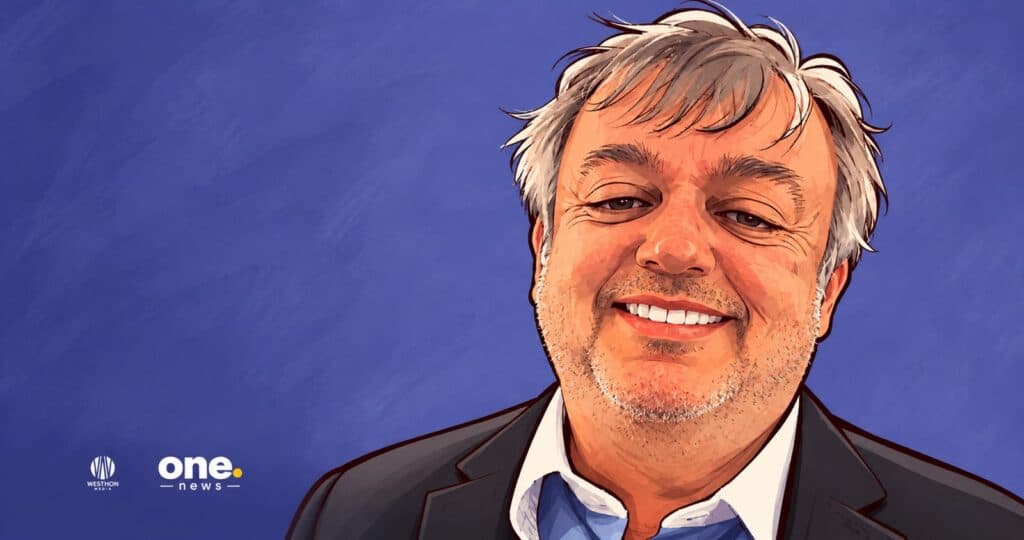
Energy Talks – Tarik Darian
Automatically generated translation; may contain errors.
“NAVVIK is born from a very solid foundation, built over time, and with a highly qualified team. Our goal is to continue this work, preserving the culture, the highest quality standards, and moving forward with a clear vision for the future.”
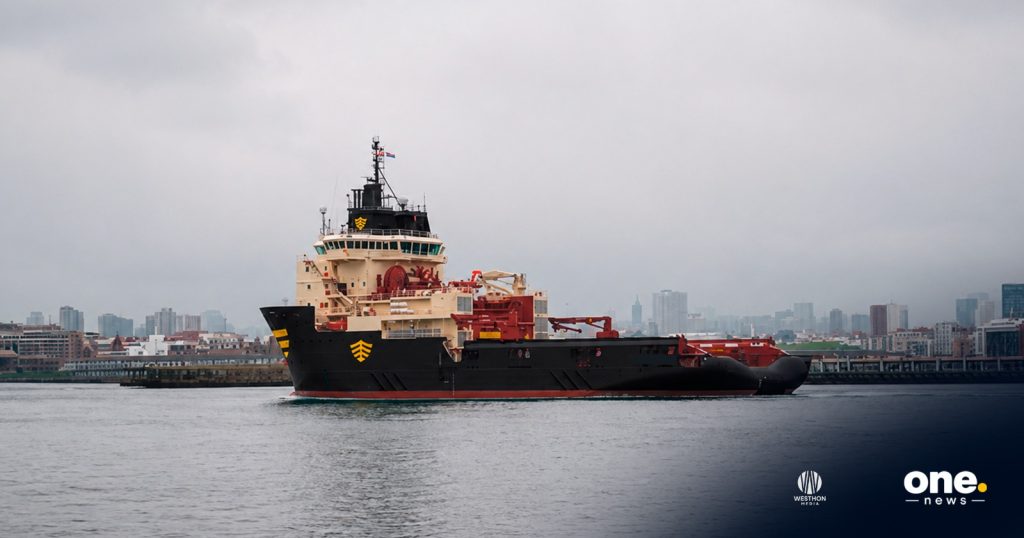
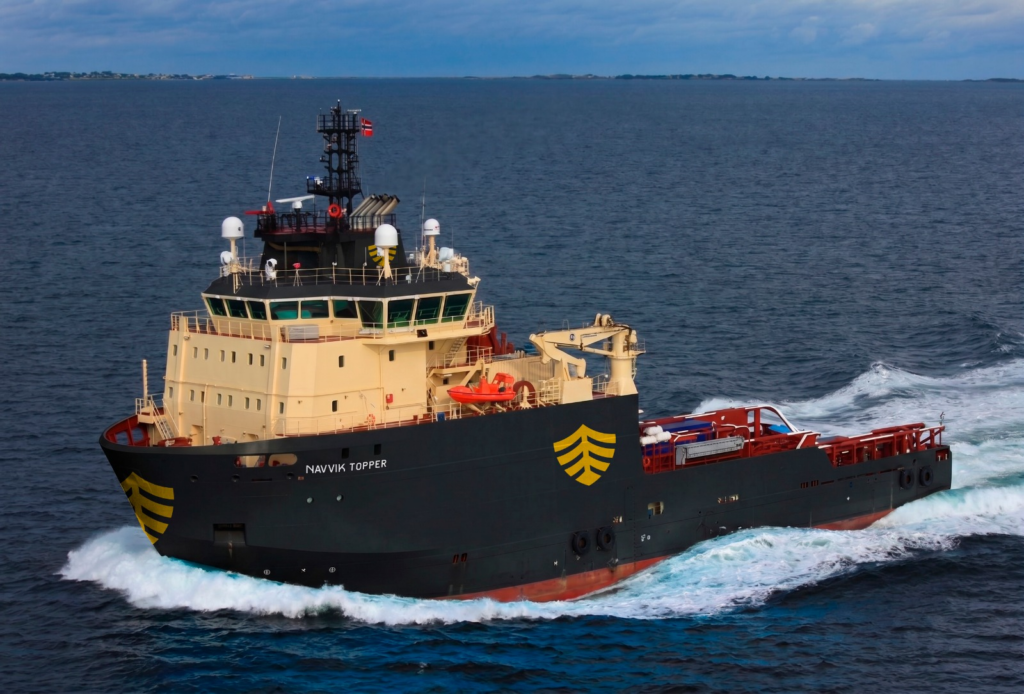
Tarik Darian, the company’s CEO, sums up the moment NAVVIK is experiencing. The new Brazilian maritime support company has taken over the operation previously conducted by Maersk Supply Service Brazil. The company enters the market with its own identity, backed by decades of experience in the maritime and offshore sectors.
Led by brothers Tarik and Omar Darian and Heitor Gioppo, NAVVIK operates across several areas of maritime support, including offshore supply, anchoring and platform positioning, cargo transportation, unit movements and subsea support. Its goal is to provide integrated solutions for complex operations, with a focus on safety, efficiency and quality.
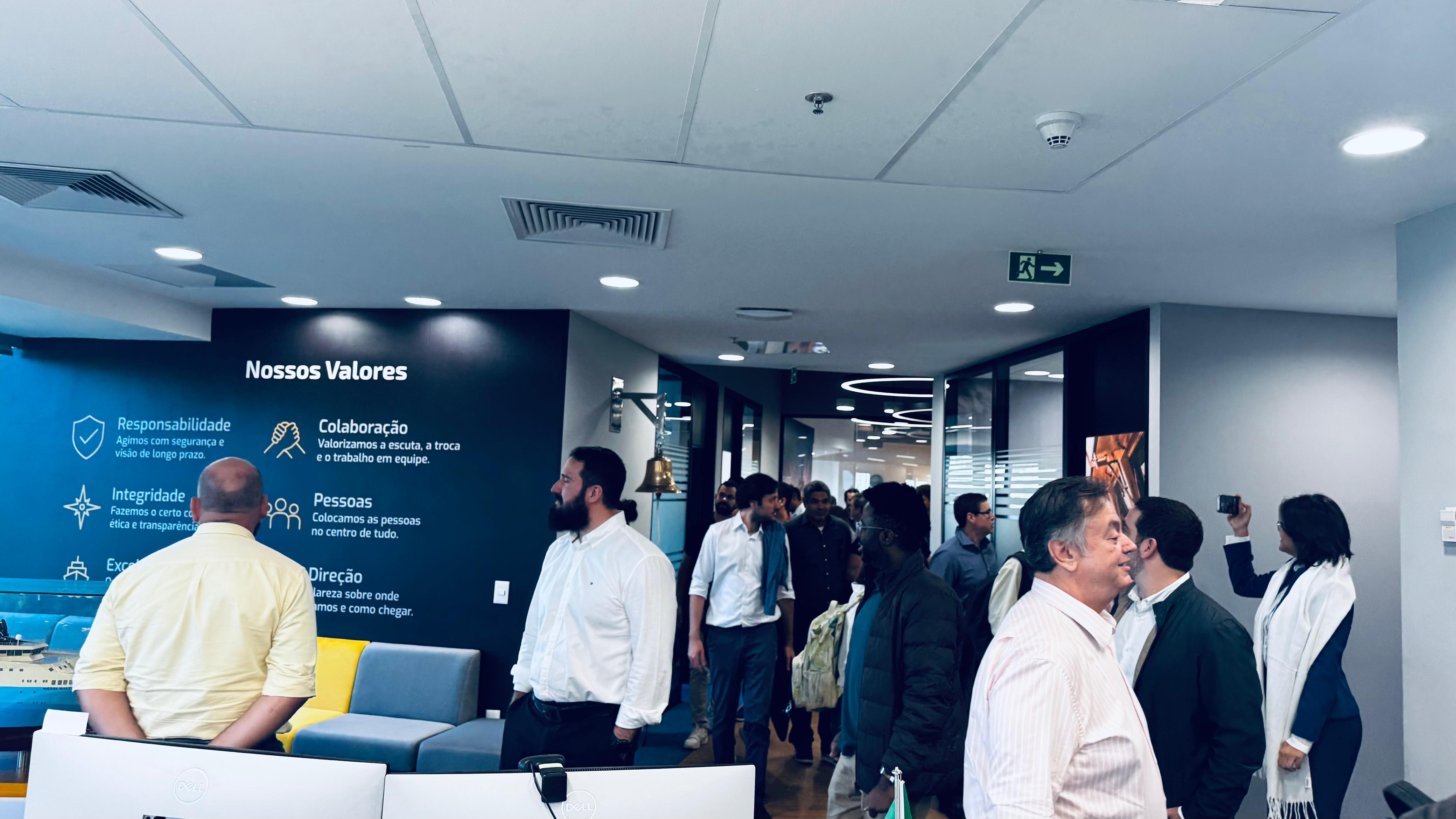
The company is also investing in its own identity, reflected in the concept “guided by the sea.” The name NAVVIK combines “NAV,” from navigation, with “VIK,” inspired by Nordic and maritime traditions and associated with the idea of a bay, port and safe harbor. More than its fleet, the company places people at the center of its strategy, with experienced crews, qualified technical teams and leadership with extensive industry experience.
Coming from an Arab family, Tarik is originally from São Paulo, but divides his time between Rio de Janeiro, where NAVVIK is headquartered, and Houston, where his family lives. A Merchant Marine Chief Engineer with a specialization in International Maritime Law, Darian has more than three decades of experience in the maritime and offshore sectors, with a career that includes companies such as Petrobras, Wilson Sons, Transocean, Noble Drilling and Svitzer.
In 2012, he was one of the founders of Transmar, which was later acquired by Svitzer. More recently, he paused a PhD in Ocean Engineering at Texas A&M University to take on the NAVVIK project.
The market tends to look at rebrandings with a certain degree of skepticism. Could you tell us a little more about the process of distancing NAVVIK’s image from that of “former Maersk Supply Service Brazil”?
We were not concerned about distancing ourselves from the brand, since I admire Maersk. So, we carried out the rebranding process without that pressure. Perhaps that is precisely why it has been working so well. We brought a tremendous amount of momentum to the company. You only have to look at the changes we have achieved in less than six months.
We engaged our people, who embraced the idea because they believed in what we want to build. There was no major emphasis on trying to show anything to people outside the company. The transformation was endogenous and, because it was so natural, it seems to me that the market embraced the new brand.
Is there any behind-the-scenes story about the creation of NAVVIK that has not yet been told? Any particularly memorable internal discussion about culture, positioning or strategic direction?
Well, we negotiated the acquisition of the company for more than a year. So, we have plenty of stories, but unfortunately, I cannot share most of them here (laughs). We chose to embrace the seller’s culture. We wanted to provide a stable environment for our employees, who had already been through too much uncertainty. We simply decided to do it within a more dynamic environment that rewards excellence and boldness, rather than the complacency that inevitably takes hold of organizations that experience success for too long.
When the Brazilian operation was left out of DOF’s global acquisition of MSS, what was your reading of the situation at the time? Did you see an opportunity there to build something independent?
Honestly?! At the time, I was more concerned with learning partial derivatives and did not follow the episode closely. They only came looking for me in Houston much later.
NAVVIK is being launched at a time when Brazil’s offshore market is gaining momentum again. What differentiates a company prepared to grow from one that is simply trying to take advantage of a positive cycle? What are the industry’s biggest bottlenecks in Brazil today?
There are several factors that differentiate one from the other. And this is just my opinion. I am not an expert in corporate longevity, but I believe companies that seek to recruit talent and invest in good, well-built assets are one step ahead in this game. Obviously, this always has to be done from a financial perspective.
Another point is the development or existence of clear and well-structured procedures that make people’s lives easier. Companies that care about creating a good working environment and have these procedures tend to be more resilient. It is worth remembering that, in this business, even a well-structured and well-managed company can cease to exist because of a single decision or a shareholder’s short-term vision. No one is immune to that.
After decades in the industry, what was the most challenging operational situation you experienced at sea or in managing operations?
At sea, it was certainly working in salvage. In fact, I started believing in God again while towing the N/T Pedreiras. But that is a story for another day. There were many fires, groundings, operations under extremely difficult conditions and with the equipment available in the 1990s. A lot of adrenaline.
On the management side, I would highlight my first year in Africa. It was very difficult. But I learned a lot and developed a great love for the continent and its people. The year that preceded the sale of Transmar to Svitzer was also very challenging. The O&G market had turned, and the Dilma Rousseff government, then Brazil’s president, did not help much. Our competitors in port towage did not like having a new entrant and thought it was a good idea to suffocate us in the nest. But God is great, and I survived to tell you the story.
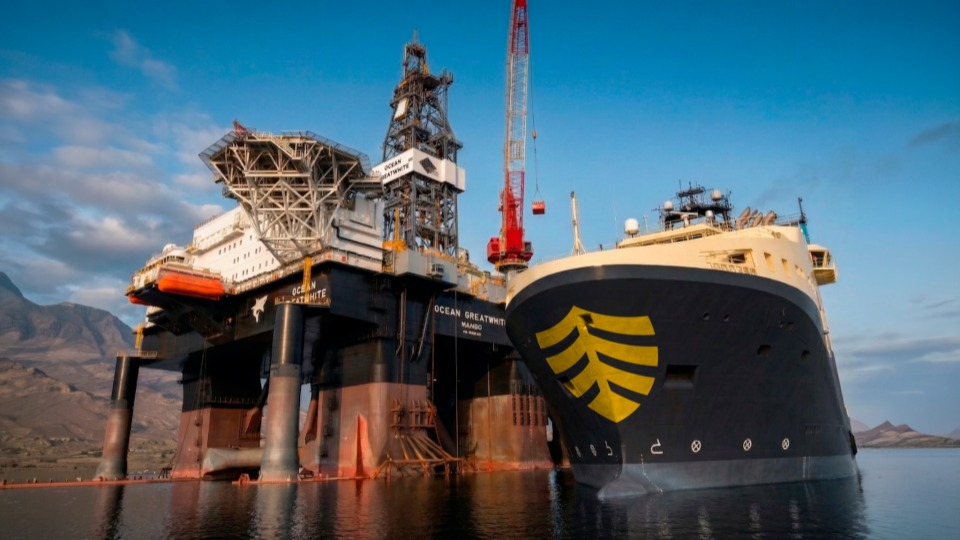
When you look at NAVVIK five or ten years from now, what is the real ambition? To build a strong Brazilian company with a regional presence or a shipping company with global reach? What are the challenges to growth?
If I tell you my real ambition, you will call me crazy, but I can tell you that we want global reach, with a focus on quality, not just size. We do not see ourselves operating only in Brazil. If we were to elaborate on the challenges, we would need a separate interview. The secret is to focus on the goal, not the obstacle. I can assure you that we have the know-how, the determination and the team to grow.
NAVVIK is still a relatively new company under this brand, but it brings together an operation and a team with decades of experience. What do you believe NAVVIK can do differently in the Brazilian market over the next few years?
Forecasting is an extremely delicate exercise in this market, especially in Brazil. What we intend to do is establish ourselves as a “premium” operator and expand into other markets. We want to invest heavily in preparing Brazilian maritime professionals so that they become a global benchmark. I cannot mention the other plans yet.
You have a career that combines maritime operations, engineering, maritime law and M&A. When did you realize that you could move between the technical and strategic sides of the offshore sector?
There was no “aha!” moment. It happened gradually. I was dissatisfied with the way crews were treated. I saw a lot of unprepared and arrogant people onshore who treated us with disregard, as a necessary evil at best, and I believed I could do better. I never believed people when they told me something was impossible. I kept pushing myself, learning, and I had many people who helped me along the way.
How did your training as a Merchant Marine Chief Engineer influence the way you lead companies and make executive decisions?
Being a Chief Engineer is at the core of everything I do and everything I am. It is the cornerstone on which I built everything. I had good mentors who taught me that, in the engine room, we do not give up until the problem is solved, that the ship has to operate no matter what sacrifice is required, and that every problem has a solution.
That philosophy enabled me to face the challenges of life and my career. I built my reputation as someone who could solve difficult problems, even though I was not a brilliant engineer like many of my colleagues. It also, obviously, gave me a technical perspective that most managers lack. To me, it was clear that I could learn what they knew, but the reverse was difficult to achieve.
Did your experience at Transmar, which was later acquired by Svitzer (2015), change the way you viewed the maritime industry?
Very much so. We built the company from scratch, which is the least efficient way of doing anything, but it was a powerful school. It was my first company and my first M&A (Mergers and Acquisitions). It was a baptism of fire for me and my partners, without a doubt.
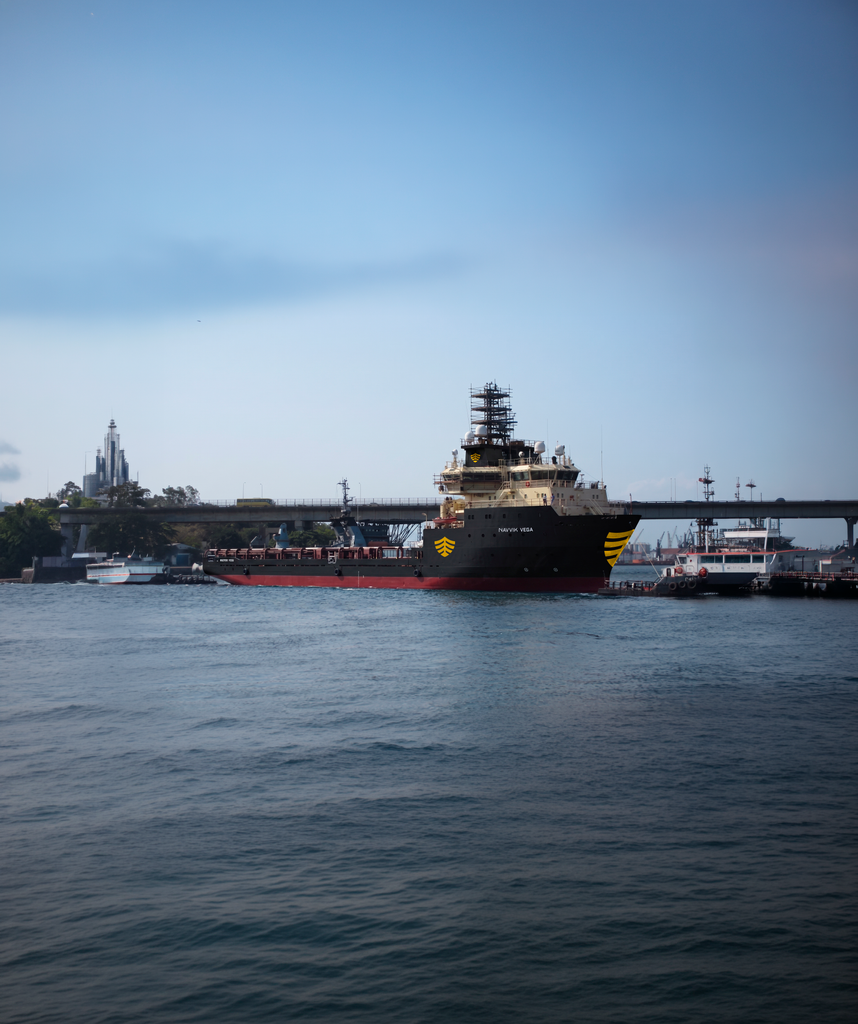
You have worked in complex environments across Africa, South America, the United States, China and Europe. What makes the Brazilian offshore market different from the others?
Brazil is not for amateurs (laughs) and, sometimes, it seems it is not for shipowners either. The biggest differences are the existence of one very large client, rather than a more fragmented market; a regulatory framework that changes constantly, much more than what I experienced in Africa, for example, and which can be interpreted in different ways; and heavy bureaucracy. But that is part of the game. And if it were easy, I would not be interested.
You decided to pause a PhD in Ocean Engineering at Texas A&M to take on a business project. Was it a difficult decision? Have you given up on your academic career for good?
Yes, it was a decision that weighed heavily on me. I had already proven myself professionally, but I had a passion for academia and, above all, for mathematics and physics. I wanted to pursue a PhD in something extremely difficult and mathematically complex, and, to my surprise, I was accepted into the Texas A&M program at the age of 54. My goal was to conduct research into propellers and perhaps magnetic propulsion and begin a second career as a professor.
I really wanted to pass something on to future generations, while also testing myself to see whether I had the IQ to successfully complete a program of that level of difficulty, and I was very happy with my results and with the research I was beginning. On top of that, there is the family, who is left alone abroad while I dedicate time to NAVVIK and to other projects I had in parallel, which I also had to put on hold. A PhD at that level requires total dedication, and I do not believe I will be able to devote time to my academic dreams from now on, but Allah knows best.
Looking back at your own journey, from your early years as a Chief Engineer to the leadership position you hold today, is there a decision or moment that you consider particularly decisive in getting you here?
In fact, it was a sequence of moments and decisions that seemed random to me at the time. I cannot take credit for what God did. I stumbled a lot, but I was also very lucky. I had a dream and was willing to risk everything to make it a reality. But some decisions had a greater impact, such as resigning from a good job at Noble Drilling so I could take the APMA and deciding that I would finish first in the course. Another was the decision to leave everything behind in Brazil and accept an invitation to move to Angola with my family. Resigning and returning to Brazil four years later to start Transmar was another. And, finally, leaving my PhD and my family in the United States to throw myself into the NAVVIK project.
All of those moments were significant because they involved extremely high levels of risk. I remember the stress of each one. Just thinking about them makes my heart race and my blood pressure rise. I could have lost everything on every one of those occasions. It was always an all-in game. I would not advise anyone to try to replicate what I did. The cost is high and the chances of failure are greater. But I also will not say that I regret it or that it was not worth it. I lived unique experiences and made it this far. I am blessed by God. That is all I can say.
After so many years following different industry cycles, how do you see the Brazilian offshore market at this moment? What structural movements do you believe will define the coming years, and what opportunities are still being overlooked by the market?
The current moment is one of justified euphoria. There is hope and positive expectation. We just need a little continuity. We do not even need help. We simply need people not to get in our way and to let us work. Beyond that, I want to make it clear that I am not some visionary who can see structural movements in an increasingly convoluted world. I am just a man of the sea who understands that our business is cyclical and values patience.
This article was produced by Westhon Media for One Energy News.