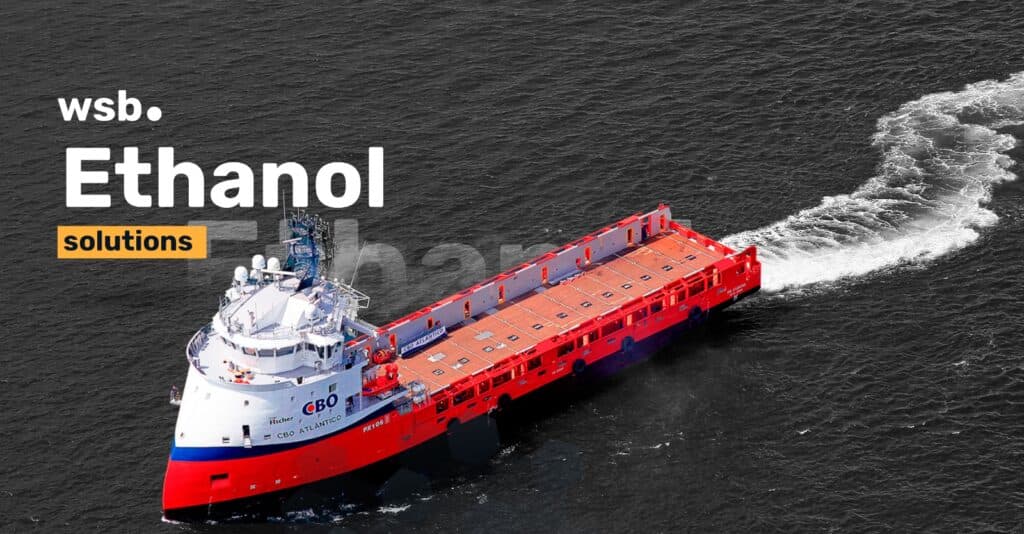
Ethanol solutions
Automatically generated translation; may contain errors.
Ethanol: A Viable Path to Decarbonization in Brazil’s Maritime Sector?
The use of ethanol as a marine fuel is an emerging option as a concrete step toward decarbonization in Brazil’s naval industry. Recent initiatives, such as the pioneering project by Sotreq S/A and Caterpillar Inc. to convert a MaK marine engine to a dual-fuel system (diesel and ethanol), are placing the country at the forefront of sustainable maritime solutions. This marks the first conversion of its kind worldwide and underscores Brazil’s potential to lead in low-emission technologies for high-demand sectors like shipping and offshore support.
Ethanol, produced primarily from sugarcane and corn, is a renewable, widely available and logistically viable alternative. When considering its full lifecycle, it can cut CO₂ emissions by up to 60% compared to fossil fuels, like Diesel. Its infrastructure can easily be put in place across Brazil’s ports, creating an immediate pathway for adoption, unlike other emerging alternatives such as hydrogen, ammonia or green methanol, which still face scaling and cost challenges.
According to Anidio Correa, R&D Environment Projects Lead at WSB Advisors, ethanol represents both a practical and strategic solution:
“The technology for production, storage and transport of ethanol is fully mastered in Brazil. If truly adopted, the challenge lies in gradually adapting maritime engines, ensuring safety, preserving autonomy and energy efficiency while considering the lower energy density of ethanol, compared with diesel. Adoption shall be progressive, allowing fuel production to grow alongside market demand. Ethanol could represent a safe, cost-effective and scalable solution for the sector.”
As Brazil progresses its energy transition, ethanol-powered maritime operations could offer a competitive, sustainable path, aligned with IMO decarbonization targets and the country’s robust renewable infrastructure.
Would ethanol-powered vessels become a turning point for the Brazilian maritime industry?
What do you think?
This article was produced by Westhon Media for One Energy News.