
Digital Minds · From the magazine
Digital Minds #2
Automatically generated translation; may contain errors.
The New Luxury: When Time Is Worth More Than a Rolex — and No One Notices
There’s a scene that has become routine in the corporate world. You’ve probably seen it. Maybe you are that guy. The other day, I was sitting at a crowded airport terminal — the kind that smells like bad coffee and collective anxiety — when I noticed an executive cutting across the hall with that fast, purposeful walk of someone who believes he’s saving the world. Suit perfectly fitted, shoes polished, what looked like a Rolex on his wrist — the kind that doesn’t just tell time, it tells people you’ve “made it.” Phone glued to his ear, another screen buzzing in his hand, and then the line, delivered almost automatically: “This week is chaos… I have no time for anything.” — and I just thought: of course.
What struck me wasn’t the chaos. It was the pride. There was something almost satisfying about it, as if exhaustion itself had become an achievement. That’s exactly what it was: a quiet proof that he was too important to have time.
For a long time, this is how we learned to recognize success. It came with visible signals — cars, watches, travel, hotels. Things that didn’t need explanation. You just knew.
Always busy. Always solving. Always putting out fires. Not necessarily in debt, but almost always under pressure, living with the constant feeling that if he stops, something will fall apart. Over time, this stops being a phase and becomes a personality. Chaos becomes necessary, because chaos validates, urgency validates, overload validates. It’s as if someone has to hold the world together — and, of course, that someone always ends up being… you know.
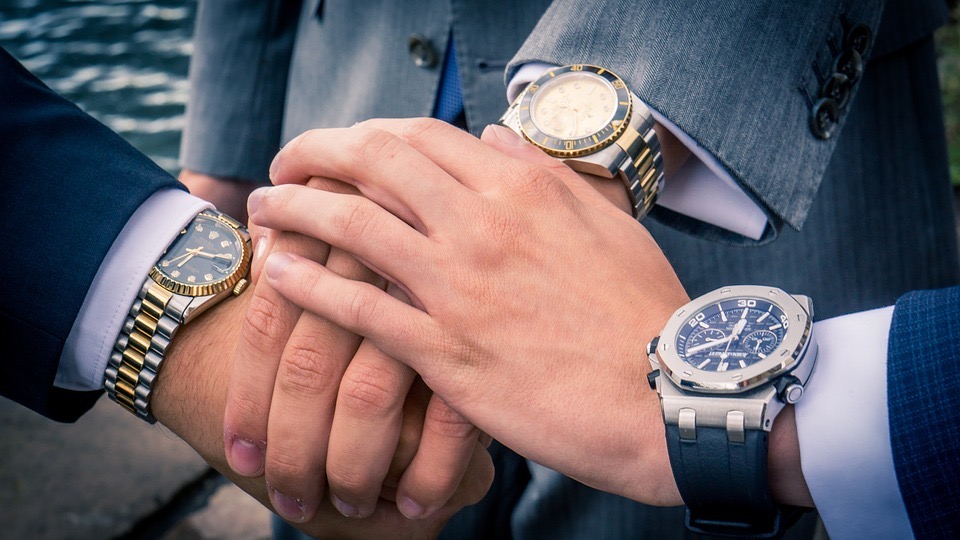
The corporate narcissist is still there, but he’s no longer necessarily the most put-together person in the room. A different profile has started to emerge — someone who doesn’t look busy all the time, who doesn’t keep repeating how overloaded they are, and who doesn’t need to prove every five minutes that they’re indispensable. At first, that’s uncomfortable, because it breaks the script. This person doesn’t talk about a packed schedule. They’re simply not available all the time. They train, they sleep, they disappear when needed. And, contrary to what common sense used to suggest — and in some places still does — this doesn’t make them less productive. It makes them less chaotic.
2026 trends are already reflecting this shift. Reports from Bain & Company and Exame point to luxury moving away from display and into what is now called “quiet luxury”: premium athleisure like Lululemon and On Running, Louis Vuitton spas, curated retreats. Brands have figured out that the ultra-wealthy are spending more on recovery than on possessions. Wellness has become the new Rolex. And in business, this is no longer a trend — it’s a requirement. Regulations like NR-01 now place mental health and fatigue management at the center of operations, because exhausted teams miss checklists, misread data, and turn fatigue into operational risk. Exercise is no longer a hobby — it sharpens focus, reduces errors, and can increase productivity by 20–30%, as recent studies suggest.
Fitness culture has become the billboard of this new luxury. Not because of aesthetics, but because of what it signals. The person showing up at a high-end gym at 7 a.m., wearing premium gear, isn’t just working out. They’re communicating something much deeper: they control their schedule, they don’t live at the mercy of chaos, they have time. And today, time is rarer than money.
While many people spend their days reacting, a few are actually designing their days. While many claim they don’t have time, others simply refuse to live without it.
In the end, this isn’t about money not mattering. It does. Money is what gets you into the game in the first place. But for a long time, we confused having money with looking like we had it. People leveraged themselves to the edge just to display success — watches, cars, lifestyles built more on pressure than on stability. That version still exists, but it’s not the one that lasts.
Because real wealth doesn’t just show up in what you can buy. It shows up in what you don’t have to prove anymore. The person who truly has money doesn’t need chaos to justify it, doesn’t need to look busy to feel important, and doesn’t need to trade all their time just to sustain the image. They have something much harder to fake: balance — the ability to generate, sustain, and protect, financially, physically, and mentally.
Because having money and having control are not the same thing. And the second is what determines whether the first actually means anything.
Time doesn’t show up. Time is imposed. And the people who can impose it usually aren’t the ones trying to look rich. They’re the ones who actually are.
This article was produced by Westhon Media for One Energy News.