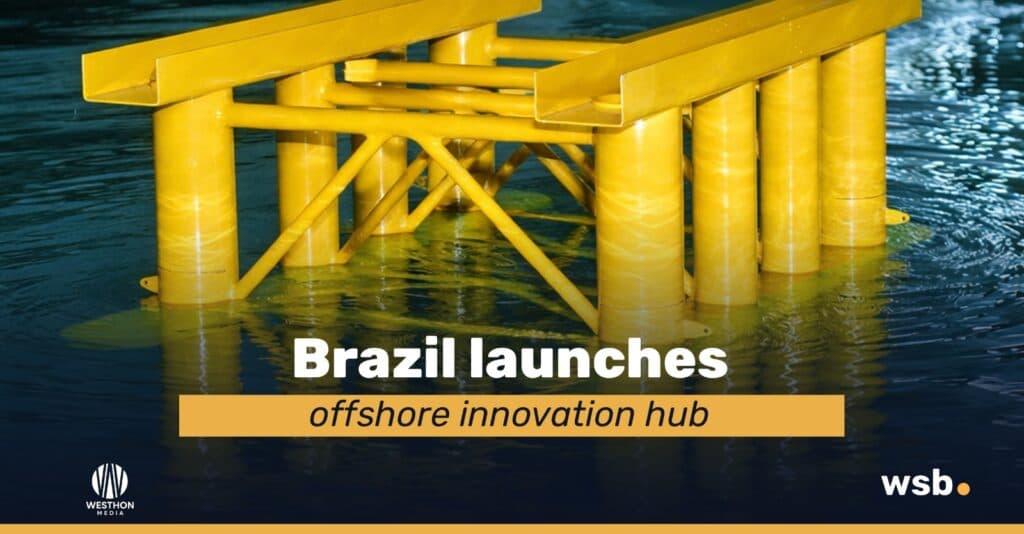
Brazil launches offshore innovation hub
Automatically generated translation; may contain errors.
Brazil Launches Offshore and Subsea Innovation Center with R$ 163 Million Investment
USP, IPT, Shell and Fapesp join forces to position Brazil at the forefront of applied research for the offshore sector, with a focus on advanced materials, low-carbon energy and digital transformation.
A Heavyweight Partnership
On 15 April 2026, the Escola Politécnica at the University of São Paulo (USP) hosted the official launch of the Offshore Technology Innovation Centre (OTIC) — a centre dedicated to the development of cutting-edge technologies for the oceanic and subsea environment. The initiative brings together USP, the Institute for Technological Research (IPT), Shell and the São Paulo Research Foundation (Fapesp), forming one of the most significant public-private partnerships ever established for the offshore sector in Brazil.
The ceremony also marked the inauguration of four new laboratories associated with the OTIC, all located within the University City campus in São Paulo.
Five Pillars, One Strategic Goal
The OTIC is structured around five technical pillars that guide its operations: Low-Carbon Energy, Digital Transformation, New Materials and Nanotechnology, Safety, Environment and Circular Economy, and New Processes and Operations. The logic underpinning these pillars is straightforward — to accelerate the technological transition of Brazil’s offshore sector by closing the gap between scientific output and the practical demands of industry.
R$ 163 Million and Global Ambitions
The estimated investment over the course of the project stands at approximately R$ 163 million, a figure that reflects the scale of the partners’ ambitions. The stated objective is to position Brazil as an international reference in subsea technologies — an increasingly competitive market as deepwater exploration consolidates its role as a pillar of the global energy mix.
IPT’s Role: Advanced Materials at the Core
IPT’s participation in the OTIC is anchored in the laboratories of its Advanced Materials Unit, operating specifically in the areas of corrosion and protection and lightweight structures — competencies with direct application to the durability and structural integrity challenges that define the offshore environment.
Anderson Correia, IPT’s President and CEO, underscored the institutional significance of the project, noting that the institute’s contribution rests on the expertise of its teams in technology areas that are critical to industry. Sandra Moraes, Director of the Advanced Materials Unit, was more specific in outlining the expected impact: the teams involved play a strategic role in developing solutions for aggressive environments, in the integration of onshore and offshore systems, and in operational efficiency — all central themes for any company operating in Brazil’s pre-salt fields.
Bridging Academia and Industry
The OTIC is being launched at a moment when Brazil’s offshore industry is going through a phase of consolidation and reinvestment. The proximity between applied research laboratories and energy sector operators creates conditions for innovation to reach the market faster and with greater alignment to operational needs.
For the offshore supply chain — shipbuilders, equipment manufacturers, integrity and inspection companies — the centre represents a concrete opportunity to access frontier technological development in partnership with internationally recognised institutions.
This article was produced by Westhon Media for One Energy News.