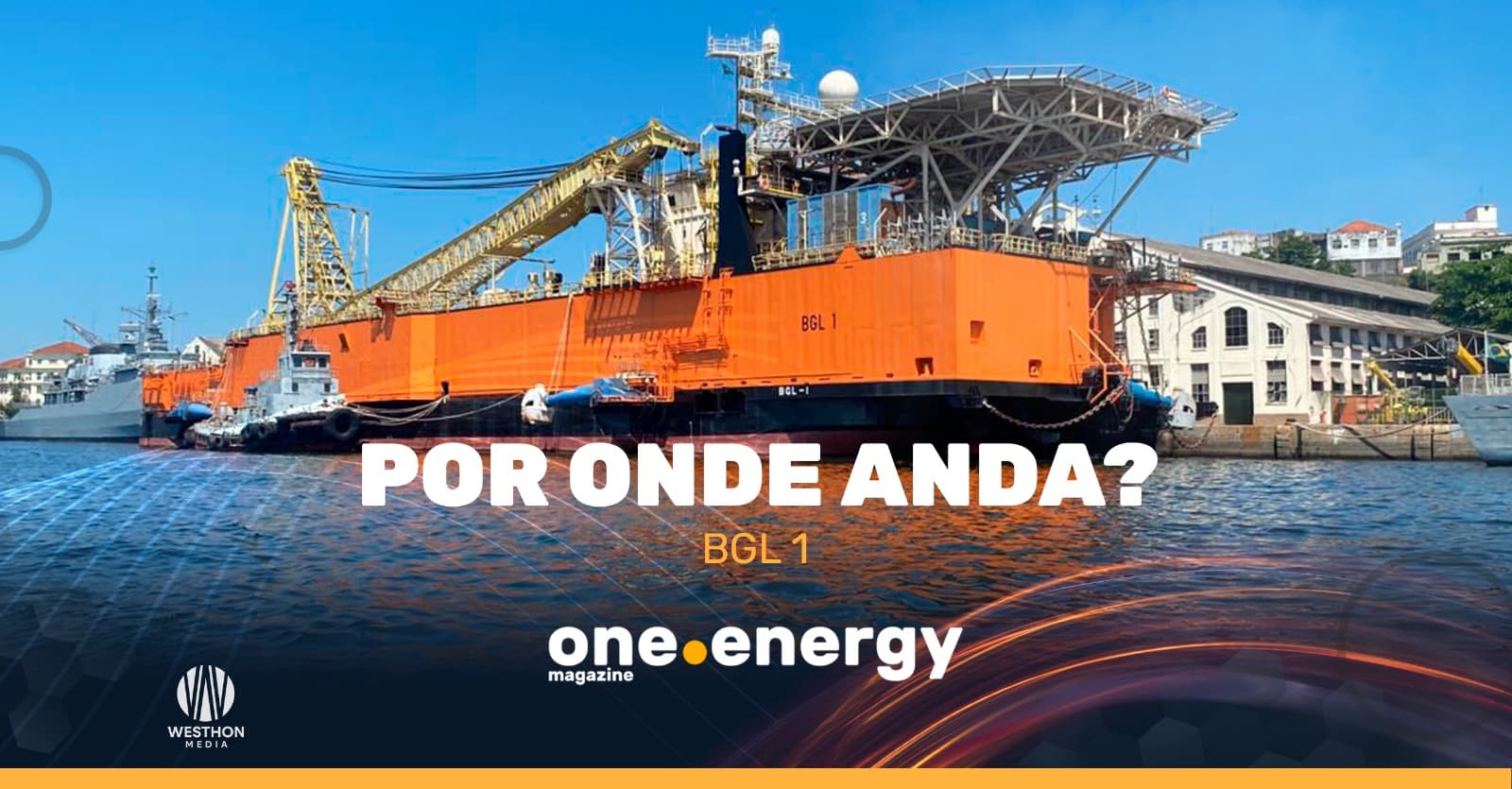
Precisely because she was a working asset, not a showcase unit, what followed stands out: after years of intense activity, the barge entered a prolonged period of inactivity, remaining for long stretches at Estaleiro Inhaúma in Guanabara Bay before being acquired by Super Braço in 2019 and later undergoing interventions at the Arsenal de Marinha do Rio de Janeiro.
And then… operational silence.
For an asset of this scale, not operating is more than the absence of a contract — it is a decision.
Keeping a construction barge idle implies continuous cost.
So the inevitable question was never “why wasn’t she operating,” but “why was she still there, simply existing?”
During Carnival 2026, a movement.
BGL 1 was recently towed toward the Porto de Sepetiba region.
No public announcement. No operational confirmation. No defined scope.
Reactivation?
Logistical repositioning?
Preparation for sale?
Or simply cost rationalization outside Guanabara Bay?
In offshore construction, assets of this nature do not move without reason.
But reason and destination are not always the same thing.
What is certain is that a vessel that helped build part of Brazil’s subsea infrastructure spent years floating sidelined — and has now started moving again.
It does not necessarily mean operation.
But ceasing to remain still always means something.
And you, any idea where BGL-1 is going next? Comments are open below.
Every Thursday, a new “Por onde anda?” — stay tuned.
This article was produced by Westhon Media for One Energy News.